Finance
Big Tech Faces Heat as China's DeepSeek Sows Doubts on Billion-Dollar Spending
Published by Global Banking & Finance Review®
Posted on January 27, 2025
4 min readLast updated: January 27, 2026
Add as preferred source on Google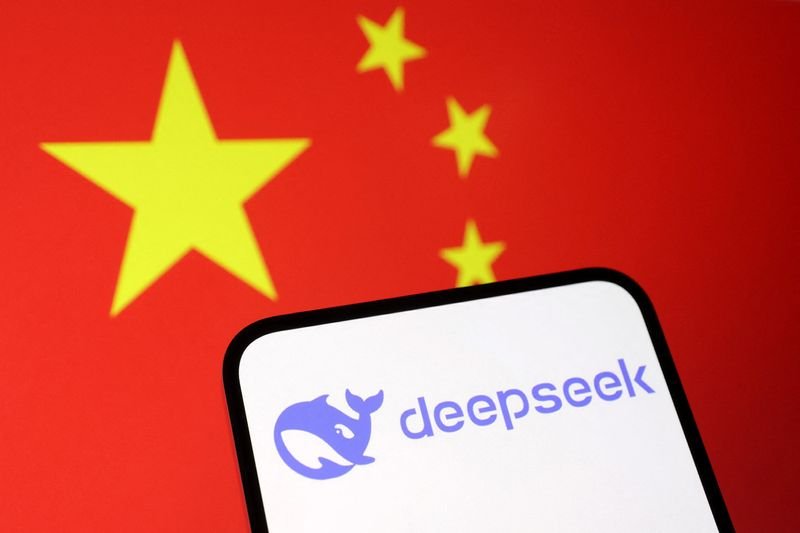
Published by Global Banking & Finance Review®
Posted on January 27, 2025
4 min readLast updated: January 27, 2026
Add as preferred source on GoogleDeepSeek's affordable AI models challenge Big Tech's spending, raising questions about the necessity of high AI infrastructure costs.
By Aditya Soni and Zaheer Kachwala
(Reuters) - Chinese startup DeepSeek's cheaper AI is sharpening investor scrutiny of the billions U.S. tech giants are pouring to develop the technology and analysts say it will dominate this week's much-awaited results from industry bellwethers.
DeepSeek has claimed it took just two months and cost under $6 million to build an AI model using Nvidia's less-advanced H800 chips. An app powered by the V3 model became the top iPhone download in the U.S. on Monday.
The startup founded in 2023 has said its AI models either match or outperform top U.S. rivals at a fraction of the cost, challenging the view that scaling AI requires vast computing power and investment.
Such a business need has powered an increase of around $10 trillion in the market value of "Magnificent Seven" companies since ChatGPT kicked off the AI boom in November 2022.
"Did DeepSeek really build OpenAI for $5 million? Of course not," Bernstein analyst Stacy Rasgon said. "It seems like a stretch to think the innovations being deployed by DeepSeek are completely unknown by the top tier AI researchers at the world's other numerous AI labs."
DeepSeek's pricing blows away anything from the competition, he said. Shares of AI chip pioneer Nvidia sank 16%, Microsoft fell 3.8% and TSMC's U.S. stock tumbled 14%.
Rasgon and other analysts argue DeepSeek's training costs for its V3 model could be higher as the nearly $6 million cited by the startup only includes the amount spent on computing power, while little is known about the costs to build the more publicized R1 model.
Still, it is a far cry from the $250 billion analysts estimate big U.S. cloud companies will spend this year on AI infrastructure. That spending has been questioned by investors worried about slow returns in the past year.
With most of the American tech giants set to report results this week and the next, analysts and investors expect executives of the companies to offer more clarity on their strategy.
"(DeepSeek's rise) puts into question whether the current pace of capex spend/technology upgrades is necessary. Commentary from U.S. hyperscalers will be key this week to see if they remain aggressive with AI spend," CFRA analyst Angelo Zino said.
"They will likely stress the need for greater computing power as we shift toward agentic AI and physical AI," Zino added, referring to autonomous AI agents that require little human intervention for routine tasks, as well as robots and self-driving cars.
PRICING PUSH
While the price of using AI models has been falling with rising competition and the progress in the technology, Bernstein's Rasgon said DeepSeek stands out as it has priced its models at up to 40 times lower than OpenAI's comparable models.
That could, analysts said, start a price war for AI services, potentially pressuring tech companies such as OpenAI that are already losing billions of dollars each year due to the high operational costs of running services such as ChatGPT.
"If DeepSeek adoption intensifies, it could initiate price reductions from competitors who have similar open source products," said Gadjo Sevilla, senior analyst at eMarketer.
"Market leaders like OpenAI (pushing for profitability) are unlikely to lower pricing in the short term. They will likely double down on trust and safety as key differentiating features, which happen to matter to enterprise users."
Some experts also doubt that U.S. businesses would be willing to embrace Chinese AI technology, given Sino-U.S. tensions and concerns about data privacy and security.
DeepSeek has said it stores user information in servers in China, which could be a sticking point in its U.S adoption.
Some investors, however, believe American tech giants would pounce on DeepSeek's breakthroughs and that cheaper AI services are bound to increase technology adoption, which could lift demand for chips.
"Did DeepSeek seek and find a more efficient processing model for AI? Maybe, but you can count on the incumbents to adopt any new techniques found," said Mark Malek, chief investment officer at SiebertNXT.
"(This) would only make the AI opportunity bigger in the future."
(Reporting by Aditya Soni and Zaheer Kachwala in Bengaluru; Editing by Arun Koyyur)
DeepSeek claims that its AI models either match or outperform top U.S. rivals at a fraction of the cost, challenging the notion that scaling AI requires vast computing power and investment.
DeepSeek stated that it took just two months and cost under $6 million to build its AI model using Nvidia's less-advanced H800 chips.
Analysts like Stacy Rasgon express skepticism about DeepSeek's low training costs, suggesting that the $6 million figure may only cover computing power and not other expenses.
DeepSeek's pricing could initiate a price war for AI services, potentially pressuring established companies like OpenAI that are already facing high operational costs.
Concerns about data privacy and security, along with Sino-U.S. tensions, may hinder U.S. businesses from embracing Chinese AI technology like DeepSeek.
Explore more articles in the Finance category