Finance
Morning Bid: Relief as German Vote Dodges Extremes
Published by Global Banking & Finance Review®
Posted on February 24, 2025
3 min readLast updated: February 27, 2026
Add as preferred source on Google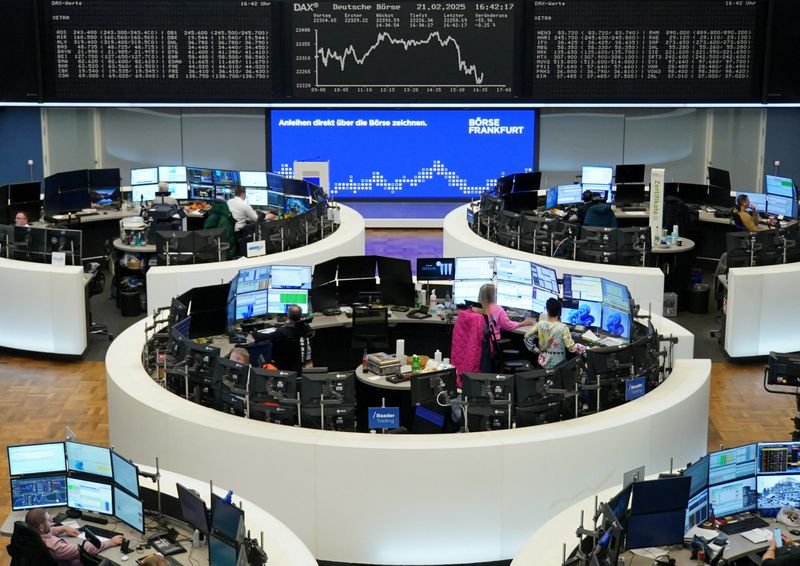
Published by Global Banking & Finance Review®
Posted on February 24, 2025
3 min readLast updated: February 27, 2026
Add as preferred source on GoogleThe German election results have eased market fears with CDU/CSU's win. However, coalition talks are underway, affecting European markets.
A look at the day ahead in European and global markets from Wayne Cole.
The market reaction has been relief at the election of the relatively mainstream CDU/CSU conservatives in Germany's election, with DAX futures now up 1.4% after a slow start. The euro has added 0.5% to a one-month high at $1.0528, clearing the previous top of $1.0514. The next target is $1.0534.
Conservative leader Friedrich Merz still has to form a coalition government and it is not yet clear whether he will need one or multiple partners, with the latter sure to take more time. Analysts assume a straightforward coalition with the SPD would be the most favoured outcome, but there's a lot of horse trading to come first. The German Ifo survey due later could show a pick-up in anticipation of a Merz win.
German leadership is sorely needed given question marks over President Donald Trump's support for NATO and Ukraine. European Union leaders are set to hold an extraordinary summit on March 6 to discuss additional support for Ukraine and how to pay for Europe's newly burgeoning defence requirements. This will almost certainly require more debt issuance and some relaxation of EU budget rules. Maybe they could bring back War, sorry, Defence Bonds to get patriotic retail investors involved.
Across the Atlantic, just the threat of tariffs was enough to slam the services PMI sharply lower and it's likely to get worse with reports the White House is actually pressuring Mexico to raise its own tariffs on Chinese imports.
A jump in U.S. consumer inflation expectations to the highest since 1995 will not be welcomed by Fed policy makers, who have constantly comforted themselves with the assertion that expectations were "well anchored". There are at least nine Fed speakers this week so there's plenty of scope for verbal warnings ahead of the PCE inflation report on Friday.
Wall Street futures have at least bounced in Asian trade, perhaps on hopes Nvidia's results on Wednesday will justify its stratospheric valuation.
Investors are looking for fourth-quarter sales around $38.5 billion and first-quarter guidance around $42.5 billion, while any caution on future AI capex would be a downside risk.
Key developments that could influence markets on Monday:
- German Ifo survey of business for Feb, EU final CPI data
- BoE research conference where Deputy Governors Dave Ramsden and Clare Lombardelli speak, along with Bank of Canada Deputy Governor Toni Gravelle. BoE committee member Swati Dhingra speaks.
(By Wayne Cole; Editing by Jacqueline Wong)
The market reacted with relief to the election of the CDU/CSU conservatives, with DAX futures rising 1.4%.
Friedrich Merz needs to form a coalition government, and it is unclear whether he will require one or multiple partners, which could delay the process.
A jump in U.S. consumer inflation expectations to the highest level since 1995 is likely unwelcome for Fed policymakers, who have relied on stable expectations.
Key developments include the German Ifo survey of business for February and the Bank of England research conference featuring several deputy governors.
European Union leaders are set to hold an extraordinary summit on March 6 to discuss critical issues, especially regarding NATO and Ukraine.
Explore more articles in the Finance category