
Headlines
G20 Foreign Ministers Gather Amid Tensions Over Trade, Ukraine
Published by Global Banking & Finance Review®
Posted on February 20, 2025
2 min readLast updated: February 27, 2026
Add as preferred source on Google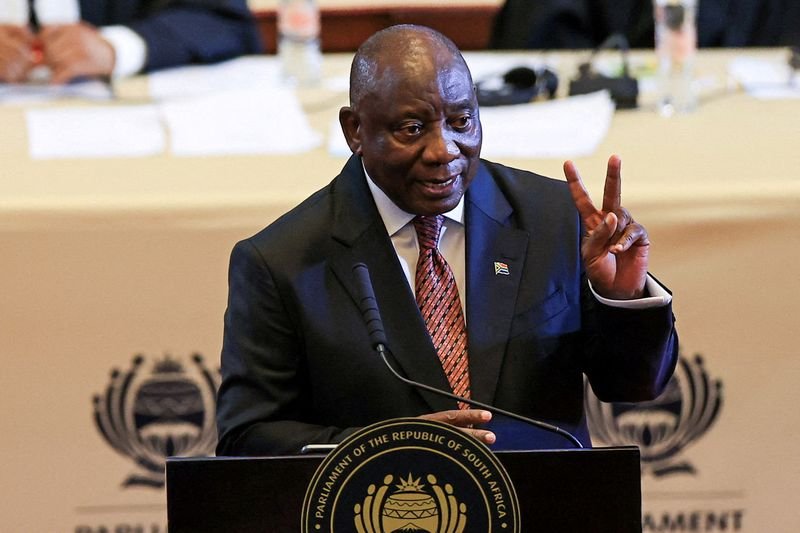
Published by Global Banking & Finance Review®
Posted on February 20, 2025
2 min readLast updated: February 27, 2026
Add as preferred source on GoogleG20 foreign ministers meet in South Africa amid trade and Ukraine tensions, with US absent. China seeks to expand influence.
By Tim Cocks
JOHANNESBURG (Reuters) - Foreign ministers from the G20 top economies were to meet in South Africa on Thursday and Friday, amid tensions between members over the Ukraine war, trade disputes and with the top U.S. diplomat staying away owing to a feud with the hosts.
The G20 countries, which represent some 85% of global GDP and three quarters of trade, often struggle to see eye to eye, but geopolitical rifts since Russia's 2022 Ukraine invasion have rendered it more fractious than ever.
The discord has increased since President Donald Trump took office a month ago and implemented rapid changes in Washington's trade and foreign policies.
South Africa holds the rotating presidency of the group and for President Cyril Ramaphosa the first G20 meeting in Africa was an opportunity to get rich nations to heed poorer countries' concerns - worsening inequality, inadequate action on climate change, and a financial system that favours investment banks over poor sovereign debtors.
But the United States won't be attending: Secretary of State Marco Rubio earlier this month rejected as "very bad" the previously agreed agenda of "diversity, equity and inclusion".
Then Trump cut U.S. aid to South Africa in an ideological dispute with the latter's efforts to redress historic racial injustices in land ownership - and over its genocide case against U.S. ally Israel at the International Court of Justice.
The gathering takes place as Trump has upended the U.S. policy of solidarity with Ukraine as he seeks to broker peace in its war with Russia. He has blamed President Volodymyr Zelenskiy for the conflict, and sidelined NATO allies in ending a campaign to isolate Russia.
The U.S. absence is an opportunity for China, which has the world's second biggest economy, to expand its influence. Such efforts by Beijing are normally focused on the Global South but China has quickly sought to capitalise on the cracks in the transatlantic alliance.
Its foreign ministry said on Monday that "healthy and stable" China-EU relations are needed now more than ever.
(Reporting by Tim Cocks; Additional reporting by Nellie Peyton, Tannur Anders in Johannesburg; Editing by Frances Kerry)
The G20 meeting focuses on tensions over the Ukraine war, trade disputes, and the need for richer nations to address the concerns of poorer countries.
The U.S. is not attending because Secretary of State Marco Rubio rejected the previously agreed agenda, labeling it as 'very bad' due to its focus on diversity, equity, and inclusion.
Geopolitical rifts since Russia's invasion of Ukraine have made it difficult for G20 countries to reach consensus, increasing discord among its members.
China, as the world's second-largest economy, sees the U.S. absence as an opportunity to expand its influence, particularly in the Global South.
South Africa aimed to bring attention to the concerns of poorer countries and to encourage richer nations to address issues of inequality and historical injustices.
Explore more articles in the Headlines category