Search
00
GBAF Logo
trophy
Top StoriesInterviewsBusinessFinanceBankingTechnologyInvestingTradingVideosAwardsMagazinesHeadlinesTrends

Subscribe to our newsletter

Get the latest news and updates from our team.

Global Banking and Finance Review

Global Banking & Finance Review

Company

    GBAF Logo
    • About Us
    • Profile
    • Privacy & Cookie Policy
    • Terms of Use
    • Contact Us
    • Advertising
    • Submit Post
    • Latest News
    • Research Reports
    • Press Release
    • Awards▾
      • About the Awards
      • Awards TimeTable
      • Submit Nominations
      • Testimonials
      • Media Room
      • Award Winners
      • FAQ
    • Magazines▾
      • Global Banking & Finance Review Magazine Issue 79
      • Global Banking & Finance Review Magazine Issue 78
      • Global Banking & Finance Review Magazine Issue 77
      • Global Banking & Finance Review Magazine Issue 76
      • Global Banking & Finance Review Magazine Issue 75
      • Global Banking & Finance Review Magazine Issue 73
      • Global Banking & Finance Review Magazine Issue 71
      • Global Banking & Finance Review Magazine Issue 70
      • Global Banking & Finance Review Magazine Issue 69
      • Global Banking & Finance Review Magazine Issue 66
    Top StoriesInterviewsBusinessFinanceBankingTechnologyInvestingTradingVideosAwardsMagazinesHeadlinesTrends

    Global Banking & Finance Review® is a leading financial portal and online magazine offering News, Analysis, Opinion, Reviews, Interviews & Videos from the world of Banking, Finance, Business, Trading, Technology, Investing, Brokerage, Foreign Exchange, Tax & Legal, Islamic Finance, Asset & Wealth Management.
    Copyright © 2010-2025 GBAF Publications Ltd - All Rights Reserved.

    ;
    Editorial & Advertiser disclosure

    Global Banking and Finance Review is an online platform offering news, analysis, and opinion on the latest trends, developments, and innovations in the banking and finance industry worldwide. The platform covers a diverse range of topics, including banking, insurance, investment, wealth management, fintech, and regulatory issues. The website publishes news, press releases, opinion and advertorials on various financial organizations, products and services which are commissioned from various Companies, Organizations, PR agencies, Bloggers etc. These commissioned articles are commercial in nature. This is not to be considered as financial advice and should be considered only for information purposes. It does not reflect the views or opinion of our website and is not to be considered an endorsement or a recommendation. We cannot guarantee the accuracy or applicability of any information provided with respect to your individual or personal circumstances. Please seek Professional advice from a qualified professional before making any financial decisions. We link to various third-party websites, affiliate sales networks, and to our advertising partners websites. When you view or click on certain links available on our articles, our partners may compensate us for displaying the content to you or make a purchase or fill a form. This will not incur any additional charges to you. To make things simpler for you to identity or distinguish advertised or sponsored articles or links, you may consider all articles or links hosted on our site as a commercial article placement. We will not be responsible for any loss you may suffer as a result of any omission or inaccuracy on the website.

    Home > Banking > World Bank wins $100 billion replenishment of fund for poorest countries
    Banking

    World Bank wins $100 billion replenishment of fund for poorest countries

    World Bank wins $100 billion replenishment of fund for poorest countries

    Published by Uma Rajagopal

    Posted on December 6, 2024

    Featured image for article about Banking

    By David Lawder

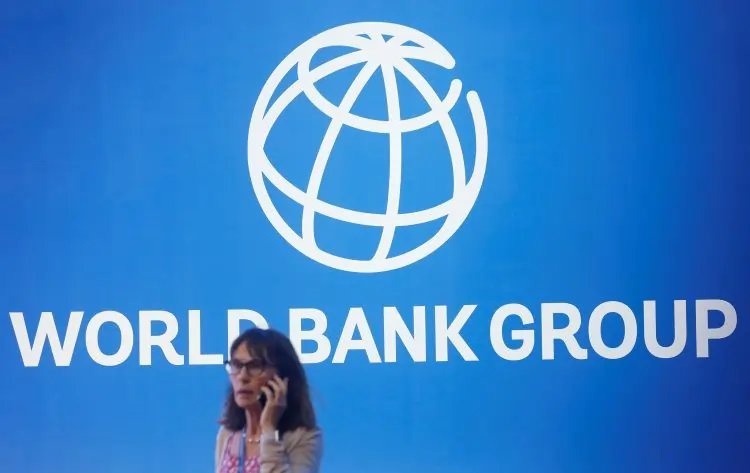
    (Reuters) -Donor countries have pledged a record $100 billion three-year replenishment of the World Bank’s fund for the poorest nations, providing a vital lifeline for their struggles against crushing debts, climate disasters, inflation and conflict.

    The World Bank made the announcement early on Friday in Seoul at a pledging conference for the International Development Association, which provides grants and very low-interest loans to 78 low-income countries.

    The total exceeds the previous $93 billion IDA replenishment announced in December 2021. Countries will contribute about $24 billion directly to IDA, only marginally increased from the $23.5 billion pledged in 2021, but the fund will issue bonds and employ other financial leverage to stretch that to the targeted $100 billion in grants and loans through mid-2028.

    The two-day pledging conference fell short of the $120 billion goal that African heads of state had called for, partly because the U.S. dollar’s strength – pushed up by Donald Trump’s U.S. presidential election victory – diminished the dollar value of significant increases in foreign currency contributions by several countries.

    At a G20 leaders’ summit in Brazil last month, Norway increased its pledge by 50% from 2021 to 5.024 billion krone. That’s $455 million at current exchange rates, but at the start of 2024, it would have been worth $496 million.

    South Korea boosted its pledge by 45% to 846 billion won, ($597 million), Britain by 40% to 1.8 billion pounds, and Spain by 37% to 400 million euros. Spain’s pledge was worth $423 million on Friday, $10 million less than the day it was announced in October.

    U.S. President Joe Biden pledged a $4 billion U.S. contribution, up from $3.5 billion in the previous round.

    The World Bank did not immediately reveal the amounts of other pledges, but said that 17 donor countries had committed to raising their contributions by more than 25%, with 10 offering increases of 40% or more.

    World Bank President Ajay Banga said in a statement that IDA will be able to stretch the new pledges further because of work done to optimize the development lender’s balance sheet over the past two years, increasing its lending capacity by some $150 billion over 10 years.

    The bank’s ability to leverage contributions will transform “modest contributions into life-changing investments,” Banga said in an open letter to shareholders and client countries.

    About 35 countries have graduated from IDA to become donors, including China, South Korea, Chile, Jordan, and Turkey.

    Banga said the resources will allow the bank to put job creation at the center of its work, even as it addresses climate change and other global crises.

    “In this context, IDA is not just a financial instrument; it is a catalyst for job creation,” Banga said. “It provides countries with the resources to build infrastructure, improve education and health systems and foster private sector growth.”

    ($1 = 0.9455 euros)

    (Reporting by David Lawder; Editing by Shri Navaratnam and Saad Sayeed)

    Related Posts
    DeFi and banking are converging. Here’s what banks can do.
    DeFi and banking are converging. Here’s what banks can do.
    Are Neo Banks Offering Better Metal Debit Cards Than Traditional Banks?
    Are Neo Banks Offering Better Metal Debit Cards Than Traditional Banks?
    Banking at the Intersection: From Nashville to Cannes, A Strategic Call to Action
    Banking at the Intersection: From Nashville to Cannes, A Strategic Call to Action
    Driving Efficiency and Profit Through Customer-Centric Banking
    Driving Efficiency and Profit Through Customer-Centric Banking
    How Ecosystem Partnerships Are Redefining Deposit Products
    How Ecosystem Partnerships Are Redefining Deposit Products
    CIBC Private Banking wins four 2025 Global Banking & Finance Awards
    CIBC Private Banking wins four 2025 Global Banking & Finance Awards
    How Banks Can Put AI to Work Now and Prove ROI in 90 Days
    How Banks Can Put AI to Work Now and Prove ROI in 90 Days
    Top 5 AI quality assurance framework providers for Banks and Financial Services firms.
    Top 5 AI quality assurance framework providers for Banks and Financial Services firms.
    The Unbanked Paradox: How Banking Access Creates Economic Resilience
    The Unbanked Paradox: How Banking Access Creates Economic Resilience
    Hyper-Personalised Banking - Shaping the Future of Finance
    Hyper-Personalised Banking - Shaping the Future of Finance
    The End of Voice Trust: How AI Deepfakes Are Forcing Banks to Rethink Authentication
    The End of Voice Trust: How AI Deepfakes Are Forcing Banks to Rethink Authentication
    Predicting and Preventing Customer Churn in Retail Banking
    Predicting and Preventing Customer Churn in Retail Banking

    Why waste money on news and opinions when you can access them for free?

    Take advantage of our newsletter subscription and stay informed on the go!

    Subscribe

    More from Banking

    Explore more articles in the Banking category
    Growth and Impact: Banreservas Leads Dominican Republic Economic Expansion

    Growth and Impact: Banreservas Leads Dominican Republic Economic Expansion

    Turning Insight into Impact: Making AI and Analytics Work in Retail Banking

    Turning Insight into Impact: Making AI and Analytics Work in Retail Banking

    KeyBank Embraces Next-Generation AI Platform to Transform Fraud and Financial Crime Prevention

    KeyBank Embraces Next-Generation AI Platform to Transform Fraud and Financial Crime Prevention

    Understanding Association Banking: Financial Solutions for Community Success

    Understanding Association Banking: Financial Solutions for Community Success

    Applying Symbiosis for advantage in APAC banking

    Applying Symbiosis for advantage in APAC banking

    AmBank Islamic Berhad Earns Triple Recognition for Excellence in Islamic Banking

    AmBank Islamic Berhad Earns Triple Recognition for Excellence in Islamic Banking

    FinTok Strategy: How Banks Are Reaching Gen Z Through Social Media

    FinTok Strategy: How Banks Are Reaching Gen Z Through Social Media

    Rethinking Retail Banking Sustainability: Why the ATM is an Asset in the Sustainable Transition

    Rethinking Retail Banking Sustainability: Why the ATM is an Asset in the Sustainable Transition

    How private banks can survive the neo-broker revolution

    How private banks can survive the neo-broker revolution

    Next-Gen Bank Branches: The Evolution from Transaction Hubs to Experience Centers

    Next-Gen Bank Branches: The Evolution from Transaction Hubs to Experience Centers

    The Banking Talent Crunch: How Financial Institutions Are Competing for Digital-Native Skills

    The Banking Talent Crunch: How Financial Institutions Are Competing for Digital-Native Skills

    Beyond Interest: How Banks Are Reimagining Revenue in the Digital Age

    Beyond Interest: How Banks Are Reimagining Revenue in the Digital Age

    View All Banking Posts
    Previous Banking PostCash draws biggest weekly inflow since March 2023, BofA says
    Next Banking PostItaly and African Development Bank sign $420 million co-financing deal