Business
Why Social Capital Needs to Be Your Top Priority
Published by linker 5
Posted on July 23, 2020
6 min readLast updated: January 21, 2026
Add as preferred source on Google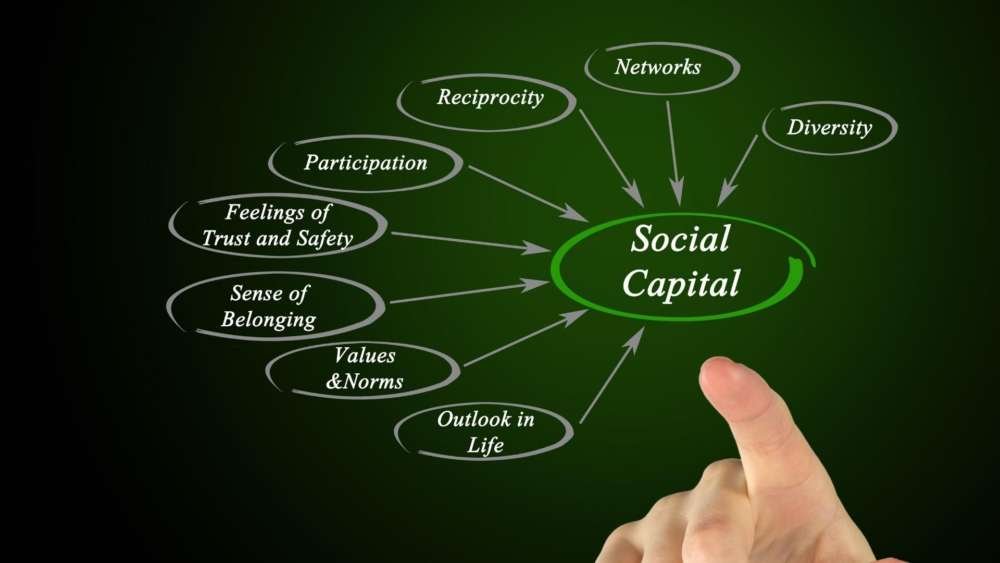
Published by linker 5
Posted on July 23, 2020
6 min readLast updated: January 21, 2026
Add as preferred source on GoogleBy Mostafa Sayyadi
Executives are aware that activities related to managing knowledge at the individual level and the practices associated with knowledge management at the organizational level are handled at different points on the organizational chart. In order to create a sustainable competitive advantage, executives need to focus on the interactions among the facets of knowledge to minimize the possible limitations of managing all facets or the business units and components on an organizational chart.
Can social capital create effective knowledge management?
Executives across the globe have found that knowledge management is critical to business success. Knowledge, in of itself, is not enough to satisfy the vast array of changes in today’s organization. Therefore, knowledge management is only a necessary precursor to effectively managing knowledge within the organization. One tool for executives to improve organizational knowledge management and use it to lessen the gaps between success and possible failure, is to adopt leadership and become a social architect. Executives can do this by using what is known in the academic realm as social capital. Social capital, however, is different from human capital in that human capital focuses on individual behavior and knowledge while social capital emphasizes relationships and the assets created by these relationships. Leaders aggregate human capital into social capital so as to provide further information and opportunities for all members, and subsequently contribute to organizational knowledge management through developing relationships with subordinates that link follower’s individual interests to the organization’s collective-interests.
Executives want to know how social capital can be defined and used in organizations. At this point, you’re probably asking why Social Capital is so important. Just as human resource is a huge component of organizations, Social capital is the resource that keeps the culture together and builds upon the foundations that helps organizations prosper. Social capital focuses on developing relationships to create valuable resources. Executives may not be as interested in social capital as much as scholars are but there is a kernel worth looking it in this theoretical framework for executives. For example, social capital enables executives to improve organizational knowledge management and help close the gap between success and possible failure. Many executives would agree John Girard, who sees knowledge management as an outcome of various factors such as leadership, interactions and communications, formal policies and rules, and a climate inspiring innovation and creativity within organizations. Organizational knowledge cannot merely be described as the sum of individual knowledge, but as a systematic combination of knowledge based on social interactions shared among organizational members. Thus, executives need to see organizational knowledge as the knowledge that exists in the organization as a whole and use social capital to convert individual knowledge into a collective mind for their organization to close the performance gap and help organizations prosper. Therefore, firms need to consider a range of other factors such as social capital that is also reflective of their knowledge management performance.
Can knowledge management processes create a sustainable competitive advantage?
Executives know that discontinuity exists at all levels of product and services and they do not want to find themselves caught off guard and become obsolete. To remain competitive, executives realize that they have to quickly create and share new ideas and knowledge to be more responsive to market changes. Importantly, knowledge held by organizational members is the most strategic resource for competitive advantage, and also through the way it is managed by executives. Executives can enhance knowledge accumulation which is associated with coaching and mentoring activities by sharing experiences gained by imitating, observing and practicing. Executives can, in fact, help followers add meaningfulness to their work in ways enhancing a shared understanding among members to enhance engagement.
In the integration process, organizational knowledge is articulated into formal language that represents official statements. Organizational knowledge is incorporated into formal language and subsequently becomes available to be shared within organizations. Executives have their internet technology departments to create a combination which reshapes existing organizational knowledge to more systematic and complex forms by, for example, using internal databases. Organizing knowledge using databases and archives can make knowledge available throughout the organization—–organized knowledge can be disseminated and searched by others. Most importantly, in knowledge integration, organizational knowledge is internalized through learning by doing which is more engaging. It is important to note that executives have found that shared mental models and technical know-how become valuable assets. Organizational knowledge, which is reflected in moral and ethical standards and the degree of awareness about organizational visions and missions can in-turn be used in strategic decision making. Organizational knowledge can be, therefore, converted to create new knowledge that executives can view and implement  immediately in managerial decision making. Applying knowledge aimed at providing better decision-making and work related practices and creating new knowledge through innovation.
Finally, when executives agree to share knowledge with other organizations in the environment, studies have shown that that knowledge is often difficult to share externally. One reason is that other organizations have too much pride to accept knowledge or are apprehensive to expose themselves to the competition. Therefore, executives may lack the required capabilities to interact with other organizations. Learning in organizations is the ultimate outcome of knowledge reconfiguration by which organizational knowledge is created and acquired by connecting knowledge with other companies that want to share successes and failures. This leads to converting acquired knowledge into organizational processes and activities to improve processes that contribute success. Executives can now see that a company’s capability to manage organizational knowledge is the most crucial factor in a sustainable competitive advantage. This core-competitive advantage relies within and among people. Figure 1 illustrates how social capital can create knowledge management and competitive advantage for companies.
In Conclusion
Executives began to listen and respond to the plethora of information in the form of articles, books, and models attempting to provide social capital to help impact knowledge management and organizational competitiveness. This article articulates a different approach and introduces a new and dynamic perspective of social capital by showing how executives can create social capital as collective actions, meaning that organizational knowledge is power and can be used as an asset when competing with rivals.
Explore more articles in the Business category