
Top Stories
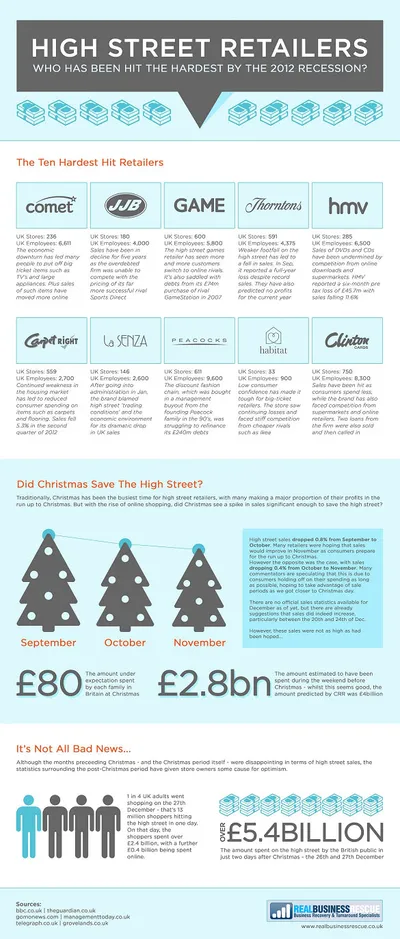
Which retailers have been hit the hardest by the 2012-recession
Published by Gbaf News
Posted on January 10, 2013
1 min read· Last updated: June 11, 2018
Key Takeaways
- Several UK high‑street retailers such as Comet, HMV and Blockbuster were among the hardest hit in the 2012 recession.
- Many chains shut stores at a rapid rate—PwC reported an average of 20 closures per day in 2012.
- J.C. Penney suffered nearly $1 billion in losses due to a failed transformation strategy.
- Electronics brand Best Buy closed 50 big‑box stores amid losses and shifting retail dynamics.
References
Frequently Asked Questions
Which UK retailers were hardest hit by the 2012 recession?
Retailers like Comet, HMV, Blockbuster, JJB and Clinton Cards suffered major sales declines and faced closures during the 2012 recession in the UK.
How many retail stores closed daily in 2012?
According to PwC, major chains closed on average 20 stores per day in 2012.
What large US retailer lost nearly $1 billion in 2012?
J.C. Penney reported a net loss of approximately $985 million for fiscal year 2012.
How did Best Buy respond to the 2012 recession?
Best Buy announced plans to close 50 U.S. big‑box stores in 2012 following poor performance and shifting consumer behavior.
Tags
Related Articles
One year after its founder's death, Armani faces challenge of 'inevitable evolution'
Barclays aims to more than double banker headcount in Singapore private bank by 2030
StanChart turns to hedge fund strategies to shield wealth clients from volatility
UK's St James's Place reports lower first-half inflows
Singapore's DBS targets over $774 billion in wealth assets by 2030
More from Top Stories
Explore more articles in the Top Stories category
The Hidden Infrastructure Behind AI: Why Compute Growth Depends on More Than Chips
The Physical Limits of AI: Why Digital Growth Is Becoming an Infrastructure Story
The Resilience Premium: Why Adaptability Is Becoming a Competitive Advantage
The Infrastructure Bottleneck: Why Growth Is Increasingly Constrained by What Companies Cannot Build Fast Enough
Why Management Attention Is Becoming a Scarcer Corporate Resource Than Capital
Why Corporate Resilience Is Moving From Insurance to Operating Design
The Last-Mile Standard: How Banks Can Make Cross-Border Payments Predictable
UK Critical Third Parties: A Bank Resilience Playbook
The Long-Term Advantage Built Through Better Decisions
Why Stability Is Becoming the World's New Growth Strategy
The Leadership Capability Quietly Reshaping Business Success
The Digital Foundation Quietly Transforming Global Business