
Business
Understanding the Impact: Unraveling the Significance of Scope 3 Emissions
Published by Jessica Weisman-Pitts
Posted on March 7, 2024
5 min readLast updated: January 30, 2026
Add as preferred source on Google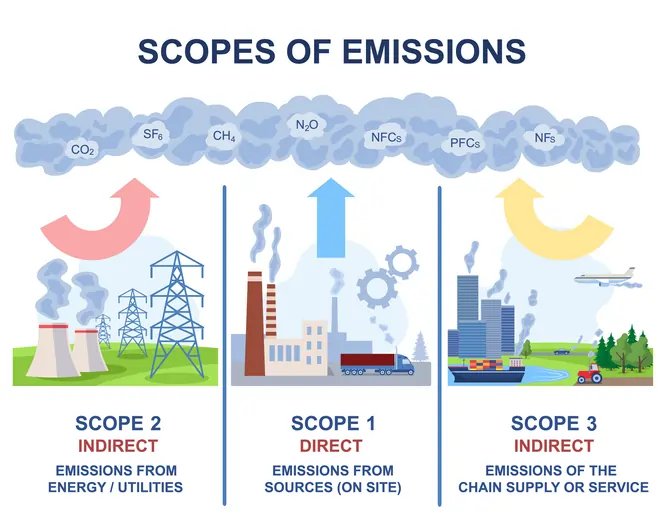
Published by Jessica Weisman-Pitts
Posted on March 7, 2024
5 min readLast updated: January 30, 2026
Add as preferred source on GoogleIn the global pursuit of sustainable practices and climate action, businesses are increasingly recognising the importance of assessing their carbon footprint comprehensively. While Scope 1 and Scope 2 emissions have long been at the forefront of environmental considerations, Scope 3 emissions are em...
In the global pursuit of sustainable practices and climate action, businesses are increasingly recognising the importance of assessing their carbon footprint comprehensively. While Scope 1 and Scope 2 emissions have long been at the forefront of environmental considerations, Scope 3 emissions are emerging as a critical component in the quest for a more sustainable future.
In a conversation with Dr Ruby Pillai, Founder & CEO of iWarranty. Ruby is passionate about sustainability, and her vision for iWarranty is to help businesses and households transition into the circular economy.
Could you define Scope III emission and how this is different from Scope 1 and 2?
Scope 3 emissions encompass indirect greenhouse gas emissions that occur throughout a company’s value chain, including both upstream and downstream activities. These emissions result from sources outside of a company’s direct control but are associated with its activities. These emissions arise from activities throughout the entire value chain, including raw material extraction, production, transportation, product use, and disposal. By accounting for these indirect emissions, we gain a more comprehensive understanding of the true carbon footprint associated with the goods and services we produce and consume.
They often include emissions from purchased goods and services, transportation and distribution, waste disposal, and the use of products sold. Unlike Scope 1 (direct emissions from owned or controlled sources) and Scope 2 (indirect emissions from purchased energy), Scope 3 emissions extend beyond a company’s operational boundaries.
The cumulative effect of Scope 3 emissions contributes significantly to global greenhouse gas concentrations and exacerbates climate change. From the deforestation associated with sourcing raw materials to the emissions released during product transportation and end-of-life disposal, each stage of the value chain adds to the atmospheric burden of greenhouse gases. As a result, addressing Scope 3 emissions is crucial for mitigating the impacts of climate change and limiting the rise in global temperatures.
Thank you for clarifying that. Now, let’s delve into the impacts of Scope 3 emissions. Could you elaborate on how these emissions influence various aspects, starting with their effect on the supply chain?
Certainly. Scope 3 emissions indeed wield a significant influence, particularly within the supply chain. A considerable portion of these emissions stems from activities along the supply chain. Accurately measuring and reporting Scope 3 emissions can be challenging due to the extensive and interconnected nature of global supply chains. Companies needs to invest in robust data collection and reporting systems to gain a comprehensive understanding of their indirect emissions.
Companies are becoming increasingly aware that addressing emissions solely within their organisational boundaries is insufficient. Collaboration with suppliers and partners is crucial to collectively reduce the carbon footprint across the entire value chain. Many large organisations are engaging in partnerships and industry initiatives to collectively develop strategies and standards for reducing emissions throughout the value chain.
That’s a crucial point. Moving on, how do Scope 3 emissions factor into considerations of a product’s lifecycle?
Understanding Scope 3 emissions requires a holistic view of a product’s lifecycle, from raw material extraction to disposal. Companies are now evaluating the environmental impact of their products at every stage, from sourcing sustainable materials to designing for longevity and recyclability. It’s about embracing sustainability throughout the entire lifecycle of a product.
Thank you for highlighting that perspective. Could you shed some light on the role of consumer awareness and influence concerning Scope 3 emissions?
Absolutely. Scope 3 emissions also encompass those generated when consumers use and eventually dispose of products. This highlights the importance of educating consumers about the environmental impact of their choices and encouraging sustainable practices. Companies prioritising transparent communication regarding their products’ lifecycle impact can build trust and loyalty among environmentally conscious consumers, driving positive change.
Lastly, what are your thoughts on the road ahead…
We live in an era of heightened environmental consciousness; acknowledging and mitigating Scope 3 emissions is no longer an option for businesses, but it is a strategic imperative. In our collective efforts to combat climate change and safeguard the health of our planet, understanding the full extent of our carbon footprint is paramount. While much attention is rightly placed on direct emissions from owned sources (Scope 1) and those from purchased energy (Scope 2), the often-overlooked Scope 3 emissions wield a profound influence on the health of our planet. Businesses that proactively assess, manage, and reduce their indirect emissions are not only contributing to a more sustainable planet but are also positioning themselves as leaders in a global movement toward responsible and environmentally conscious practices. As companies continue to embrace the challenge of Scope 3 emissions, the collective impact promises a brighter and more sustainable future for generations to come.
Thank you, Dr. Pillai, for sharing your insights into the significance of Scope 3 emissions and their implications for sustainability. It’s been a pleasure speaking with you.
Dr. Ruby Pillai: Thank you for having me. It’s been a pleasure discussing this important topic.
Scope 1 emissions are direct greenhouse gas emissions that occur from sources owned or controlled by a company, such as emissions from fuel combustion in company vehicles.
Scope 2 emissions are indirect greenhouse gas emissions from the generation of purchased electricity, steam, heating, and cooling consumed by a company.
Scope 3 emissions are indirect emissions that occur in a company's value chain, including both upstream and downstream activities, such as purchased goods and services.
Measuring Scope 3 emissions is crucial for understanding the full carbon footprint of a company's operations and for identifying opportunities to reduce overall greenhouse gas emissions.
Explore more articles in the Business category









