Search
00
GBAF Logo
trophy
Top StoriesInterviewsBusinessFinanceBankingTechnologyInvestingTradingVideosAwardsMagazinesHeadlinesTrends

Subscribe to our newsletter

Get the latest news and updates from our team.

Global Banking and Finance Review

Global Banking & Finance Review

Company

    GBAF Logo
    • About Us
    • Profile
    • Privacy & Cookie Policy
    • Terms of Use
    • Contact Us
    • Advertising
    • Submit Post
    • Latest News
    • Research Reports
    • Press Release
    • Awards▾
      • About the Awards
      • Awards TimeTable
      • Submit Nominations
      • Testimonials
      • Media Room
      • Award Winners
      • FAQ
    • Magazines▾
      • Global Banking & Finance Review Magazine Issue 79
      • Global Banking & Finance Review Magazine Issue 78
      • Global Banking & Finance Review Magazine Issue 77
      • Global Banking & Finance Review Magazine Issue 76
      • Global Banking & Finance Review Magazine Issue 75
      • Global Banking & Finance Review Magazine Issue 73
      • Global Banking & Finance Review Magazine Issue 71
      • Global Banking & Finance Review Magazine Issue 70
      • Global Banking & Finance Review Magazine Issue 69
      • Global Banking & Finance Review Magazine Issue 66
    Top StoriesInterviewsBusinessFinanceBankingTechnologyInvestingTradingVideosAwardsMagazinesHeadlinesTrends

    Global Banking & Finance Review® is a leading financial portal and online magazine offering News, Analysis, Opinion, Reviews, Interviews & Videos from the world of Banking, Finance, Business, Trading, Technology, Investing, Brokerage, Foreign Exchange, Tax & Legal, Islamic Finance, Asset & Wealth Management.
    Copyright © 2010-2025 GBAF Publications Ltd - All Rights Reserved.

    Editorial & Advertiser disclosure

    Global Banking and Finance Review is an online platform offering news, analysis, and opinion on the latest trends, developments, and innovations in the banking and finance industry worldwide. The platform covers a diverse range of topics, including banking, insurance, investment, wealth management, fintech, and regulatory issues. The website publishes news, press releases, opinion and advertorials on various financial organizations, products and services which are commissioned from various Companies, Organizations, PR agencies, Bloggers etc. These commissioned articles are commercial in nature. This is not to be considered as financial advice and should be considered only for information purposes. It does not reflect the views or opinion of our website and is not to be considered an endorsement or a recommendation. We cannot guarantee the accuracy or applicability of any information provided with respect to your individual or personal circumstances. Please seek Professional advice from a qualified professional before making any financial decisions. We link to various third-party websites, affiliate sales networks, and to our advertising partners websites. When you view or click on certain links available on our articles, our partners may compensate us for displaying the content to you or make a purchase or fill a form. This will not incur any additional charges to you. To make things simpler for you to identity or distinguish advertised or sponsored articles or links, you may consider all articles or links hosted on our site as a commercial article placement. We will not be responsible for any loss you may suffer as a result of any omission or inaccuracy on the website.

    Home > Banking > Traditional banks and closing the digital divide.
    Banking

    Traditional banks and closing the digital divide.

    Traditional banks and closing the digital divide.

    Published by Jessica Weisman-Pitts

    Posted on March 8, 2022

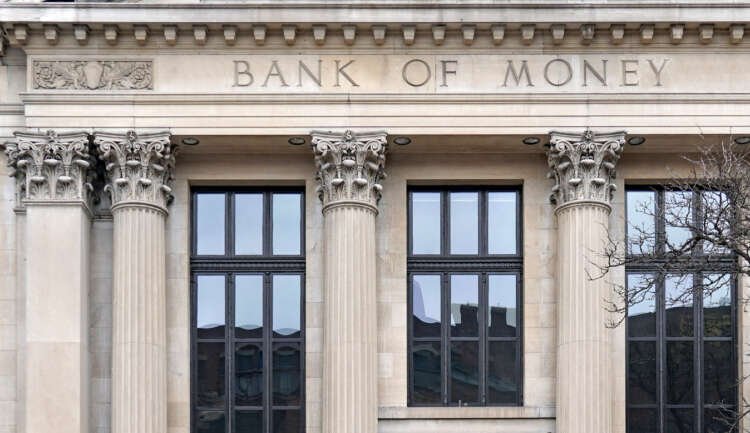
    Featured image for article about Banking

    By Rowan Brewer, Paymentology’s new CEO

    Traditional banks find themselves at a crossroads. One which will define their role for years and decades to come. Established financial institutions now face the challenge of keeping pace with both the capabilities and agility of a new generation of digital-first competitors. All whilst managing the added obligation of ensuring existing systems continue working, with no disruption.

    As a result, the role of banks has evolved at an unforgiving and exponential pace. A new report found that “89% of banks surveyed agree that COVID-19 accelerated the implementation of new technology for the banking sector by five years”. This, amidst the wave of digital banks and fintechs already beginning to leapfrog traditional institutions in terms of innovation, speed and capability, must come as a worrying omen for traditional banks.

    Born digital, newer market entrants are unencumbered by legacy processes large banks have abided since their inception. This has brought intense competition across the banking industry, urged on by a new era of customer-centricity and product granularity.

    Simply put; for banks, any opportunity for inertia has now evaporated. There is no choice but to embrace full-scale digital transformation. And, with it, harness the myriad business and societal benefits in the process. Or, face the very real threat of extinction.

    Of course, many banks have adopted some new technology, with varying levels of success. But, on an industry-level, systems overall remain far behind the technological standard immediately available to a fast-maturing neobank generation. A generation with an inherent ability to adapt, innovate and pivot – flexibly and quickly.

    Traditional banking systems – however you slice it, and however many incremental improvements you bolt on each year – remain largely built on the rails of decades-old technology, badly overdue a bottom-up rethink. However, many practices appear simply too deeply woven into the fabric of traditional banking systems to be migrated without perceived risk of a major disruption. Or at the very least, millions of miles of red tape.

    Thankfully, whilst challenging and admittedly far-reaching in scope, the process of full-scale digital modernisation, migration and optimisation, can be achieved smoothly, effectively, and – critically – while there is still time. In order for banks to achieve this crucial step-change, they must examine three critical components of their payment operations.

    First; the ability to issue cards and products in multiple regions. This is achieved largely through access to the best and most flexible API functionality, with which digitally native banks have carved out new USPs. For example, offering low to zero fees on services that big banks have historically used as valuable lines of revenue, such as international card-usage fees. Customers now have choice, and can use a range of challenger banks for specific needs, whilst cutting traditional banks out of the loop.

    The second to make the entire process as digital and data-rich as possible. Data is today’s most valuable business asset. Without the power to harvest, interpret and leverage key datasets in real time, businesses miss huge opportunities to use customer card-spend data to innovate products completely tailored to individuals and their specific needs. “Digital” no longer just means “online” or “in-app”. It requires harnessing customer-data to empower meaningful, decisive action.

    Lastly, banks must ensure they can execute their vision at scale, for millions of customers, 24/7, at the highest levels of security and reliability. Like neobanks, who must think ahead in terms of their processors’ ability to handle the volumes, volumes that sudden success and exponential-growth will require, traditional institutions need to adopt processors with the capacity and expertise to both migrate and scale their operations, smoothly.

    By embracing the infinite potential and opportunity of a next-gen payment platform – one with the best APIs, scalability, migration expertise and global reach – traditional banks need not fear their new challengers. Nor envy their opportunities, as there is still time. The only remaining barriers are vision and will.

    Related Posts
    DeFi and banking are converging. Here’s what banks can do.
    DeFi and banking are converging. Here’s what banks can do.
    Are Neo Banks Offering Better Metal Debit Cards Than Traditional Banks?
    Are Neo Banks Offering Better Metal Debit Cards Than Traditional Banks?
    Banking at the Intersection: From Nashville to Cannes, A Strategic Call to Action
    Banking at the Intersection: From Nashville to Cannes, A Strategic Call to Action
    Driving Efficiency and Profit Through Customer-Centric Banking
    Driving Efficiency and Profit Through Customer-Centric Banking
    How Ecosystem Partnerships Are Redefining Deposit Products
    How Ecosystem Partnerships Are Redefining Deposit Products
    CIBC Private Banking wins four 2025 Global Banking & Finance Awards
    CIBC Private Banking wins four 2025 Global Banking & Finance Awards
    How Banks Can Put AI to Work Now and Prove ROI in 90 Days
    How Banks Can Put AI to Work Now and Prove ROI in 90 Days
    Top 5 AI quality assurance framework providers for Banks and Financial Services firms.
    Top 5 AI quality assurance framework providers for Banks and Financial Services firms.
    The Unbanked Paradox: How Banking Access Creates Economic Resilience
    The Unbanked Paradox: How Banking Access Creates Economic Resilience
    Hyper-Personalised Banking - Shaping the Future of Finance
    Hyper-Personalised Banking - Shaping the Future of Finance
    The End of Voice Trust: How AI Deepfakes Are Forcing Banks to Rethink Authentication
    The End of Voice Trust: How AI Deepfakes Are Forcing Banks to Rethink Authentication
    Predicting and Preventing Customer Churn in Retail Banking
    Predicting and Preventing Customer Churn in Retail Banking

    Why waste money on news and opinions when you can access them for free?

    Take advantage of our newsletter subscription and stay informed on the go!

    Subscribe

    Previous Banking PostThe Future of Artificial Intelligence in Banking
    Next Banking PostFrom process to experience: the next frontier is engagement banking

    More from Banking

    Explore more articles in the Banking category

    Growth and Impact: Banreservas Leads Dominican Republic Economic Expansion

    Growth and Impact: Banreservas Leads Dominican Republic Economic Expansion

    Turning Insight into Impact: Making AI and Analytics Work in Retail Banking

    Turning Insight into Impact: Making AI and Analytics Work in Retail Banking

    KeyBank Embraces Next-Generation AI Platform to Transform Fraud and Financial Crime Prevention

    KeyBank Embraces Next-Generation AI Platform to Transform Fraud and Financial Crime Prevention

    Understanding Association Banking: Financial Solutions for Community Success

    Understanding Association Banking: Financial Solutions for Community Success

    Applying Symbiosis for advantage in APAC banking

    Applying Symbiosis for advantage in APAC banking

    AmBank Islamic Berhad Earns Triple Recognition for Excellence in Islamic Banking

    AmBank Islamic Berhad Earns Triple Recognition for Excellence in Islamic Banking

    FinTok Strategy: How Banks Are Reaching Gen Z Through Social Media

    FinTok Strategy: How Banks Are Reaching Gen Z Through Social Media

    Rethinking Retail Banking Sustainability: Why the ATM is an Asset in the Sustainable Transition

    Rethinking Retail Banking Sustainability: Why the ATM is an Asset in the Sustainable Transition

    How private banks can survive the neo-broker revolution

    How private banks can survive the neo-broker revolution

    Next-Gen Bank Branches: The Evolution from Transaction Hubs to Experience Centers

    Next-Gen Bank Branches: The Evolution from Transaction Hubs to Experience Centers

    The Banking Talent Crunch: How Financial Institutions Are Competing for Digital-Native Skills

    The Banking Talent Crunch: How Financial Institutions Are Competing for Digital-Native Skills

    Beyond Interest: How Banks Are Reimagining Revenue in the Digital Age

    Beyond Interest: How Banks Are Reimagining Revenue in the Digital Age

    View All Banking Posts