Search
00
GBAF Logo
trophy
Top StoriesInterviewsBusinessFinanceBankingTechnologyInvestingTradingVideosAwardsMagazinesHeadlinesTrends

Subscribe to our newsletter

Get the latest news and updates from our team.

Global Banking and Finance Review

Global Banking & Finance Review

Company

    GBAF Logo
    • About Us
    • Profile
    • Privacy & Cookie Policy
    • Terms of Use
    • Contact Us
    • Advertising
    • Submit Post
    • Latest News
    • Research Reports
    • Press Release
    • Awards▾
      • About the Awards
      • Awards TimeTable
      • Submit Nominations
      • Testimonials
      • Media Room
      • Award Winners
      • FAQ
    • Magazines▾
      • Global Banking & Finance Review Magazine Issue 79
      • Global Banking & Finance Review Magazine Issue 78
      • Global Banking & Finance Review Magazine Issue 77
      • Global Banking & Finance Review Magazine Issue 76
      • Global Banking & Finance Review Magazine Issue 75
      • Global Banking & Finance Review Magazine Issue 73
      • Global Banking & Finance Review Magazine Issue 71
      • Global Banking & Finance Review Magazine Issue 70
      • Global Banking & Finance Review Magazine Issue 69
      • Global Banking & Finance Review Magazine Issue 66
    Top StoriesInterviewsBusinessFinanceBankingTechnologyInvestingTradingVideosAwardsMagazinesHeadlinesTrends

    Global Banking & Finance Review® is a leading financial portal and online magazine offering News, Analysis, Opinion, Reviews, Interviews & Videos from the world of Banking, Finance, Business, Trading, Technology, Investing, Brokerage, Foreign Exchange, Tax & Legal, Islamic Finance, Asset & Wealth Management.
    Copyright © 2010-2025 GBAF Publications Ltd - All Rights Reserved.

    ;
    Editorial & Advertiser disclosure

    Global Banking and Finance Review is an online platform offering news, analysis, and opinion on the latest trends, developments, and innovations in the banking and finance industry worldwide. The platform covers a diverse range of topics, including banking, insurance, investment, wealth management, fintech, and regulatory issues. The website publishes news, press releases, opinion and advertorials on various financial organizations, products and services which are commissioned from various Companies, Organizations, PR agencies, Bloggers etc. These commissioned articles are commercial in nature. This is not to be considered as financial advice and should be considered only for information purposes. It does not reflect the views or opinion of our website and is not to be considered an endorsement or a recommendation. We cannot guarantee the accuracy or applicability of any information provided with respect to your individual or personal circumstances. Please seek Professional advice from a qualified professional before making any financial decisions. We link to various third-party websites, affiliate sales networks, and to our advertising partners websites. When you view or click on certain links available on our articles, our partners may compensate us for displaying the content to you or make a purchase or fill a form. This will not incur any additional charges to you. To make things simpler for you to identity or distinguish advertised or sponsored articles or links, you may consider all articles or links hosted on our site as a commercial article placement. We will not be responsible for any loss you may suffer as a result of any omission or inaccuracy on the website.

    Home > Trading > Trading Strategies
    Trading

    Trading Strategies

    Trading Strategies

    Published by linker 5

    Posted on September 23, 2020

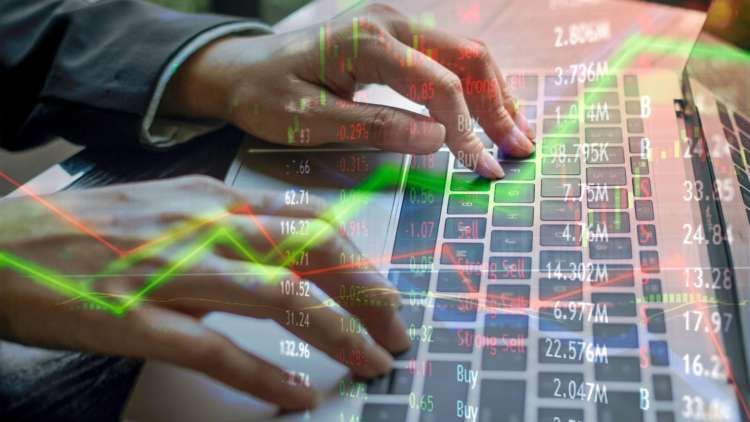
    Featured image for article about Trading

    By Paddy Osborn, Academic Dean, London Academy of Trading

    Whether you’re negotiating a business deal, playing a sport or trading financial markets, it’s vital that you have a plan. Top golfers will have a strategy to get around the course in the fewest number of shots possible, and without this plan, their score will undoubtedly be worse. It’s the same with trading. You can’t just open a trading account and trade off hunches and hopes. You need to create a structured and robust plan of attack. This will not only improve your profitability, but will also significantly reduce your stress levels during the decision-making process.

    In my opinion, there are four stages to any trading strategy.

    S – Set-up

    T – Trigger

    E – Execution

    M – Management

    Good trading performance STEMs from a structured trading process, so you should have one or more specific rules for each stage of this process.

    Before executing any trades, you need to decide on your criteria for making your trading decisions. Should you base your trades off fundamental analysis, or maybe political news or macroeconomic data? If so, then you need to understand these subjects and how markets react to specific news events.

    Alternatively, of course, there’s technical analysis, whereby you base your decisions off charts and previous price action, but again, you need a set of specific rules to enable you to trade with a consistent strategy. Many traders combine both fundamental and technical analysis to initiate their positions, which, I believe, has merit.

    Set-up

    What needs to happen for you to say “Ah, this looks interesting! Here’s a potential trade.”? It may be a news event, a major macro data announcement (such as interest rates, employment data or inflation), or a chart level breakout. The key ingredient throughout is to fix specific and measurable rules (not rough guidelines that can be over-ridden on a whim with an emotional decision). For me, I may take a view on the potential direction of an asset (i.e. whether to be long or short) through fundamental analysis, but the actual execution of the trade is always technical, based off a very specific set of rules.

    To take a simple example, let’s assume an asset has been trending higher, but has stopped at a certain price, let’s say 150. The chart is telling us that, although buyers are in long-term control, sellers are dominant at 150, willing to sell each time the price touches this level. However, the uptrend may still be in place, since each time the price pulls back from the 150 level, the selling is weaker and the price makes a higher short-term low. This clearly suggests that upward pressure remains, and there’s potential to profit from the uptrend if the price breaks higher.

    Trigger

    Once you’ve found a potential new trade set-up, the next step is to decide when to pull the trigger on the trade. However, there are two steps to this process… finger on trigger, then pull the trigger to execute.

    Paddy Osborn

    Paddy Osborn

    Continuing the example above, the trigger would be to buy if the price breaks above the resistance level at 150. This would indicate that the sellers at 150 have been exhausted, and the buyers have re-established control of the uptrend.  Also, it is often the case that after pause in a trend such as this, the pent-up buying returns and the price surges higher. So the trigger for this trade is a breakout above 150.

    Execution

    We have a finger on the trigger, but now we need to decide when to squeeze it. What if the price touches 150.10 for 10 seconds only? Has our resistance level broken sufficiently to execute the trade? I’d say not, so you need to set rules to define exactly how far the price needs to break above 150 – or for how long it needs to stay above 150 – for you to execute the trade. You’re basically looking for sufficient evidence that the uptrend is continuing. Of course, the higher the price goes (or the longer it stays above 150), the more confident you can be that the breakout is valid, but the higher price you will need to pay. There’s no perfect solution to this decision, and it depends on many things, such as the amount of other supporting evidence that you have, your levels of aggression, and so on. The critical point here is to fix a set of specific rules and stick to those rules every time.

    Management

    Good trade management can save a bad trade, while poor trade management can turn an excellent trade entry into a loser. I could talk for days about in-trade management, since there are many different methods you can use, but the essential ingredient for every trade is a stop loss. This is an order to exit your position for a loss if the market doesn’t perform as expected. By setting a stop loss, you can fix your maximum risk on a trade, which is essential to preserving your capital and managing your overall risk limits. Some traders set their stop loss and target levels and let the trade run to its conclusion, while others manage their trades more actively, trailing stop losses, taking interim profits, or even adding to winning positions. No matter how you decide to manage each trade, it must be the same every time, following a structured and robust process.

    Review

    The final step in the process is to review every trade to see if you can learn anything, particularly from your losing trades. Are you sticking to your trading rules? Could you have done better? Should you have done the trade in the first place? Only by doing these reviews will you discover any patterns of errors in your trading, and hence be able to put them right. In this way, it’s possible to monitor the success of your strategy. If your trades are random and emotional, with lots of manual intervention, then there’s no fixed process for you to review. You also need to be honest with yourself, and face up to your bad decisions in order to learn from them.

    In this way, using a structured and robust trading strategy, you’ll be able to develop your trading skills – and your profits – without the stress of a more random approach.

    Related Posts
    What Is a Liquidity Provider – And Why Modern Brokers Can’t Function Without One
    What Is a Liquidity Provider – And Why Modern Brokers Can’t Function Without One
    OneFunded: Prop Firm Overview and Program Structure
    OneFunded: Prop Firm Overview and Program Structure
    What if You Can Actually Chat with Your Crypto Wallet?
    What if You Can Actually Chat with Your Crypto Wallet?
    The Growing Importance of Choosing the Right Crypto Broker in 2025
    The Growing Importance of Choosing the Right Crypto Broker in 2025
    The Rise of Algorithmic Trading Among Retail Investors in the UK
    The Rise of Algorithmic Trading Among Retail Investors in the UK
    Forex Trading for the 9-to-5er: A Realistic Path to a Second Income
    Forex Trading for the 9-to-5er: A Realistic Path to a Second Income
    Quality Matters: ZiNRai’s Focus on Empowering Traders with Precision and Purpose
    Quality Matters: ZiNRai’s Focus on Empowering Traders with Precision and Purpose
    MiCA Regulations and the Legal Requirements for Crypto Presales and Token Offerings in the European Union
    MiCA Regulations and the Legal Requirements for Crypto Presales and Token Offerings in the European Union
    Top Ways Forex Traders Benefit From Peer-to-Peer Learning
    Top Ways Forex Traders Benefit From Peer-to-Peer Learning
    Why High Leverage Remains Attractive to Forex Traders Worldwide
    Why High Leverage Remains Attractive to Forex Traders Worldwide
    XDC Network’s ETP Listing Signals the Maturing Convergence of Blockchain and Trade Finance
    XDC Network’s ETP Listing Signals the Maturing Convergence of Blockchain and Trade Finance
    Inside the Perp DEX Landscape: How Platforms Like Grvt and Hyperliquid Are Shaping Their Long-Term Vision
    Inside the Perp DEX Landscape: How Platforms Like Grvt and Hyperliquid Are Shaping Their Long-Term Vision

    Why waste money on news and opinions when you can access them for free?

    Take advantage of our newsletter subscription and stay informed on the go!

    Subscribe

    Previous Trading PostHow has the online trading landscape changed in 2020?
    Next Trading PostEconomic recovery likely to prove a ‘stuttering’ affair

    More from Trading

    Explore more articles in the Trading category

    Blending Theory and Practice: Building Stronger Forex Strategies

    Blending Theory and Practice: Building Stronger Forex Strategies

    Strategies for Professional CFD Traders: Tools and Company Support

    Strategies for Professional CFD Traders: Tools and Company Support

    Trust as the Cornerstone of Capital Markets

    Trust as the Cornerstone of Capital Markets

    UK Investors Reassess Trading Venues as Liquidity Shifts

    UK Investors Reassess Trading Venues as Liquidity Shifts

    Bitcoin Price Live: What Factors Influence Its Value?

    Bitcoin Price Live: What Factors Influence Its Value?

    Offshore Forex Brokers vs. U.S.-Regulated Brokers: A Risk Assessment

    Offshore Forex Brokers vs. U.S.-Regulated Brokers: A Risk Assessment

    The Broker Expo, Its Role in the Small Business World, and Everest Business Funding’s Role as Sponsor

    The Broker Expo, Its Role in the Small Business World, and Everest Business Funding’s Role as Sponsor

    Finding Your Edge with a Crypto-First Prop Firm

    Finding Your Edge with a Crypto-First Prop Firm

    Evaluating the Most Reliable Tools for Tracking Real-Time Cryptocurrency Prices

    Evaluating the Most Reliable Tools for Tracking Real-Time Cryptocurrency Prices

    MT5 vs MT4: Why More Brokers Are Moving to MetaTrader 5

    MT5 vs MT4: Why More Brokers Are Moving to MetaTrader 5

    From Central Banks to Retail Traders: Who Drives the Forex Market?

    From Central Banks to Retail Traders: Who Drives the Forex Market?

    Building a Winning Forex Portfolio: Tools and Resources You Can’t Ignore

    Building a Winning Forex Portfolio: Tools and Resources You Can’t Ignore

    View All Trading Posts