Search
00
GBAF Logo
trophy
Top StoriesInterviewsBusinessFinanceBankingTechnologyInvestingTradingVideosAwardsMagazinesHeadlinesTrends

Subscribe to our newsletter

Get the latest news and updates from our team.

Global Banking & Finance Review®

Global Banking & Finance Review® - Subscribe to our newsletter

Company

    GBAF Logo
    • About Us
    • Profile
    • Privacy & Cookie Policy
    • Terms of Use
    • Contact Us
    • Advertising
    • Submit Post
    • Latest News
    • Research Reports
    • Press Release
    • Awards▾
      • About the Awards
      • Awards TimeTable
      • Submit Nominations
      • Testimonials
      • Media Room
      • Award Winners
      • FAQ
    • Magazines▾
      • Global Banking & Finance Review Magazine Issue 79
      • Global Banking & Finance Review Magazine Issue 78
      • Global Banking & Finance Review Magazine Issue 77
      • Global Banking & Finance Review Magazine Issue 76
      • Global Banking & Finance Review Magazine Issue 75
      • Global Banking & Finance Review Magazine Issue 73
      • Global Banking & Finance Review Magazine Issue 71
      • Global Banking & Finance Review Magazine Issue 70
      • Global Banking & Finance Review Magazine Issue 69
      • Global Banking & Finance Review Magazine Issue 66
    Top StoriesInterviewsBusinessFinanceBankingTechnologyInvestingTradingVideosAwardsMagazinesHeadlinesTrends

    Global Banking & Finance Review® is a leading financial portal and online magazine offering News, Analysis, Opinion, Reviews, Interviews & Videos from the world of Banking, Finance, Business, Trading, Technology, Investing, Brokerage, Foreign Exchange, Tax & Legal, Islamic Finance, Asset & Wealth Management.
    Copyright © 2010-2026 GBAF Publications Ltd - All Rights Reserved. | Sitemap | Tags | Developed By eCorpIT

    Editorial & Advertiser disclosure

    Global Banking & Finance Review® is an online platform offering news, analysis, and opinion on the latest trends, developments, and innovations in the banking and finance industry worldwide. The platform covers a diverse range of topics, including banking, insurance, investment, wealth management, fintech, and regulatory issues. The website publishes news, press releases, opinion and advertorials on various financial organizations, products and services which are commissioned from various Companies, Organizations, PR agencies, Bloggers etc. These commissioned articles are commercial in nature. This is not to be considered as financial advice and should be considered only for information purposes. It does not reflect the views or opinion of our website and is not to be considered an endorsement or a recommendation. We cannot guarantee the accuracy or applicability of any information provided with respect to your individual or personal circumstances. Please seek Professional advice from a qualified professional before making any financial decisions. We link to various third-party websites, affiliate sales networks, and to our advertising partners websites. When you view or click on certain links available on our articles, our partners may compensate us for displaying the content to you or make a purchase or fill a form. This will not incur any additional charges to you. To make things simpler for you to identity or distinguish advertised or sponsored articles or links, you may consider all articles or links hosted on our site as a commercial article placement. We will not be responsible for any loss you may suffer as a result of any omission or inaccuracy on the website.

    Home > Banking > Timeline: Decline and near fall of Italy’s Monte dei Paschi, the world’s oldest bank
    Banking

    Timeline: Decline and near fall of Italy’s Monte dei Paschi, the world’s oldest bank

    Published by maria gbaf

    Posted on August 20, 2021

    10 min read

    Last updated: January 21, 2026

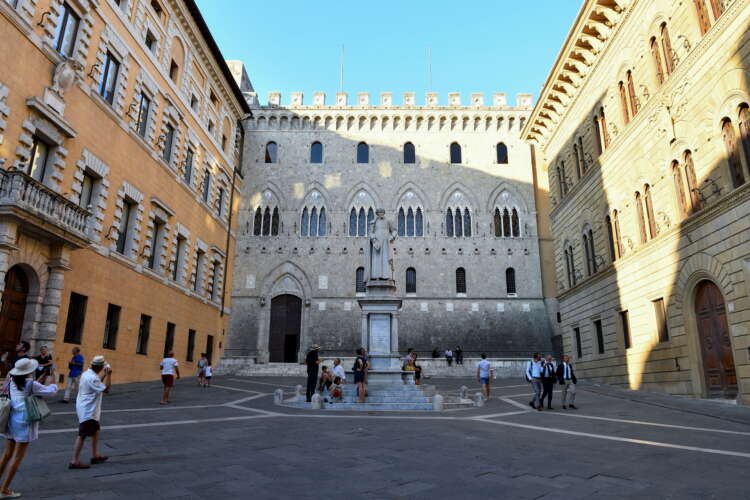
    This image illustrates the timeline of Monte dei Paschi's decline, detailing key events in its financial struggles and government interventions, highlighting its role in Italy's banking crisis.
    Historical timeline of Monte dei Paschi's decline and rescue efforts - Global Banking & Finance Review
    Why waste money on news and opinion when you can access them for free?

    Take advantage of our newsletter subscription and stay informed on the go!

    Subscribe

    MILAN (Reuters) – Four years after spending 5.4 billion euros ($6.3 billion) to rescue it, Rome is in talks to sell Monte dei Paschi to UniCredit and cut its 64% stake in the Tuscan bank.

    Here is a timeline of key events in the recent history of Monte dei Paschi (MPS), which have made it the epitome of Italy’s banking nightmare.

    NOVEMBER 2007 – MPS buys Antonveneta from Santander for 9 billion euros in cash, just months after the Spanish bank paid 6.6 billion euros for the Italian regional lender.

    JANUARY 2008 – MPS announces a 5 billion euros rights issue, a 1 billion euro convertible financial instrument called Fresh 2008, 2 billion euros in subordinated, hybrid capital bonds and a 1.95 billion euro bridge loan to fund the Antonveneta deal.

    MARCH 2008 – The Bank of Italy, led by Mario Draghi, approves the Antonveneta takeover subject to MPS rebuilding its capital.

    MARCH 2009 – MPS sells 1.9 billion euros in special bonds to Italy’s Treasury to shore up its finances.

    JULY 2011 – MPS raises 2.15 billion euros in a rights issue ahead of European stress test results.

    SEPTEMBER 2011 – The Bank of Italy provides 6 billion euros in emergency liquidity to MPS through repo deals as the euro zone sovereign debt crisis escalates.

    DECEMBER 2011 – The European Banking Authority sets MPS’ capital shortfall at 3.267 billion euros as part of a general recommendation to 71 lenders to boost their capital reserves.

    FEBRUARY 2012 – MPS cuts its capital needs by 1 billion euros by converting hybrid capital instruments into shares.

    MARCH 2012 – MPS posts a 4.7 billion euro 2011 loss after billions of goodwill writedowns on deals including Antonveneta.

    MAY 2012 – Italian police search MPS headquarters as prosecutors investigate whether it misled regulators over the Antonveneta acquisition.

    JUNE 2012 – MPS says it needs 1.3 billion euros in capital to comply with EBA’s recommendation.

    JUNE 2012 – MPS asks Italy’s Treasury to underwrite up to another 2 billion euros in special bonds.

    OCTOBER 2012 – Shareholders approve a 1 billion euro share issue aimed at new investors.

    FEBRUARY 2013 – MPS says losses stemming from three 2006-09 derivatives trades amount to 730 million euros.

    MARCH 2013 – MPS loses 3.17 billion euros in 2012, hit by plunging prices on its large Italian government bond holdings.

    MARCH 2014 – MPS posts 2013 net loss of 1.44 billion euros.

    JUNE 2014 – MPS raises 5 billion euros in a deeply discounted rights issue and repays the state 3.1 billion euros.

    OCTOBER 2014 – MPS emerges as the worst performer in Europe-wide stress tests with a capital shortfall of 2.1 billion euros.

    OCTOBER 2014 – The former MPS chairman, chief executive and finance chief are sentenced to three-and-a-half years in jail after being found guilty of misleading regulators.

    NOVEMBER 2014 – MPS plans to raise up to 2.5 billion euros after stress tests results.

    JUNE 2015 – MPS raises 3 billion euros in cash having upped the size of its rights issue after posting a 5.3 billion euro net loss for 2014 on record bad loan writedowns. It repays the remaining 1.1 billion euro state underwritten special bond.

    JULY 2016 – MPS announces a new 5 billion euro rights issue and plans to offload 28 billion euros in bad loans as European bank stress tests show it would have negative equity in a slump.

    DECEMBER 2016 – MPS turns to the state for help under a precautionary recapitalisation scheme after its cash call fails. The ECB sets the bank’s capital needs at 8.8 billion euros.

    JULY 2017 – After the ECB declares MPS solvent, the EU Commission clears the bailout at a cost of 5.4 billion euros for the state in return for a 68% stake. Private investors contribute 2.8 billion euros for a total of 8.2 billion.

    FEBRUARY 2018 – MPS swings to profit in 2018 but says its updated projections are below EU agreed restructuring targets.

    OCTOBER 2018 – MPS completes Europe’s biggest bad loan securitisation deal, shedding 24 billion euros in bad debts.

    FEBRUARY 2020 – MPS posts 1 billion euro 2019 loss.

    MAY 2020 – CEO Marco Morelli steps down urging Rome to secure a partner for MPS as soon as possible. He is replaced by 5-Star backed Guido Bastianini.

    AUGUST 2020 – Italy sets aside 1.5 billion euros to help MPS as it works to meet a mid-2022 re-privatisation deadline.

    OCTOBER 2020 – MPS shareholders approve a state-sponsored plan to cut soured loans to 4.3% of total lending. Italy’s stake falls to 64% as a decree paves the way for its sale.

    OCTOBER 2020 – A Milan court convicts MPS’ former CEO and chairman for false accounting in a surprise decision that forces MPS to boost legal risk provisions.

    DECEMBER 2020 – MPS says it needs up to 2.5 billion euros in capital.

    DECEMBER 2020 – Italy approves tax incentives for bank mergers entailing a 2.3 billion euro benefit for an MPS buyer.

    JANUARY 2021 – MPS says to open its books to potential partners.

    FEBRUARY 2021 – MPS posts 1.69 billion euro loss for 2020.

    APRIL 2021 – Andrea Orcel takes over as UniCredit CEO.

    JULY 2021 – UniCredit enters exclusive talks with Italy’s Treasury to buy “selected parts” of MPS, a day before European banking stress test results show the smaller bank’s capital would be wiped out in a slump.

    ($1 = 0.8527 euros)

    (Reporting by Valentina Za; Editing by Alexander Smith)

    MILAN (Reuters) – Four years after spending 5.4 billion euros ($6.3 billion) to rescue it, Rome is in talks to sell Monte dei Paschi to UniCredit and cut its 64% stake in the Tuscan bank.

    Here is a timeline of key events in the recent history of Monte dei Paschi (MPS), which have made it the epitome of Italy’s banking nightmare.

    NOVEMBER 2007 – MPS buys Antonveneta from Santander for 9 billion euros in cash, just months after the Spanish bank paid 6.6 billion euros for the Italian regional lender.

    JANUARY 2008 – MPS announces a 5 billion euros rights issue, a 1 billion euro convertible financial instrument called Fresh 2008, 2 billion euros in subordinated, hybrid capital bonds and a 1.95 billion euro bridge loan to fund the Antonveneta deal.

    MARCH 2008 – The Bank of Italy, led by Mario Draghi, approves the Antonveneta takeover subject to MPS rebuilding its capital.

    MARCH 2009 – MPS sells 1.9 billion euros in special bonds to Italy’s Treasury to shore up its finances.

    JULY 2011 – MPS raises 2.15 billion euros in a rights issue ahead of European stress test results.

    SEPTEMBER 2011 – The Bank of Italy provides 6 billion euros in emergency liquidity to MPS through repo deals as the euro zone sovereign debt crisis escalates.

    DECEMBER 2011 – The European Banking Authority sets MPS’ capital shortfall at 3.267 billion euros as part of a general recommendation to 71 lenders to boost their capital reserves.

    FEBRUARY 2012 – MPS cuts its capital needs by 1 billion euros by converting hybrid capital instruments into shares.

    MARCH 2012 – MPS posts a 4.7 billion euro 2011 loss after billions of goodwill writedowns on deals including Antonveneta.

    MAY 2012 – Italian police search MPS headquarters as prosecutors investigate whether it misled regulators over the Antonveneta acquisition.

    JUNE 2012 – MPS says it needs 1.3 billion euros in capital to comply with EBA’s recommendation.

    JUNE 2012 – MPS asks Italy’s Treasury to underwrite up to another 2 billion euros in special bonds.

    OCTOBER 2012 – Shareholders approve a 1 billion euro share issue aimed at new investors.

    FEBRUARY 2013 – MPS says losses stemming from three 2006-09 derivatives trades amount to 730 million euros.

    MARCH 2013 – MPS loses 3.17 billion euros in 2012, hit by plunging prices on its large Italian government bond holdings.

    MARCH 2014 – MPS posts 2013 net loss of 1.44 billion euros.

    JUNE 2014 – MPS raises 5 billion euros in a deeply discounted rights issue and repays the state 3.1 billion euros.

    OCTOBER 2014 – MPS emerges as the worst performer in Europe-wide stress tests with a capital shortfall of 2.1 billion euros.

    OCTOBER 2014 – The former MPS chairman, chief executive and finance chief are sentenced to three-and-a-half years in jail after being found guilty of misleading regulators.

    NOVEMBER 2014 – MPS plans to raise up to 2.5 billion euros after stress tests results.

    JUNE 2015 – MPS raises 3 billion euros in cash having upped the size of its rights issue after posting a 5.3 billion euro net loss for 2014 on record bad loan writedowns. It repays the remaining 1.1 billion euro state underwritten special bond.

    JULY 2016 – MPS announces a new 5 billion euro rights issue and plans to offload 28 billion euros in bad loans as European bank stress tests show it would have negative equity in a slump.

    DECEMBER 2016 – MPS turns to the state for help under a precautionary recapitalisation scheme after its cash call fails. The ECB sets the bank’s capital needs at 8.8 billion euros.

    JULY 2017 – After the ECB declares MPS solvent, the EU Commission clears the bailout at a cost of 5.4 billion euros for the state in return for a 68% stake. Private investors contribute 2.8 billion euros for a total of 8.2 billion.

    FEBRUARY 2018 – MPS swings to profit in 2018 but says its updated projections are below EU agreed restructuring targets.

    OCTOBER 2018 – MPS completes Europe’s biggest bad loan securitisation deal, shedding 24 billion euros in bad debts.

    FEBRUARY 2020 – MPS posts 1 billion euro 2019 loss.

    MAY 2020 – CEO Marco Morelli steps down urging Rome to secure a partner for MPS as soon as possible. He is replaced by 5-Star backed Guido Bastianini.

    AUGUST 2020 – Italy sets aside 1.5 billion euros to help MPS as it works to meet a mid-2022 re-privatisation deadline.

    OCTOBER 2020 – MPS shareholders approve a state-sponsored plan to cut soured loans to 4.3% of total lending. Italy’s stake falls to 64% as a decree paves the way for its sale.

    OCTOBER 2020 – A Milan court convicts MPS’ former CEO and chairman for false accounting in a surprise decision that forces MPS to boost legal risk provisions.

    DECEMBER 2020 – MPS says it needs up to 2.5 billion euros in capital.

    DECEMBER 2020 – Italy approves tax incentives for bank mergers entailing a 2.3 billion euro benefit for an MPS buyer.

    JANUARY 2021 – MPS says to open its books to potential partners.

    FEBRUARY 2021 – MPS posts 1.69 billion euro loss for 2020.

    APRIL 2021 – Andrea Orcel takes over as UniCredit CEO.

    JULY 2021 – UniCredit enters exclusive talks with Italy’s Treasury to buy “selected parts” of MPS, a day before European banking stress test results show the smaller bank’s capital would be wiped out in a slump.

    ($1 = 0.8527 euros)

    (Reporting by Valentina Za; Editing by Alexander Smith)

    More from Banking

    Explore more articles in the Banking category

    Image for Latin Securities Named Winner of Two Prestigious 2026 Global Banking & Finance Awards
    Latin Securities Named Winner of Two Prestigious 2026 Global Banking & Finance Awards
    Image for Pix at five years: how Brazil built one of the world’s most advanced public payments infrastructures - and why other countries are paying attention
    Pix at five years: how Brazil built one of the world’s most advanced public payments infrastructures - and why other countries are paying attention
    Image for Idle Stablecoins Are Becoming a Systemic Efficiency Problem — and Banks Should Pay Attention
    Idle Stablecoins Are Becoming a Systemic Efficiency Problem — and Banks Should Pay Attention
    Image for Banking Without Boundaries: A More Practical Approach to Global Banking
    Banking Without Boundaries: A More Practical Approach to Global Banking
    Image for Lessons From the Ring and the Deal Table: How Boxing Shapes Steven Nigro’s Approach to Banking and Life
    Lessons From the Ring and the Deal Table: How Boxing Shapes Steven Nigro’s Approach to Banking and Life
    Image for The Key to Unlocking ROI from GenAI
    The Key to Unlocking ROI from GenAI
    Image for The Changing Landscape of Small Business Lending: What Traditional Finance Models Miss
    The Changing Landscape of Small Business Lending: What Traditional Finance Models Miss
    Image for VestoFX.net Expands Education-Oriented Content as Focus on Risk Awareness Grows in CFD Trading
    VestoFX.net Expands Education-Oriented Content as Focus on Risk Awareness Grows in CFD Trading
    Image for The Hybrid Banking Model That Digital-Only Providers Cannot Match
    The Hybrid Banking Model That Digital-Only Providers Cannot Match
    Image for INTERPOLITAN MONEY ANNOUNCES RECORD GROWTH ACROSS 2025
    INTERPOLITAN MONEY ANNOUNCES RECORD GROWTH ACROSS 2025
    Image for Alter Bank Wins Two Prestigious Awards in the 2025 Global Banking & Finance Awards®
    Alter Bank Wins Two Prestigious Awards in the 2025 Global Banking & Finance Awards®
    Image for CIBC wins two Global Banking and Finance Awards for student banking
    CIBC wins two Global Banking and Finance Awards for student banking
    View All Banking Posts
    Previous Banking PostIran urges Japan to release billions in blocked funds amid U.S. sanctions
    Next Banking PostSri Lanka becomes first in Asia to tighten policy in pandemic-era