
By Larry Kotch, the co-founder of The Brains
While we might think of entrepreneurs, CEOs and business leaders as confident and secure, nothing in life is so black and white. We all have histories, insecurities and battles we’re fighting.
When it comes to mental health, entrepreneurs face the same challenges. In fact, many sources claim they’re at an increased risk. 72% of entrepreneurs are directly, or indirectly, affected by mental health issues, with 32% suffering with two or more mental health conditions. This isn’t discussed enough, which is a pity – a more open dialogue on this topic would assure business leaders that mental health struggles aren’t an impediment to success – they’re just something we all need to work with.
Panic Disorder: My Personal Battle
I founded my company, a leading digital marketing agency, in 2016. For years before that, however, I had struggled with a condition known as Panic Disorder. This disorder manifests in sudden, unanticipated and intense panic attacks, which can occur multiple times a day. Many people with Panic Disorder suffer symptoms ranging from sweating and trembling to derealisation and a fear of losing control – or a belief that you might actually be going crazy. If you don’t know what’s happening to you, it can be a terrifying experience. In the UK, the prevalence of panic disorder stands at roughly 1.70%, and in the USA, rates stand at 1.5-5%.
I suffered my first panic attack at the age of 21. The experience was overwhelming, and lasted twelve hours. As I’d never experienced anything like it before, it was terrifying and confusing. Of course, I’d heard of panic attacks, but when you’re in the midst of one, it’s hard to be rational and recall – you simply think something is seriously wrong.
For the next twelve months, I experienced daily panic attacks, often waking up in the middle of the night experiencing one. My sleep was affected and I survived off four hours a night. I wondered if I was going mad, and experienced periods of extremely high anxiety. This began to impact every area of my life, particularly work. I found it hard to focus, due to a combination of sleep deprivation and worrying about when my next panic attack would strike.
The Impact of Panic Disorder on My Working Life
As important as my work was to me, I was forced to take time off. I lived in near constant fear of another panic attack, and became convinced that the panic attacks were being brought on by my own life choices – perhaps I was under too much pressure at work, or I wasn’t spending enough time with my family. Unfortunately, these thoughts simply led to more guilt and further panic attacks.
As time went by, I also began to develop agoraphobia or claustrophobia – I had a real fear of being confined. This led to further problems, as if ever I was stuck on the underground or in a lift, I became terrified. Eventually, the same thing began happening with cars, buses and trains. At this point, I knew it was time to seek help. I didn’t want whatever I was experiencing to take over my life completely.
How CBT and Mindfulness Meditation Helped Me Succeed as an Entrepreneur
I tried a few therapists, but unfortunately, their way of working didn’t seem to resonate with me. Finally, I was able to get help from a CBT practitioner. They seriously changed my life, and helped me understand what I’d been experiencing. They were also able to reassure me that I wasn’t alone.
My therapist showed me that anxiety disorders were entirely natural, and quite common. They helped to put everything into perspective – I was worried that my panic attacks would inevitably lead to further mental health issues down the road, but I was reassured that a panic attack says nothing about your potential for longer-term mental health concerns. Eventually, with the help of my therapist, I was able to separate my sense of self-worth from the panic attacks, realising they said nothing about me as a person. The change was remarkable – the number of panic attacks I experienced drastically reduced and I was able to focus at work again, taking stress in my stride.
CBT was just one of the tools that helped me recover. I was also introduced to mindfulness meditation, which taught me that in life, most of us try to manipulate the world to be more in line with what we want – the vision of life we deem to be more worthy or successful. With this mindset, we’re constantly living in the future, believing that once we achieve something (whether it be a weight loss goal, a career goal or a financial goal) we’ll finally be happy. The reality, though, is that once you reach that goal, you’ll want more. We always will, because we’re human. Mindfulness helped me get into the mindspace of ‘what I have now makes me happy’ – it was a form of introspection that helped me to see that whatever I have right now is all I will ever need to be truly happy.
How My Experienced Spurred On My Ambition
Once I refocused my energies on what was making me happy in the present moment, I was finally able to delve back into work. I began to enjoy my work again, and found real reward and satisfaction in the processes involved. By changing my mindset, I was more able to focus, which ultimately made me more productive and successful. I was throwing myself into work not because of a potential reward, but because the work itself was the reward.
Ultimately, I was able to truly and intrinsically enjoy my work, without worrying about society’s expectations of what I should be doing and who I should be. I was still nonetheless ambitious, but that ambition derived from my love of the process and the nature of the work, rather than from the expectations of a massive pay-off. Everything I went through helped me to prioritise what I really wanted out of my career, which resulted in less stress and better mental health overall.
Where I am Today
Through my struggles, I managed to co-found a leading digital marketing company in London. We now lead a team of dedicated, remote digital marketers across a range of specialisms, including PPC, lead generation, content marketing, SEO, design and paid social. I was lucky enough to be included in B2B Marketing’s Global 30 under 30 and, more importantly, I’m doing what I enjoy.
Mental health is something that needs to be discussed more often, particularly with regards to business leaders – we take on a lot and deal with so much, but ultimately we’re dealing with the same pressures and strains. What matters is that you discuss it openly, get the help you need and begin to enjoy work, and life, again.
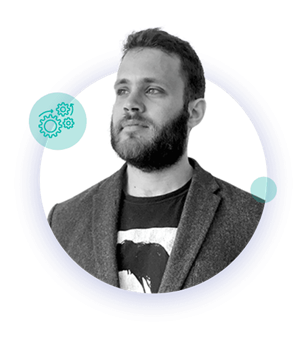
Larry Kotch, the co-founder of The Brains
About the Author: Larry Kotch is the co-founder of The Brains, an award-winning digital marketing agency. Ranked #3 in B2B Marketing’s Global 30 under 30, Larry leads a dedicated, remote team of talented digital marketing professionals.