Business
The Palessi Principle: What Payless Shoes taught us about turning perception into profit
Published by Barnali Pal Sinha
Posted on March 31, 2026
8 min readLast updated: March 31, 2026
Add as preferred source on Google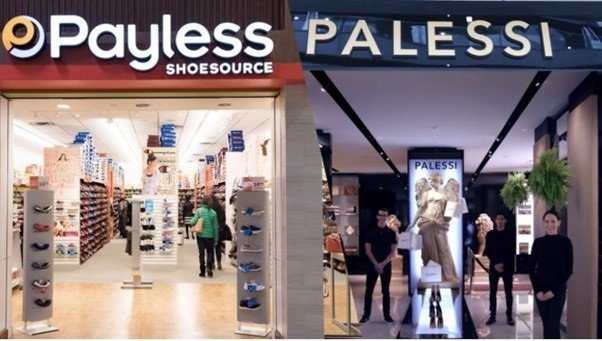
Published by Barnali Pal Sinha
Posted on March 31, 2026
8 min readLast updated: March 31, 2026
Add as preferred source on GoogleBy Bill Harper
Most brands aren't undervalued because the product is weak. They're undervalued because the positioning is a confession.
Picture this.
You're standing inside a sleek Santa Monica boutique. Marble floors. Ambient lighting. The walls hold maybe twenty pieces - because scarcity is the first language of luxury. A sales associate hands you a pair of shoes and tells you this is the season's most refined silhouette. You turn them over. The leather catches the light. The stitching is clean. The price tag reads $450.
You buy them. You tell your friend they're sophisticated. You use the word craftsmanship.
Here's what turns out to be true: those shoes were made by Payless. The exact same shoes sitting in strip mall bins for $19.99. And you - a self-identified fashion person - just paid $640 for them, called them luxurious, and meant it.
That's not a thought experiment. That happened. In 2018. On camera.
The Palessi Principle
In November 2018, Payless Shoe Source rented a former Armani store in Santa Monica, staged it as a fictional luxury brand called Palessi, and invited real fashion influencers to an exclusive opening event. Standard Payless shoes - retail: $20 to $40 - were priced between $200 and $640. The attendees didn't just accept the prices. They defended them. "I can see the quality." "It's sophisticated. Expensive-looking." One pair sold for $640. The store generated roughly $3,000 before the reveal. Every guest was refunded.
What Payless proved that night is what I call The Palessi Principle: the product didn't change. The positioning did. And the market responded to the positioning.
The price didn't reflect the shoes. The price reflected the story being told about the shoes. And the story was told through marble, light, scarcity, location, and a name that ended in a vowel.
Now you're probably thinking: that's a clever stunt, but it's not real brand strategy. Influencers getting tricked at a fake store is not the same as sustained market perception. That's a fair challenge. But here's what the experiment actually reveals - and why it matters beyond the prank.
The Value Signal Stack
The brain doesn't evaluate a product and then assign a price. It works in the opposite direction. The reason people in that room called those $20 shoes sophisticated is that their brains had already processed the environment - the lighting, the spacing, the address, the invitation - and had formed a value expectation. Then they picked up the shoe. The product was experienced through that expectation, not independently of it.
I call this the Value Signal Stack - the layered set of environmental, visual, social, and contextual cues that tell a buyer what your product is worth before they ever touch it. Every brand has one. The question is never whether you have a Value Signal Stack. The question is whether yours is working for you or against you.
This is where most businesses make a catastrophic mistake. Instead of asking "what signals are we sending?", they invest in the product and hope the market figures out the value on its own. It doesn't. The market reads your signals and prices you accordingly. When your signals say ordinary, the market says ordinary back - and no amount of product quality overrides it.
But here's where this goes from interesting to urgent. The Zara story proves The Palessi Principle doesn't just work in a controlled experiment. It works at $39 billion in annual revenue. And it's happening right now.
Zara and The Positioning Floor
For most of its history, Zara owned what I call The Positioning Floor - the invisible ceiling your own brand signals place on what the market will pay you. Zara's floor was set by the fast fashion label: affordable, disposable, trend-chasing. That floor wasn't just a perception problem. It was a revenue cap. Every price increase, every quality improvement, every editorial campaign bumped against it, because the brand's signals still said cheap.
In 2022, Marta Ortega became chair of Inditex. What she did next was not a rebrand. There were no new logos, no relaunch events, no brand manifestos. Instead, she went to work on the Value Signal Stack - systematically replacing every signal that said fast fashion with one that said fashion house.
Here's the exact playbook:
She recruited from the right rooms. In 2022, Narciso Rodriguez - whose designs have appeared on Michelle Obama - launched a capsule collection with Zara. In 2024, Stefano Pilati, former creative director of Saint Laurent, designed a limited collection shot with Gisele Bündchen. In 2025: Ludovic de Saint Sernin, then the LVMH Prize winner Soshiotsuki. Each name sent one signal: people who could work anywhere chose us.
She bought the right addresses. Zara's Paris flagship moved into the former home of The Conran Shop - a beloved luxury institution on Rue du Bac. Neuroscience research on spatial memory shows the brain doesn't cleanly separate a location from its history. Parisians who associated that corner with refinement carried that association into every Zara visit that followed. Simultaneously, Inditex closed roughly 9% of its total retail footprint - eliminating smaller, lower-signal locations while expanding flagship stores.
She made the camera say something different. For Zara's 50th anniversary in 2025, the brand commissioned legendary photographer Steven Meisel and assembled 50 of the world's top models - Naomi Campbell, Cindy Crawford, Carla Bruni, Amber Valletta, Irina Shayk. This wasn't a catalogue shoot. This was a declaration that Zara's visual language now belongs next to houses on Avenue Montaigne.
She raised prices and didn't apologize for them. Consistently. Backed by every signal above, the higher prices didn't alienate customers - they felt justified. Because the Value Signal Stack had already told customers what to expect.
The Results Are Not Subtle
Zara ended 2024 with revenue growth of +7.5% - while traditional fashion houses were losing ground to Shein and Temu. The consumers who once dismissed Zara as disposable fashion now queue at its flagships. One industry publication put it plainly: "Even the snootiest ones line up at its checkouts."
The supply chain didn't change. The factories didn't change. The product quality trajectory was real, yet it was always real. What changed was every signal telling the market what Zara was worth. And the market - exactly like the influencers in that Santa Monica boutique - responded to the signals it was given.
Now you're thinking: that's Zara. They have billions of dollars to spend on Steven Meisel and flagship stores on Rue du Bac. This doesn't scale down.
Actually, it does. Because the principle isn't about budget. It's about signal consistency. Zara's first move wasn't the Meisel shoot. It was a 25-piece capsule with Narciso Rodriguez - a limited, low-cost, high-signal collaboration. The budget was small. The signal was enormous. Every business, at every size, controls its own Value Signal Stack. The question is whether you're managing it or ignoring it.
The Positioning Floor You're Setting Right Now
Here's the truth that's uncomfortable to sit with.
Right now, your brand is sending a Value Signal Stack whether you designed one or not. Your pricing page, your LinkedIn banner, your proposals, your email signature, the clients you list publicly, the ones you discount for, the events you attend, the photographers you don't hire - all of it is stacking signals. And those signals are setting a Positioning Floor.
The brands and businesses that are being undervalued right now are not being undervalued because their product is weak. They are being undervalued because their signals are confessing a low price before the conversation even begins.
The market doesn't investigate. It doesn't give you the benefit of the doubt. It reads your Value Signal Stack in the first eight seconds and decides what you're worth. Once that number is set, everything you charge above it feels like an overreach.
The Palessi Principle doesn't give you permission to inflate a bad product. But it does expose the irreversible cost of under-positioning a good one. When you hold back on signal - when you use amateur imagery, discount on request, avoid bold associations, stay in the wrong rooms - you are not being modest. You are actively setting your own Positioning Floor lower than it needs to be. And the market will agree with you. Every single time.
The question isn't whether you can afford to invest in your positioning.
The question is whether you can afford not to.
What's the boldest repositioning move you've seen a brand make - at any scale - and what was the signal that changed everything? Drop it in the comments.
Want to see how this could work for your brand -Book a Call
Explore more articles in the Business category