Search
00
GBAF Logo
trophy
Top StoriesInterviewsBusinessFinanceBankingTechnologyInvestingTradingVideosAwardsMagazinesHeadlinesTrends

Subscribe to our newsletter

Get the latest news and updates from our team.

Global Banking and Finance Review

Global Banking & Finance Review

Company

    GBAF Logo
    • About Us
    • Profile
    • Privacy & Cookie Policy
    • Terms of Use
    • Contact Us
    • Advertising
    • Submit Post
    • Latest News
    • Research Reports
    • Press Release
    • Awards▾
      • About the Awards
      • Awards TimeTable
      • Submit Nominations
      • Testimonials
      • Media Room
      • Award Winners
      • FAQ
    • Magazines▾
      • Global Banking & Finance Review Magazine Issue 79
      • Global Banking & Finance Review Magazine Issue 78
      • Global Banking & Finance Review Magazine Issue 77
      • Global Banking & Finance Review Magazine Issue 76
      • Global Banking & Finance Review Magazine Issue 75
      • Global Banking & Finance Review Magazine Issue 73
      • Global Banking & Finance Review Magazine Issue 71
      • Global Banking & Finance Review Magazine Issue 70
      • Global Banking & Finance Review Magazine Issue 69
      • Global Banking & Finance Review Magazine Issue 66
    Top StoriesInterviewsBusinessFinanceBankingTechnologyInvestingTradingVideosAwardsMagazinesHeadlinesTrends

    Global Banking & Finance Review® is a leading financial portal and online magazine offering News, Analysis, Opinion, Reviews, Interviews & Videos from the world of Banking, Finance, Business, Trading, Technology, Investing, Brokerage, Foreign Exchange, Tax & Legal, Islamic Finance, Asset & Wealth Management.
    Copyright © 2010-2025 GBAF Publications Ltd - All Rights Reserved.

    Editorial & Advertiser disclosure

    Global Banking and Finance Review is an online platform offering news, analysis, and opinion on the latest trends, developments, and innovations in the banking and finance industry worldwide. The platform covers a diverse range of topics, including banking, insurance, investment, wealth management, fintech, and regulatory issues. The website publishes news, press releases, opinion and advertorials on various financial organizations, products and services which are commissioned from various Companies, Organizations, PR agencies, Bloggers etc. These commissioned articles are commercial in nature. This is not to be considered as financial advice and should be considered only for information purposes. It does not reflect the views or opinion of our website and is not to be considered an endorsement or a recommendation. We cannot guarantee the accuracy or applicability of any information provided with respect to your individual or personal circumstances. Please seek Professional advice from a qualified professional before making any financial decisions. We link to various third-party websites, affiliate sales networks, and to our advertising partners websites. When you view or click on certain links available on our articles, our partners may compensate us for displaying the content to you or make a purchase or fill a form. This will not incur any additional charges to you. To make things simpler for you to identity or distinguish advertised or sponsored articles or links, you may consider all articles or links hosted on our site as a commercial article placement. We will not be responsible for any loss you may suffer as a result of any omission or inaccuracy on the website.

    Home > Investing > SUB-SAHARAN AFRICA RISING: CAPTURING THE OPPORTUNITIES
    Investing

    SUB-SAHARAN AFRICA RISING: CAPTURING THE OPPORTUNITIES

    SUB-SAHARAN AFRICA RISING: CAPTURING THE OPPORTUNITIES

    Published by Gbaf News

    Posted on April 30, 2014

    Featured image for article about Investing

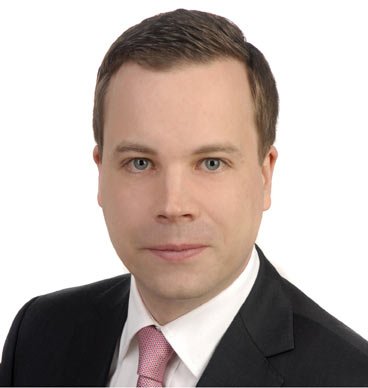
    An increasing number of investment and trade opportunities are presenting themselves for foreign corporates in sub-Saharan Africa. And while there are risks associated with investing and operating in Africa that cannot be ignored – as is true of any emerging market – it should not mean that the opportunities in the region are overlooked. Florian Witt, Head of Africa at Commerzbank, looks at Africa’s growth and what it means for those looking to do business in the region

    Sub-Saharan Africa has shown itself to be remarkably resilient in the face of the global economic crisis. In fact, the region has been growing sustainably for the past decade and is expected to see economic growth of 6 percent this year1. According to the African Development Bank (AfDB), Africa’s economy is growing faster than any other continent in the world.
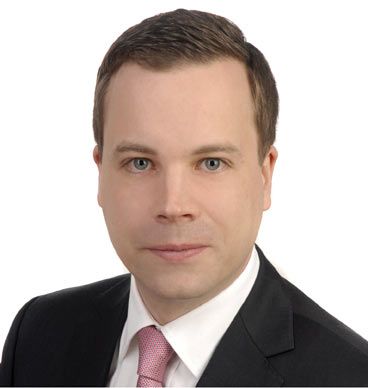
    Florian Witt

    Florian Witt

    Behind this positive economic growth lies improved political and economic stability in sub-Saharan Africa as a whole, which has helped the region rise up and become more resilient to external shocks, such as import and export price volatilities. Other factors helping to kick start the African economy are the recent commodities boom and the burgeoning African middle class, which is generating demand for consumer goods and services, many of which are imported.

    And this increased demand for consumer goods imports brings a host of business opportunities for foreign exporters. Indeed, many have already recognised the region’s potential and have established a presence on the continent.

    However, not only is there enormous trading potential, there are also opportunities for investment in productivity and manufacturing that could transform the composition of a number of African economies. Indeed, Africa is now beginning to move up the production value chain (evolving from being an extractor of raw materials to a producer of finished products) thanks in part to foreign direct investment and international trade, which is improving resource-processing and manufacturing capabilities. But in order for Africa to keep moving up the value chain, continued investment and imports of specialist equipment and machinery will be needed to develop the continent’s value-added industries.

    While the opportunities for doing business in Africa are therefore clear, it is also important that companies understand the risks involved in trading with the heterogeneous region. In this respect, having a global banking partner on side that has strong relationships with the local banks and expert “on-the-ground” knowledge is essential for mitigating these risks.

    Seizing the opportunities

    Of course, some sub-Saharan African countries have already begun their transition from raw material exporters to producers of value-added products and this process is providing vast opportunities for foreign corporates.

    In this respect, Nigeria is an interesting example. For example, the agriculture sector now accounts for around a quarter of Nigeria’s GDP following the recent rebasing of the economy. And the country has wide expanses of arable land that are rich in hydrocarbon, but in order to be able to produce food locally, value-added chains in the form of harvest, storage and transport are required.

    The good news is that moves towards building these value-added chains are already underway. For example, construction of the world’s largest fertilizer plant in Nigeria is due to be completed in 2015. The planned gas-to-urea fertilizer plant will cost approximately US$1.2 billion and will be privately financed with foreign companies bidding for the contract. The plant is aimed at transforming Nigeria from a major importer to a key exporter of fertilizer, and is expected to significantly boost agricultural production in the country.

    There are also emerging opportunities in Nigeria’s most lucrative sector: oil. This commodity is the driving factor in Nigeria’s economy – accounting for 96 percent of exports and 75 percent of government revenues2 – making it one of the most oil-dependent economies in Africa. However, Nigeria has very few oil refineries, meaning the country is reliant on imports of the by-products of crude oil. Therefore, in order to reduce the country’s exposure to the fluctuations in oil prices, huge investment is needed to boost the country’s refinery output, as well as for oil exploration and development projects.

    There’s no doubt that sub-Saharan Africa’s potential is attracting investors who have recognised the strong and sustained economic growth displayed by the continent in recent years – particularly in the fastest-growing African countries such as Nigeria. And it is expected that further foreign direct investment in these countries will help to kick off a higher growth phase.

    Understanding the risks

    Of course, in sub-Saharan Africa – as with any emerging market – there are risks that go hand in hand with the opportunities. However, the key to reducing exposure to these risks is acknowledging them and taking the right approach to doing business in the country.

    For example, corruption remains a large risk factor in sub-Saharan Africa. In this respect, Commerzbank has 60 years’ experience in Africa and has learnt that time can play an essential role in mitigating this risk. While investment in marketing, for example, is required to break into a mature market, such as Germany, in Africa what corporates need to invest is time in order to avoid unethical business practices.

    Credit and counterparty risk is also a factor to address. Given the levels of political risk associated with many of Africa’s developing markets and the ‘unknown’ factor when it comes toforeign trade counterparties, letters of credit are still one of the safest ways to mitigate this risk. This trade finance instrument is useful when exporters cannot easily obtain reliable credit information about a foreign buyer – instead passing the risk on to their own advising or confirming bank. This bank can then leverage its local expertise based on its correspondent banking relationships.

    In this respect, long-standing relationships with local African banks are important. Commerzbank, for example, works together with approximately 350 sub-Saharan African banks meaning that it has a unique risk appetite for confirming letters of credit issued in the region where other banks may have chosen to withdraw their commitments and are scaling back their correspondent-banking networks to reduce risk.

    While the risks of doing business on the continent sometimes seem to be at the forefront of many corporates’ minds, simply ignoring the potential for growth is not advisable. Indeed, with the help of the right local banking partner to navigate the risks, the opportunities for foreign corporates are limitless.

    1 Please see Page 3 of Commerzbank’s “Renaissance in Sub-Saharan Africa” study, published in January 2014

    2 Please see Page 18 of Commerzbank’s “Renaissance in Sub-Saharan Africa” study, published in January 2014

    Related Posts
     Millennials Aren’t Ignoring Retirement. They’re Rebuilding It.
    Millennials Aren’t Ignoring Retirement. They’re Rebuilding It.
    BridgeWise Launches FixedWise, the First AI Solution Bringing Granular Bond Intelligence to the European Market
    BridgeWise Launches FixedWise, the First AI Solution Bringing Granular Bond Intelligence to the European Market
    Why Financial Advisors Are Rethinking Gold Allocations
    Why Financial Advisors Are Rethinking Gold Allocations
    From Opaque to Investable: Yaniv Bertele's Blueprint for Transparent Alternatives
    From Opaque to Investable: Yaniv Bertele's Blueprint for Transparent Alternatives
    Private Equity Needs AI Advocates
    Private Equity Needs AI Advocates
    Understanding the Global Impact of Rising Medical Insurance Premiums on the Middle Class
    Understanding the Global Impact of Rising Medical Insurance Premiums on the Middle Class
    The New Model Driving Creative Investment in University Innovation
    The New Model Driving Creative Investment in University Innovation
    The return of tangible assets in modern portfolios
    The return of tangible assets in modern portfolios
    Retro Bikes And Insurance: What You Should Know?
    Retro Bikes And Insurance: What You Should Know?
    Top Stocks Powering the AI Boom in 2025
    Top Stocks Powering the AI Boom in 2025
    How often should you update your estate plan? The events that demand a refresh
    How often should you update your estate plan? The events that demand a refresh
    Top 5 Mutual Funds in the UAE: Performance, Features, and How to Invest
    Top 5 Mutual Funds in the UAE: Performance, Features, and How to Invest

    Why waste money on news and opinions when you can access them for free?

    Take advantage of our newsletter subscription and stay informed on the go!

    Subscribe

    Previous Investing PostSAXO BANK ANNOUNCES ADDITION OF STOCK OPTIONS TRADING TO ITS MULTI-ASSET PLATFORM
    Next Investing PostINDUSTRY STOCKS YOU SIMPLY NEED TO INVEST IN

    More from Investing

    Explore more articles in the Investing category

    How One Investor Learned to Find Value Through a Wider Lens

    How One Investor Learned to Find Value Through a Wider Lens

    Freedom Holding Corp’s Global Rise: Why Institutional Investors Are Betting Big

    Freedom Holding Corp’s Global Rise: Why Institutional Investors Are Betting Big

    Pro Visionary Helps Australians Strengthen Their Financial Resilience Through Licensed Wealth Strategies

    Pro Visionary Helps Australians Strengthen Their Financial Resilience Through Licensed Wealth Strategies

    How ZenInvestor Is Breaking Down Barriers to Financial Literacy and Empowering Everyday Investors Nationwide

    How ZenInvestor Is Breaking Down Barriers to Financial Literacy and Empowering Everyday Investors Nationwide

    Edward L. Shugrue III on Returning to the Office: A Cultural Shift and Investment Opportunity

    Edward L. Shugrue III on Returning to the Office: A Cultural Shift and Investment Opportunity

    How Private Capital Can Build Public Good

    How Private Capital Can Build Public Good

    Private Equity Has a Major Speed and Capacity Problem

    Private Equity Has a Major Speed and Capacity Problem

    Navigating AI Investing Tools: Wealth Management Disruption Ahead

    Navigating AI Investing Tools: Wealth Management Disruption Ahead

    MTF Trading Explained: What It Is, How It Works, and Key Benefits

    MTF Trading Explained: What It Is, How It Works, and Key Benefits

    Private Equity Has Trust Issues With AI

    Private Equity Has Trust Issues With AI

    Merifund Capital Management on FTSE 100 Gains

    Merifund Capital Management on FTSE 100 Gains

    Sycamine Capital Management sets outlook on Japan equities

    Sycamine Capital Management sets outlook on Japan equities

    View All Investing Posts