
Business
Stellantis Unveils Ram Ev Pickup, to Debut Late in 2024, at New York Auto Show
Published by Jessica Weisman-Pitts
Posted on April 5, 2023
3 min readLast updated: February 1, 2026
Add as preferred source on Google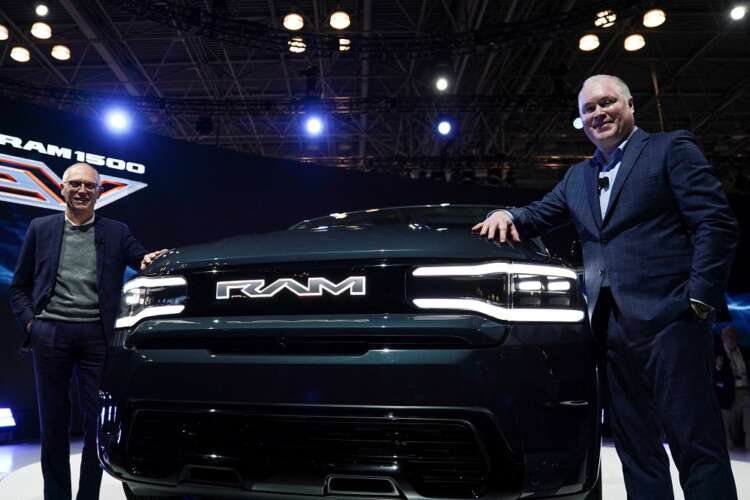
Published by Jessica Weisman-Pitts
Posted on April 5, 2023
3 min readLast updated: February 1, 2026
Add as preferred source on GoogleBy David Shepardson
NEW YORK (Reuters) -Chrysler parent Stellantis NV on Wednesday unveiled its new electric Ram pickup truck, which is poised to debut on the market late in 2024 as a key part of the French-Italian automaker’s strategy to electrify its vehicle lineup.
The 2025 model year Ram 1500 REV, introduced at the New York Auto Show which runs until April 16, will have a range of as much as 500 miles (804 km) using an optional, bigger 229-kilowatt battery pack. The EV truck will go on sale in one of the most important segments of the North American electric vehicle market.
Stellantis CEO Carlos Tavares said the truck will be built in the U.S. and the location would be announced soon. He said the company was still “fine tuning the plan.”
He told reporters on the sidelines of the auto show that consumers will choose the Ram over other EV trucks because it will exceed other trucks’ performance on range, speed of charge, towing and other factors. He said after the announcement a lot of rivals “will be under pressure to try to beat us.”
The Ram truck’s launch late in 2024 will come more than two years after similar EV trucks like the Rivian R1T electric pickup and Ford’s F-150 Lightning electric truck.
General Motors plans to start delivering electric Chevrolet Silverado pickups this fall. Tesla CEO Elon Musk said the long-delayed Cybertruck will launch this year from a factory in Texas.
The RAM EV truck will be built on a new body-on-frame architecture designed for full-size EVs, capable of towing up to 14,000 lbs and carry a payload of up to 2,700 lbs. It will have a range of up to 350 miles with a standard 168-kilowatt battery pack, rising to 500 miles on the optional 229-kilowatt battery.
Stellantis also unveiled its 2024 model plug-in hybrid electric Jeep Wrangler at the show. By 2030, 50% of Jeep brand sales in the U.S. will be battery-electric, the company said.
Tavares has set ambitious targets to slash emissions in half by 2030, including that 100% of car sales in Europe and 50% of car and light-duty truck sales in the U.S. be of electric vehicles by the end of the decade.
While the high costs of electrification and advanced software development have pressured automakers, U.S. lawmakers approved hefty incentives for EV battery production and consumer tax credits in August.
Stellantis in late February indefinitely idled a Jeep assembly plant in Illinois, blaming the high cost of EVs.
Automakers face tougher vehicle emissions standards in the U.S. and Europe and mandates from California and other U.S. states to sell a rising number of electric vehicles.
California wants to require that all new light-duty cars and trucks sold in the state by 2035 be electric or plug-in electric hybrids. The Biden administration must approve the requirements before the plan can take effect.
(Reporting by David Shepardson; editing by Bernadette Baum and Josie Kao)
An electric vehicle (EV) is a type of vehicle that is powered by electricity instead of traditional fuels like gasoline or diesel. EVs use electric motors and batteries to operate.
Towing capacity refers to the maximum weight that a vehicle can safely tow. It is an important specification for trucks and SUVs, especially for those used for hauling trailers.
A battery pack in electric vehicles is a collection of batteries that store electrical energy used to power the vehicle's electric motor. Battery packs vary in size and capacity.
Payload capacity is the maximum weight that a vehicle can carry in addition to its own weight. This includes passengers, cargo, and any additional equipment.
Range in electric vehicles refers to the distance a vehicle can travel on a single charge. It is a critical factor for consumers when choosing an EV.
Explore more articles in the Business category









