Research Reports
Register Robust Growth in Packaging Additives Consumption During 2018-2026
Published by mark itwired
Posted on September 16, 2021
8 min readLast updated: February 9, 2026
Add as preferred source on Google
Published by mark itwired
Posted on September 16, 2021
8 min readLast updated: February 9, 2026
Add as preferred source on GoogleFuture Market Insights (FMI) delivers key insights on the global packaging additives market in its published report titled “Packaging Additives Market: Global Industry Analysis 2013-2017 and Opportunity Assessment 2018-2026”. In terms of revenue, the global packaging additives market is estimated to grow at a CAGR of 4.3% during the forecast period, owing to numerous factors on which FMI sheds light in this report. The Asia Pacific packaging additives market is expected to remain in the leading position during the forecast period.
In the packaging industry, packaging additives have prominent applications in end-use industries like food and beverages and pharmaceuticals. The rise in disposable income and increase in economic growth is the significant factors driving the growth of the global packaging additives market. One key driver in the global packaging additives market is the expansion of the convenient packaging and food industry in various emerging countries across the globe. The packaging industry in regions such as North America and Europe is highly mature and supports manufacturers to promote market growth in other regions. Growth Opportunities in the packaging additives market due to the variation in the food consumption habits in regions such as the Middle East and the Asia Pacific excluding Japan is prompting various leading manufacturers of packaging additives to set up production units in these regions.
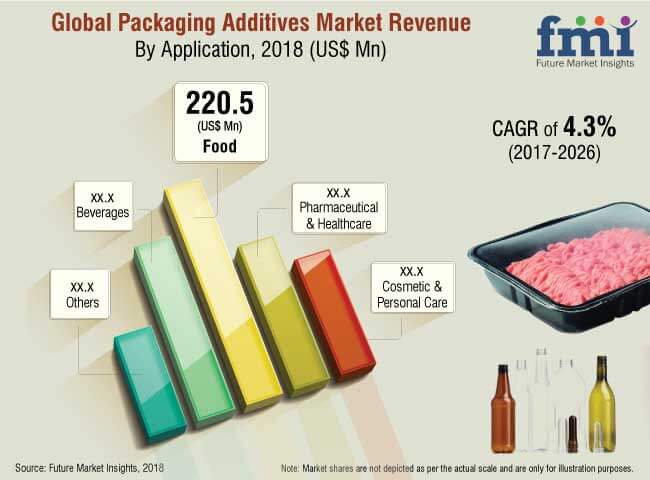
In this report, Future Market Insights suggests that packaging additives will play a major role in the food & beverage industry during the forecast period. With a rise in demand of packaged food items in the industry, there will be enormous demand of the packaging additives market. The research also suggests that the beverage sector segment in packaging additives is anticipated to be one of the highest contributors to the growth of the packaging additives market. The pharmaceuticals and health sector is also anticipated to witness high growth in the packaging additives market during the forecast period.
Request a Complete TOC of this Report with figures:
https://www.futuremarketinsights.com/toc/rep-gb-7594
Key players are looking forward to expansion through organic & inorganic methods such as acquisitions & mergers, product launches, etc. For instance,
By substrate, the global packaging additives market is segmented into:
By product, the global packaging additives market is segmented into:
By packaging, the global packaging additives market is segmented into:
Key Regions
Among the key regional markets, North America is projected to exhibit relatively higher growth in the global packaging additives market and will grow with a CAGR of over 4.3% during the forecast period. Revenue from the packaging additives markets in Western Europe and Asia Pacific Excluding Japan (APEJ) is expected to collectively account for more than 45% of the global packaging additives market revenue during the forecast period.
Key players operating in the global market for packaging additives include BASF SE, AkzoNobel N.V., ALTANA Group, ColorMatrix Group, Arkema Inc, Henkel, Huber Group, PPG Industries Inc, Lubrizol Corporation, Flint Group Sun Chemical Corporation, Valspar Corporation, Evonik, and Wacker Chemie AG. Many local and unrecognized players are expected to contribute to the global packaging additives market during 2018 to 2026.
The post Register Robust Growth in Packaging Additives Consumption During 2018-2026 first appeared on Market Research Blog.
Future Market Insights (FMI) delivers key insights on the global packaging additives market in its published report titled “Packaging Additives Market: Global Industry Analysis 2013-2017 and Opportunity Assessment 2018-2026”. In terms of revenue, the global packaging additives market is estimated to grow at a CAGR of 4.3% during the forecast period, owing to numerous factors on which FMI sheds light in this report. The Asia Pacific packaging additives market is expected to remain in the leading position during the forecast period.
In the packaging industry, packaging additives have prominent applications in end-use industries like food and beverages and pharmaceuticals. The rise in disposable income and increase in economic growth is the significant factors driving the growth of the global packaging additives market. One key driver in the global packaging additives market is the expansion of the convenient packaging and food industry in various emerging countries across the globe. The packaging industry in regions such as North America and Europe is highly mature and supports manufacturers to promote market growth in other regions. Growth Opportunities in the packaging additives market due to the variation in the food consumption habits in regions such as the Middle East and the Asia Pacific excluding Japan is prompting various leading manufacturers of packaging additives to set up production units in these regions.
In this report, Future Market Insights suggests that packaging additives will play a major role in the food & beverage industry during the forecast period. With a rise in demand of packaged food items in the industry, there will be enormous demand of the packaging additives market. The research also suggests that the beverage sector segment in packaging additives is anticipated to be one of the highest contributors to the growth of the packaging additives market. The pharmaceuticals and health sector is also anticipated to witness high growth in the packaging additives market during the forecast period.
Request a Complete TOC of this Report with figures:
https://www.futuremarketinsights.com/toc/rep-gb-7594
Key players are looking forward to expansion through organic & inorganic methods such as acquisitions & mergers, product launches, etc. For instance,
By substrate, the global packaging additives market is segmented into:
By product, the global packaging additives market is segmented into:
By packaging, the global packaging additives market is segmented into:
Key Regions
Among the key regional markets, North America is projected to exhibit relatively higher growth in the global packaging additives market and will grow with a CAGR of over 4.3% during the forecast period. Revenue from the packaging additives markets in Western Europe and Asia Pacific Excluding Japan (APEJ) is expected to collectively account for more than 45% of the global packaging additives market revenue during the forecast period.
Key players operating in the global market for packaging additives include BASF SE, AkzoNobel N.V., ALTANA Group, ColorMatrix Group, Arkema Inc, Henkel, Huber Group, PPG Industries Inc, Lubrizol Corporation, Flint Group Sun Chemical Corporation, Valspar Corporation, Evonik, and Wacker Chemie AG. Many local and unrecognized players are expected to contribute to the global packaging additives market during 2018 to 2026.
The post Register Robust Growth in Packaging Additives Consumption During 2018-2026 first appeared on Market Research Blog.
Packaging additives are substances added to packaging materials to enhance their properties, such as durability, flexibility, and barrier effectiveness, particularly in food and pharmaceutical applications.
CAGR stands for Compound Annual Growth Rate, which is the mean annual growth rate of an investment over a specified time period longer than one year.
End-use industries refer to sectors that utilize products or services to produce final goods. In this context, they include food, beverages, and pharmaceuticals.
The Asia Pacific market refers to the economic region that includes countries in East Asia, Southeast Asia, and Oceania, known for its significant growth in various industries, including packaging.
Organic growth methods involve expanding a business through internal resources, such as increasing sales or improving efficiency, while inorganic growth methods involve mergers, acquisitions, or partnerships.
Explore more articles in the Research Reports category