Search
00
GBAF Logo
trophy
Top StoriesInterviewsBusinessFinanceBankingTechnologyInvestingTradingVideosAwardsMagazinesHeadlinesTrends

Subscribe to our newsletter

Get the latest news and updates from our team.

Global Banking and Finance Review

Global Banking & Finance Review

Company

    GBAF Logo
    • About Us
    • Profile
    • Privacy & Cookie Policy
    • Terms of Use
    • Contact Us
    • Advertising
    • Submit Post
    • Latest News
    • Research Reports
    • Press Release
    • Awards▾
      • About the Awards
      • Awards TimeTable
      • Submit Nominations
      • Testimonials
      • Media Room
      • Award Winners
      • FAQ
    • Magazines▾
      • Global Banking & Finance Review Magazine Issue 79
      • Global Banking & Finance Review Magazine Issue 78
      • Global Banking & Finance Review Magazine Issue 77
      • Global Banking & Finance Review Magazine Issue 76
      • Global Banking & Finance Review Magazine Issue 75
      • Global Banking & Finance Review Magazine Issue 73
      • Global Banking & Finance Review Magazine Issue 71
      • Global Banking & Finance Review Magazine Issue 70
      • Global Banking & Finance Review Magazine Issue 69
      • Global Banking & Finance Review Magazine Issue 66
    Top StoriesInterviewsBusinessFinanceBankingTechnologyInvestingTradingVideosAwardsMagazinesHeadlinesTrends

    Global Banking & Finance Review® is a leading financial portal and online magazine offering News, Analysis, Opinion, Reviews, Interviews & Videos from the world of Banking, Finance, Business, Trading, Technology, Investing, Brokerage, Foreign Exchange, Tax & Legal, Islamic Finance, Asset & Wealth Management.
    Copyright © 2010-2025 GBAF Publications Ltd - All Rights Reserved.

    Editorial & Advertiser disclosure

    Global Banking and Finance Review is an online platform offering news, analysis, and opinion on the latest trends, developments, and innovations in the banking and finance industry worldwide. The platform covers a diverse range of topics, including banking, insurance, investment, wealth management, fintech, and regulatory issues. The website publishes news, press releases, opinion and advertorials on various financial organizations, products and services which are commissioned from various Companies, Organizations, PR agencies, Bloggers etc. These commissioned articles are commercial in nature. This is not to be considered as financial advice and should be considered only for information purposes. It does not reflect the views or opinion of our website and is not to be considered an endorsement or a recommendation. We cannot guarantee the accuracy or applicability of any information provided with respect to your individual or personal circumstances. Please seek Professional advice from a qualified professional before making any financial decisions. We link to various third-party websites, affiliate sales networks, and to our advertising partners websites. When you view or click on certain links available on our articles, our partners may compensate us for displaying the content to you or make a purchase or fill a form. This will not incur any additional charges to you. To make things simpler for you to identity or distinguish advertised or sponsored articles or links, you may consider all articles or links hosted on our site as a commercial article placement. We will not be responsible for any loss you may suffer as a result of any omission or inaccuracy on the website.

    Home > Business > Pivoting growth strategy to rebuild consumer trust and confidence
    Business

    Pivoting growth strategy to rebuild consumer trust and confidence

    Pivoting growth strategy to rebuild consumer trust and confidence

    Published by gbaf mag

    Posted on October 20, 2020

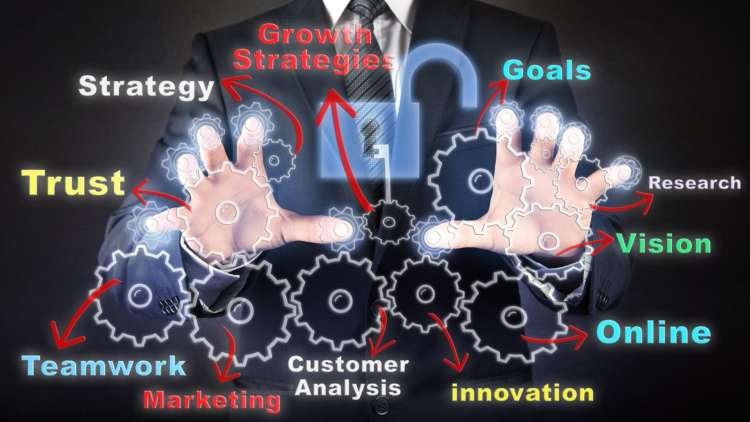
    Featured image for article about Business

    By Richard Steggall, the CEO of Urban FT

    Trust is essential to all relationships, whether personal or professional. And in an uncertain environment like we are experiencing amid the COVID-19 pandemic, trust becomes even more critical. We place our trust in healthcare providers to do their best in caring for us; we trust grocery stores to provide safe access to nourishing food; and we trust our fellow community members to practice care and vigilance. The stakes in trust have never been higher and with financial services ranking among the least trusted industries in consumer’s eyes, according to the 2020 Edelman Trust Barometer, there is much work to be done in luring customers back in.

    No one person or organization has all the answers for making the financial services industry more respected and trustworthy in the eyes of consumers. But every business leader is in a unique position to drive positive change in their own organizations and communities. Namely, leaders in financial services must rethink their growth strategy and embed it with measures of transparency, ownership and accountability.

    Define your purpose

    The fast-evolving pandemic has not only presented us with a health crisis unlike any we have seen in our lifetime, it is also driving significant social and economic pressures around the globe.

    With increased consumer attention on corporate social responsibility, many brands are leveraging purpose-driven activities as a key differentiator in the competitive financial services industry. Purpose-driven business fosters a greater connection between a brand and its consumers, so long as the message at hand is sincere and meaningful to audiences. If implemented with due authenticity, it helps brands gain trust with consumers.

    Defining your purpose may involve deploying volunteers into the community or making philanthropic donations. But those in financial services are on the front lines of the unfolding economic situation. Why not make modifications to core business activities that can be done to directly touch the consumer? Examples might include deferment of fees or personalized financial advisory to individual customers who have been financially impacted by coronavirus.

    Protect consumer data like it is your own

    A single data breach or ethical lapse can paralyze a brand instantly. Equifax discovered this the hard way when the personal information of 143 million consumers was leaked in 2017 and the organization was forced to pay a whopping $700 million in penalties, according to the Electronic Privacy Information Center (EPIC). Within 10 days of the news going public, Equifax’s YouGov ‘Buzz Score’ dropped from a neutral zero to -33. I would not have wanted to be in that board meeting.

    Thanks to such notorious widespread security breaches, consumers are fast becoming more protective of their personally identifiable information (PII) and will only share data with brands they trust. Recent regulations like the European Union’s General Data Protection Regulation (GDPR) are also empowering consumers so they can decide for themselves who has access to their PII and who does not. These developments hold companies liable for the PII security of each consumer they engage with. After all, with great power comes great responsibility.

    Amazon Prime has excelled in protecting and promoting PII within the e-commerce industry, conveying to consumers how PII can improve how they shop while still offering protection. Once viewed as a platform for free shipping, Prime customers are now investing in membership because of the personalization, customization and unmatched convenience. Amazon’s responsible handling of PII has cultivated consumer trust and increased organic word of mouth marketing. For some financial service organizations, repositioning how PII is used could become a key differentiator in the marketplace.

    Make fees clear as day 

    This will probably come as no surprise but, historically, financial institutions (FIs) have made much of their revenue on the dreaded “gotcha” fees that can become quite overwhelming for unknowing consumers: overdraft fees, external ATM fees, fees for not maintaining a certain minimum balance, etc.

    I don’t mean to knock anyone down, but now might be the time for FIs to stop promoting the so-called ‘free’ checking account. By now, most consumers get skeptical when they see the word free, knowing there’s probably back-end fees or inflexible stipulations attached. And if a product or service is worth it to them, consumers will pay for it.

    The lack of transparency around extra charges only damages the reputation of financial service, solidifying the industry’s unsavory reputation for making money by taking money. There is a simple solution however. Financial service organizations need to be as upfront as possible about the fees that a customer might incur. No exceptions. In the end, this transparency will pay off over and over again in the form of trust, retention and referrals.

    Master all touch points with humanization

    For today’s consumers, there’s no shortage of options in financial services. While the power of choice is a win for consumers, there are still a number of potential pain points and disconnects. Apart from the misuse of data, other obstacles to trust could be simple errors that temporarily freeze an account, lack of streamlining, failing customer support or absence of personalization.

    Richard Steggall

    Richard Steggall

    In other words, consumers are looking for a “digital concierge” to help them along their financial journeys—one they can trust and knows their preferences, needs and behaviors. As traditional outliers, such as price and location, diminish in importance, companies that humanize their digital user experiences (UX) will be more likely to drive long-term business growth, according to the Digital Bank Report’s “Humanizing the Digital Experience in Banking.”

    Strive for digital agility

    Thanks to the implementation of new digital technology, there are opportunities for financial service organizations to move beyond pushing products and to instead provide the digital personalized assistance that today’s consumers are looking for. This is the key to building sustainable relationships in today’s marketplace.

    But the financial services industry must first bridge the gap between what technology can offer and what consumers are looking for. Only through digital agility will financial services organizations be able to adapt in a rapidly changing business environment and maintain strong relationships with consumers. Part of this agility will depend on adopting FinTech into services and products. For example, banks and credit unions may look to implement a FinTech Core, which works alongside an FIs banking core or transaction processing system to enable endless digital expansion without having to contract with each FinTech service piecemeal. Having this in place can help ensure that FIs adopt tomorrow’s technologies today, protect their digital ecosystems, personalize UXs and win back the trust of consumers.

    Related Posts
    Why Email Deliverability is a Business Risk Your Company Can’t Afford to Ignore
    Why Email Deliverability is a Business Risk Your Company Can’t Afford to Ignore
    Five questions to ask before stepping into Employee Ownership
    Five questions to ask before stepping into Employee Ownership
    Cybersecurity as a Profit Engine: Turning Financial Services Security into Measurable Business Value
    Cybersecurity as a Profit Engine: Turning Financial Services Security into Measurable Business Value
    How Investability Helps Companies Navigate Transformational Times
    How Investability Helps Companies Navigate Transformational Times
    88% of UK and US organisations concerned about state-sponsored cyber attacks as national threat levels surge, IO research reveals
    88% of UK and US organisations concerned about state-sponsored cyber attacks as national threat levels surge, IO research reveals
    One in three SME leaders do not fully understand cash flow, despite 82% facing cash flow problems
    One in three SME leaders do not fully understand cash flow, despite 82% facing cash flow problems
    Inside the Company that Predicted the Remote Work Mega-Trend Before It Became Mainstream
    Inside the Company that Predicted the Remote Work Mega-Trend Before It Became Mainstream
    SEO Consultant Adrian Czarnoleski on How to Increase Business Value Before Exit
    SEO Consultant Adrian Czarnoleski on How to Increase Business Value Before Exit
    No SOC 2, No Deal: Why You’re Already Losing Clients - and What You Can Do About It
    No SOC 2, No Deal: Why You’re Already Losing Clients - and What You Can Do About It
    Jose Tolosa Guides Organizations Forward with Clarity, Purpose, and Integrity
    Jose Tolosa Guides Organizations Forward with Clarity, Purpose, and Integrity
    Reducing Freight Costs to Drive Global Trade Expansion
    Reducing Freight Costs to Drive Global Trade Expansion
    The Psychology of Music in the Modern Workplace
    The Psychology of Music in the Modern Workplace

    Why waste money on news and opinions when you can access them for free?

    Take advantage of our newsletter subscription and stay informed on the go!

    Subscribe

    Previous Business PostOnline jobs soar by 14% in third quarter 2020, Freelancer.com’s Fast 50 reports
    Next Business PostWhat is a glocal supply chain?

    More from Business

    Explore more articles in the Business category

    Revealed: Low-Cost/No-Cost Marketing Hacks For Results Oriented Businesses

    Revealed: Low-Cost/No-Cost Marketing Hacks For Results Oriented Businesses

    Finance teams still stuck in spreadsheets as manual processes stall digital transformation

    Finance teams still stuck in spreadsheets as manual processes stall digital transformation

    The Future of Remote & Hybrid Leadership: Leading With Data-Driven Foresight

    The Future of Remote & Hybrid Leadership: Leading With Data-Driven Foresight

    2025-2030: The Next Technological Innovations for Business

    2025-2030: The Next Technological Innovations for Business

    The CFO’s New Playbook: 5 Ways AI Is Redefining Finance with Insights from Rishi Oberoi

    The CFO’s New Playbook: 5 Ways AI Is Redefining Finance with Insights from Rishi Oberoi

    Revolutionizing Payments: Secure, Scalable, Sovereign

    Revolutionizing Payments: Secure, Scalable, Sovereign

    Why Trademark Abuse in Paid Search Is a Growing Risk for Financial Institutions

    Why Trademark Abuse in Paid Search Is a Growing Risk for Financial Institutions

    E-commerce Customer Service: Tips

    E-commerce Customer Service: Tips

    When to Automate Your Warehouse: The Tipping Point for Operations Growth

    When to Automate Your Warehouse: The Tipping Point for Operations Growth

    Hurt at Work? 5 Financial Facts You Need to Know

    Hurt at Work? 5 Financial Facts You Need to Know

    Against the Odds: Resilience in Consumer Subsectors Offers Prime Opportunities for Investors

    Against the Odds: Resilience in Consumer Subsectors Offers Prime Opportunities for Investors

    Empower Your Workforce With Financial Wellness This Labor Day

    Empower Your Workforce With Financial Wellness This Labor Day

    View All Business Posts