Search
00
GBAF Logo
trophy
Top StoriesInterviewsBusinessFinanceBankingTechnologyInvestingTradingVideosAwardsMagazinesHeadlinesTrends

Subscribe to our newsletter

Get the latest news and updates from our team.

Global Banking and Finance Review

Global Banking & Finance Review

Company

    GBAF Logo
    • About Us
    • Profile
    • Privacy & Cookie Policy
    • Terms of Use
    • Contact Us
    • Advertising
    • Submit Post
    • Latest News
    • Research Reports
    • Press Release
    • Awards▾
      • About the Awards
      • Awards TimeTable
      • Submit Nominations
      • Testimonials
      • Media Room
      • Award Winners
      • FAQ
    • Magazines▾
      • Global Banking & Finance Review Magazine Issue 79
      • Global Banking & Finance Review Magazine Issue 78
      • Global Banking & Finance Review Magazine Issue 77
      • Global Banking & Finance Review Magazine Issue 76
      • Global Banking & Finance Review Magazine Issue 75
      • Global Banking & Finance Review Magazine Issue 73
      • Global Banking & Finance Review Magazine Issue 71
      • Global Banking & Finance Review Magazine Issue 70
      • Global Banking & Finance Review Magazine Issue 69
      • Global Banking & Finance Review Magazine Issue 66
    Top StoriesInterviewsBusinessFinanceBankingTechnologyInvestingTradingVideosAwardsMagazinesHeadlinesTrends

    Global Banking & Finance Review® is a leading financial portal and online magazine offering News, Analysis, Opinion, Reviews, Interviews & Videos from the world of Banking, Finance, Business, Trading, Technology, Investing, Brokerage, Foreign Exchange, Tax & Legal, Islamic Finance, Asset & Wealth Management.
    Copyright © 2010-2025 GBAF Publications Ltd - All Rights Reserved.

    ;
    Editorial & Advertiser disclosure

    Global Banking and Finance Review is an online platform offering news, analysis, and opinion on the latest trends, developments, and innovations in the banking and finance industry worldwide. The platform covers a diverse range of topics, including banking, insurance, investment, wealth management, fintech, and regulatory issues. The website publishes news, press releases, opinion and advertorials on various financial organizations, products and services which are commissioned from various Companies, Organizations, PR agencies, Bloggers etc. These commissioned articles are commercial in nature. This is not to be considered as financial advice and should be considered only for information purposes. It does not reflect the views or opinion of our website and is not to be considered an endorsement or a recommendation. We cannot guarantee the accuracy or applicability of any information provided with respect to your individual or personal circumstances. Please seek Professional advice from a qualified professional before making any financial decisions. We link to various third-party websites, affiliate sales networks, and to our advertising partners websites. When you view or click on certain links available on our articles, our partners may compensate us for displaying the content to you or make a purchase or fill a form. This will not incur any additional charges to you. To make things simpler for you to identity or distinguish advertised or sponsored articles or links, you may consider all articles or links hosted on our site as a commercial article placement. We will not be responsible for any loss you may suffer as a result of any omission or inaccuracy on the website.

    Home > Technology > Orchestrating Identity Verification: Assimilating identity data to stop fraud
    Technology

    Orchestrating Identity Verification: Assimilating identity data to stop fraud

    Orchestrating Identity Verification: Assimilating identity data to stop fraud

    Published by Jessica Weisman-Pitts

    Posted on August 31, 2022

    Featured image for article about Technology

    By Sarah Rutherford, Senior Director Portfolio Marketing, Global, Fraud and Compliance, FICO on the need to bring biometric data together to carry out fraud checks

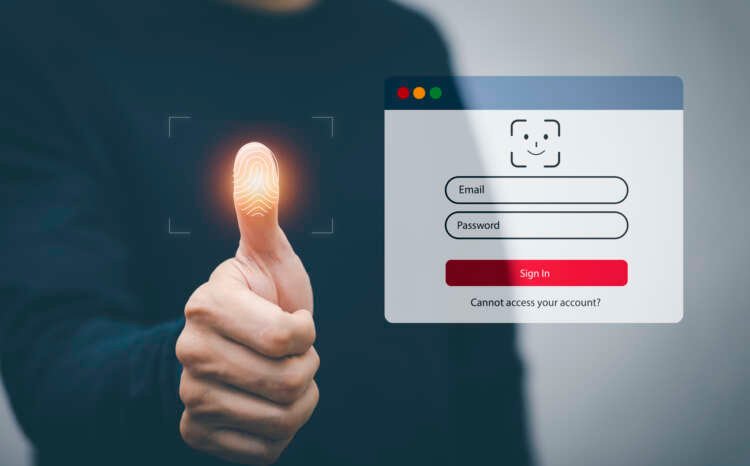
    In the last few years, there has been a steady rise in banks requesting data from consumers. What began as passwords, addresses, and phone numbers turned to fingerprints, iris scans, and behavioral biometrics. For the average customer, banks will have a data-rich understanding of their finances and how they are accessed. But that presents a huge problem as banking security should not be built on averages.

    Banks have good reason for requesting all this information. A total of over £730m was stolen through Unauthorized fraud last year. Principally, where a fraudster takes over an account and transfers money or uses stolen card details to make purchases.

    At the heart of prevention is ensuring that the person using the card or payment mechanism is the legitimate account holder. For that fraud teams will routinely ask if they have the right amount of data, including biometrics, to do the job. Too little and they frustrate customers who can’t be verified and too much and the bank has to deal with an excessive amount of personal data they must keep secure. They should really question how they make use of the solutions they have to ensure the correct decisions are made. This elevates financial security above and beyond biometrics and single point solutions, which can miss the bigger picture.

    Collecting consumer data, biometrics for example, is a necessary step in financial security but by no means the end of the journey. Cycling consumers through checks can cause friction in the process and there’s always a danger this will turn them away. With regulation such as PSD2, and industry moves such as the drive for 3D Secure 2, decisions about the frequency and to a certain extent the methods of authentication have been taken out of the hands of the banks and card issuers. This provides a challenge and an opportunity. Clearly there is much work to do to get it right and ensure that your bank isn’t the one people are choosing to abandon.

    Getting personal

    This is all tied into personalization and providing the customer with the right level of friction. For example, if banks know from the data they have about a customer that they are likely to be who they say they are, why would you put unnecessary barriers in their way? Similarly, why would you automatically invoke a biometric that costs money on every single customer when it’s not always needed?

    These questions are important to answer and must be followed by further consideration of a customer’s preferences. Do they want a one-time passcode sent through text, WhatsApp or pushed to the app on their phone? Are they even able to provide biometric data? Not everyone has a fingerprint.

    There are also actions happening in the background in terms of how many obstacles banks put in the way of someone. Consumers might not even know there is a personalization process happening behind the scenes. A completely frictionless journey would unsettle the consumer and provoke them to consider whether their account is secure when it takes such little effort for them to use it.

    What does the data say?

    FICO’s latest survey of 1,000 UK consumers into preferences around fraud shows a need for banks to strike a balance between identity checks and a smooth customer journey. It will not take much disruption for consumers to switch providers, with 35 percent saying they would do so if a legitimate online transaction was blocked three or four times.

    One of the biggest irritations UK consumers have with banking security is when they are cycled through different forms of authentication, with 21 percent stating this as a concern. Consumers are also irritated when their cards are blocked for legitimate purchases (19 percent); when they never receive messages about fraud and have to call the bank to resolve an issue (7 percent); or when their time is wasted by delayed fraud messages (8 percent).

    Banks walk a tightrope to protect consumers’ funds but also keep them engaged with the security checks that take place along the customer journey. To mitigate any losses on either side, banks must ensure their fraud systems are up to speed and reduce false positives, so they don’t delay a legitimate consumer’s purchase. Consumers expect instant results when purchasing and safety measures must be streamlined, direct, and effective.

    The key message is, it’s not one size fits all. Not everyone is comfortable with biometrics and not everyone is happy with using WhatsApp for one-time codes. This is a nuanced, complicated scenario and to simply feed everyone through the same process will turn away customers, potentially give worse results and probably cost more in the long run.

    The answer is an overarching system that orchestrates the use of customer identity verification be that biometric, behavioral, knowledge- based or possession factors. Deploying the correct checks to the account and transaction and creating the right level of friction in the journey. These systems will not only help with approaches to customers with different preferences, but also provide banks with a means of switching providers if they need to. With all their biometric solutions organized under one system, banks could swap one for another without losing out on a crucial piece of data.

    Orchestrating the data

    Banks have a long list of possibilities for carrying out identity checks. They can ask for fingerprints, facial scans, passwords, and PIN numbers but how should they go about these checks? What are the parameters that govern their approach and how are they implemented?

    • To make good decisions they need to get the right data to the decision every time and they need to streamline the process as much as possible. Not every transaction is the same and all customers vary in their willingness and ability to engage with different methods of identity checking. Added to that is the complexity of managing the regulation and scheme rules as well as the banks own risk appetite and the need to contain costs. It goes without saying it takes a great deal of orchestration to do this effectively and that is why a centralized approach is needed. The benefits of managing identity verification through a single platform include: Make the right decisions on the identity checking deployed, based on the most important parameters be that customer preferences, level of risk, cost of verification or anything else, use the data and intelligence you have about the customer and transaction to drive the decision about which solutions are deployed.
    • Unify the data from your various identity proofing solutions into a single decision point that gives appropriate weight and balance to all the information they provide to remove contradictory indicators from different systems.
    • Remove the ties that bind you to individual point solutions. There are great options for identity proofing and new and exciting options arrive all the time. But making any one of them the basis for decisions, ties you to that provider. Using an open platform with easy to establish API connectors means that you can keep decision making in your control while you add and remove data providers as you see fit.
    Related Posts
    Treasury transformation must be built on accountability and trust
    Treasury transformation must be built on accountability and trust
    Financial services: a human-centric approach to managing risk
    Financial services: a human-centric approach to managing risk
    LakeFusion Secures Seed Funding to Advance AI-Native Master Data Management
    LakeFusion Secures Seed Funding to Advance AI-Native Master Data Management
    Clarity, Context, Confidence: Explainable AI and the New Era of Investor Trust
    Clarity, Context, Confidence: Explainable AI and the New Era of Investor Trust
    Data Intelligence Transforms the Future of Credit Risk Strategy
    Data Intelligence Transforms the Future of Credit Risk Strategy
    Architect of Integration Ushers in a New Era for AI in Regulated Industries
    Architect of Integration Ushers in a New Era for AI in Regulated Industries
    How One Technologist is Building Self-Healing AI Systems that Could Transform Financial Regulation
    How One Technologist is Building Self-Healing AI Systems that Could Transform Financial Regulation
    SBS is Doubling Down on SaaS to Power the Next Wave of Bank Modernization
    SBS is Doubling Down on SaaS to Power the Next Wave of Bank Modernization
    Trust Embedding: Integrating Governance into Next-Generation Data Platforms
    Trust Embedding: Integrating Governance into Next-Generation Data Platforms
    The Guardian of Connectivity: How Rohith Kumar Punithavel Is Redefining Trust in Private Networks
    The Guardian of Connectivity: How Rohith Kumar Punithavel Is Redefining Trust in Private Networks
    BNY Partners With HID and SwiftConnect to Provide Mobile Access to its Offices Around the Globe With Employee Badge in Apple Wallet
    BNY Partners With HID and SwiftConnect to Provide Mobile Access to its Offices Around the Globe With Employee Badge in Apple Wallet
    How Integral’s CTO Chidambaram Bhat is helping to solve  transfer pricing problems through cutting edge AI.
    How Integral’s CTO Chidambaram Bhat is helping to solve transfer pricing problems through cutting edge AI.

    Why waste money on news and opinions when you can access them for free?

    Take advantage of our newsletter subscription and stay informed on the go!

    Subscribe

    Previous Technology PostUsing agile AI to beat the recession
    Next Technology PostEthics In The Time of Artificial Intelligence (and their sentient attorneys)

    More from Technology

    Explore more articles in the Technology category

    Why Physical Infrastructure Still Matters in a Digital Economy

    Why Physical Infrastructure Still Matters in a Digital Economy

    Why Compliance Has Become an Engineering Problem

    Why Compliance Has Become an Engineering Problem

    Can AI-Powered Security Prevent $4.2 Billion in Banking Fraud?

    Can AI-Powered Security Prevent $4.2 Billion in Banking Fraud?

    Reimagining Human-Technology Interaction: Sagar Kesarpu’s Mission to Humanize Automation

    Reimagining Human-Technology Interaction: Sagar Kesarpu’s Mission to Humanize Automation

    LeapXpert: How financial institutions can turn shadow messaging from a risk into an opportunity

    LeapXpert: How financial institutions can turn shadow messaging from a risk into an opportunity

    Intelligence in Motion: Building Predictive Systems for Global Operations

    Intelligence in Motion: Building Predictive Systems for Global Operations

    Predictive Analytics and Strategic Operations: Strengthening Supply Chain Resilience

    Predictive Analytics and Strategic Operations: Strengthening Supply Chain Resilience

    How Nclude.ai   turned broken portals into completed applications

    How Nclude.ai turned broken portals into completed applications

    The Silent Shift: Rethinking Services for a Digital World?

    The Silent Shift: Rethinking Services for a Digital World?

    Culture as Capital: How Woxa Corporation Is Redefining Fintech Sustainability

    Culture as Capital: How Woxa Corporation Is Redefining Fintech Sustainability

    Securing the Future: We're Fixing Cyber Resilience by Finally Making Compliance Cool

    Securing the Future: We're Fixing Cyber Resilience by Finally Making Compliance Cool

    Supply chain security risks now innumerable and unmanageable for majority of cybersecurity leaders, IO research reveals

    Supply chain security risks now innumerable and unmanageable for majority of cybersecurity leaders, IO research reveals

    View All Technology Posts