Finance
Inflation Surge Puts Commodities and CTAs in the Spotlight
Published by Jessica Weisman-Pitts
Posted on March 28, 2022
5 min readLast updated: February 8, 2026
Add as preferred source on Google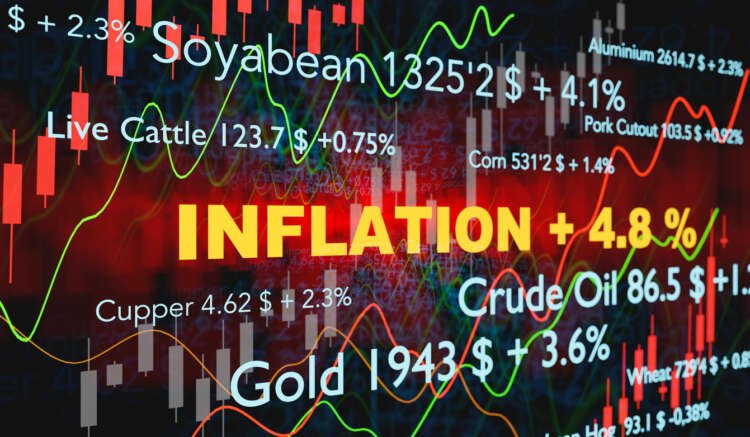
Published by Jessica Weisman-Pitts
Posted on March 28, 2022
5 min readLast updated: February 8, 2026
Add as preferred source on GoogleBy Chris Stevens, Director, Diversifying Strategies at bfinance
After more than twenty years of non-inflationary growth in the western world, inflation has staged a serious comeback. Will macroeconomic shifts bring commodities back into favour in institutional investors’ portfolios?
Institutional investors’ allocations to commodities have been in secular decline for a decade, despite the asset class offering strong protection against inflation. These reductions have been driven, in large part, by weak performance and high volatility: although the Bloomberg Commodity index (BCOM) delivered a 27% return in 2021, the decade-long picture is still negative.
Instead, many pension schemes and other asset owners have preferred to rely on historically ‘inflation-sensitive’ asset classes—equities, real estate and infrastructure—to give some insulation against the value-eroding effects of inflation. An investor’s decision on how much inflation-sensitivity is required will depend on the nature of their objectives: a pension scheme, for example, may be focused on funding ratios rather than real returns.
Yet recent months have brought a shift in sentiment, with inflation continuing to exceed forecasters’ expectations. More and more economists have moved from ‘team transitory’—shrugging off price spikes as the result of short-term heightened consumer demand or supply chain disruption—to ‘team structural’. The jury is very much still out on whether ongoing inflation is likely to be accompanied by strong or weak economic growth and the severity of the impact that the Ukraine/Russia conflict will have on supply chains and the global economic system.
In a benign ‘demand pull’ inflationary scenario, wherein supply/demand mismatches cause higher medium-term prices and interest rates rise gradually over time, a wide range of equity and real asset strategies could perform well. In a ‘cost push’ or stagflationary scenario, in which supply-side bottlenecks become entrenched, risk assets are likely to be adversely impacted and real interest rates will rise more rapidly. Their inflation sensitivity relies in large part on the ability to raise prices, rents or revenues – and this becomes challenging without reasonable economic growth to support it.
As the macroeconomic picture evolves, investors must continue to re-evaluate, analyse and stress-test their approaches.
Commodity markets regain (some) lost ground
The BCOM index is now up nearly 90% from its post-COVID lows, delivering a 27% return in 2021 and further rises in 2022 (roughly 9% in January, 6% in February). Although the price of gold and precious metals declined in 2021, undermining their reputation as inflation hedges, there were massive increases for energy, food and industrial metals.
Yet, although the index is up nearly 90% from its post-COVID lows, it is still well below its 2011 high-point and its decade-long annualised performance remains negative (-1.9%). Although an ongoing inflationary scenario would likely be highly supportive of positive performance, few market participants are (yet) expecting a return to the ‘commodities super-cycle’ theme of the 2000s.
It certainly possible that dedicated commodity investment strategies will find more favour with investors in the months to come. However, we have not yet seen an uptick in dedicated manager searches from institutional clients focused on this sector.
CTAs draw assets, but commodity-free strategies struggle to perform
Commodity Trading Advisors (CTAs), alternatively known as Managed Futures, are one of the few strategies in which institutional investors are currently likely to have direct exposure to commodities. This sector has seen strong investor demand in 2021-2.
These (largely trend-following) strategies tend to give investors a bumpy ride. Yet they often draw focus in times of uncertainty due to their ‘convex diversification’ profile: their ability to perform during specific periods when equity markets do poorly. Today, we see managers and investors placing increasing emphasis on their potential inflation sensitivity.
It is crucial to note that plenty of CTAs do not invest in commodities, and those that do usually also investing in other asset classes. The CTA acronym has long been a misnomer, with these strategies also trading the ‘financials’ of equity, bond and currency markets alongside the commodities markets where many of the first CTA firms had their roots. The choice to avoid commodities can be driven by a number of considerations, including the type of vehicle (it is more complex and costly to include commodities in a UCITS structure), investment beliefs or even ESG factors (some clients do not wish to be seen to be speculating on commodities, particularly food prices).
The Societe Generale CTA Index (SG CTA) index returned 6.2% in 2021, while the SG Trend sub-index returned 9.1%. The inclusion (or exclusion) of commodities was a major determinant of performance during the year: based on recent bfinance research on a sizeable group of CTAs, the median performance of trend-following CTAs ‘with commodities’ was +6.7% in 2021, while the median performance of those without commodities was strongly negative at -4.9%. Strong gains for CTAs are continuing in 2022: managers that offer long exposure to commodities and short positions in fixed income are ideally positioned to ride inflation-driven markets.
These strong results follow a decade of positive—albeit rather anaemic—returns. The SG CTA index returned 2.4% p.a. over the ten years to February 2022, while the SG Trend Index gave a 3.3% annualised return during the same period. These strategies have also, notably, done well during some particularly challenging recent periods, such as March 2020.
Allocation re-evaluation
Investors are increasingly likely to re-evaluate the role of commodity exposure as we face the drawn-out macroeconomic effects of pandemic and war. Long-only or long-short allocations to commodities may play a role in improving portfolio inflation sensitivity, and may become especially important in a low-growth inflationary scenario. Meanwhile, CTAs remain among the most diversifying of liquid alternative strategies, able to provide positive performance when traditional markets suffer and offering indirect exposure to commodity trends.
Inflation is the rate at which the general level of prices for goods and services rises, eroding purchasing power. It is typically measured as an annual percentage increase.
Commodities are basic goods used in commerce that are interchangeable with other goods of the same type, such as oil, gold, and agricultural products.
CTAs are professional money managers who specialize in trading futures and options on behalf of clients, often using systematic trading strategies.
A commodity index is a measure that tracks the performance of a basket of commodities, providing investors with a way to gauge market trends.
Asset allocation is the process of dividing an investment portfolio among different asset categories, such as stocks, bonds, and commodities, to optimize risk and return.
Explore more articles in the Finance category