Search
00
GBAF Logo
trophy
Top StoriesInterviewsBusinessFinanceBankingTechnologyInvestingTradingVideosAwardsMagazinesHeadlinesTrends

Subscribe to our newsletter

Get the latest news and updates from our team.

Global Banking & Finance Review®

Global Banking & Finance Review® - Subscribe to our newsletter

Company

    GBAF Logo
    • About Us
    • Profile
    • Privacy & Cookie Policy
    • Terms of Use
    • Contact Us
    • Advertising
    • Submit Post
    • Latest News
    • Research Reports
    • Press Release
    • Awards▾
      • About the Awards
      • Awards TimeTable
      • Submit Nominations
      • Testimonials
      • Media Room
      • Award Winners
      • FAQ
    • Magazines▾
      • Global Banking & Finance Review Magazine Issue 79
      • Global Banking & Finance Review Magazine Issue 78
      • Global Banking & Finance Review Magazine Issue 77
      • Global Banking & Finance Review Magazine Issue 76
      • Global Banking & Finance Review Magazine Issue 75
      • Global Banking & Finance Review Magazine Issue 73
      • Global Banking & Finance Review Magazine Issue 71
      • Global Banking & Finance Review Magazine Issue 70
      • Global Banking & Finance Review Magazine Issue 69
      • Global Banking & Finance Review Magazine Issue 66
    Top StoriesInterviewsBusinessFinanceBankingTechnologyInvestingTradingVideosAwardsMagazinesHeadlinesTrends

    Global Banking & Finance Review® is a leading financial portal and online magazine offering News, Analysis, Opinion, Reviews, Interviews & Videos from the world of Banking, Finance, Business, Trading, Technology, Investing, Brokerage, Foreign Exchange, Tax & Legal, Islamic Finance, Asset & Wealth Management.
    Copyright © 2010-2026 GBAF Publications Ltd - All Rights Reserved. | Sitemap | Tags | Developed By eCorpIT

    Editorial & Advertiser disclosure

    Global Banking & Finance Review® is an online platform offering news, analysis, and opinion on the latest trends, developments, and innovations in the banking and finance industry worldwide. The platform covers a diverse range of topics, including banking, insurance, investment, wealth management, fintech, and regulatory issues. The website publishes news, press releases, opinion and advertorials on various financial organizations, products and services which are commissioned from various Companies, Organizations, PR agencies, Bloggers etc. These commissioned articles are commercial in nature. This is not to be considered as financial advice and should be considered only for information purposes. It does not reflect the views or opinion of our website and is not to be considered an endorsement or a recommendation. We cannot guarantee the accuracy or applicability of any information provided with respect to your individual or personal circumstances. Please seek Professional advice from a qualified professional before making any financial decisions. We link to various third-party websites, affiliate sales networks, and to our advertising partners websites. When you view or click on certain links available on our articles, our partners may compensate us for displaying the content to you or make a purchase or fill a form. This will not incur any additional charges to you. To make things simpler for you to identity or distinguish advertised or sponsored articles or links, you may consider all articles or links hosted on our site as a commercial article placement. We will not be responsible for any loss you may suffer as a result of any omission or inaccuracy on the website.

    Home > Trading > How currency marketplaces have changed foreign currency trading forever
    Trading

    How currency marketplaces have changed foreign currency trading forever

    Published by Jessica Weisman-Pitts

    Posted on August 28, 2024

    4 min read

    Last updated: January 29, 2026

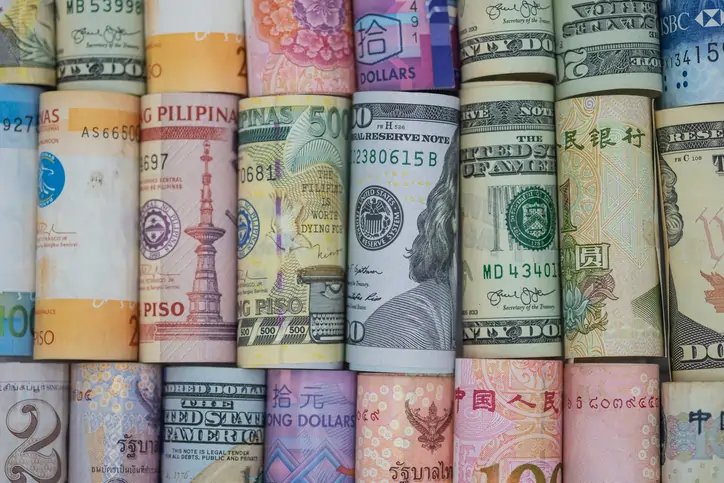
    An insightful graph depicting the evolution of foreign currency trading through innovative marketplaces, highlighting liquidity and accessibility challenges in global finance.
    Graph illustrating currency fluctuations and trading dynamics in global marketplaces - Global Banking & Finance Review
    Why waste money on news and opinion when you can access them for free?

    Take advantage of our newsletter subscription and stay informed on the go!

    Subscribe

    Tags:innovationforeign currencypaymentsemerging marketsfinancial management

    By Ola Oyetayo, co-Founder of Verto

    Companies expanding globally, from large multinationals to small businesses, often encounter significant challenges when dealing with exotic or thinly traded currencies. These obstacles include limited exchange rate control, high initial expenses, and operational inefficiencies. A key issue is the scarcity of liquidity and price transparency, especially for emerging market currencies.

    Although the emerging currency market is expected to grow at a 6.5% CAGR over the next five years, exotic currency trading remains limited, intensifying liquidity constraints and trading expenses.

    However, the emergence of currency marketplaces has transformed foreign currency access and trading, offering an effective solution to forex liquidity challenges. Here we’ll look at how these innovative platforms are reshaping the global currency landscape, enabling businesses to tap into deep liquidity pools for illiquid and exotic African currencies.

    The challenges of liquidity

    Industries engaged in international trade, cross-border investments and global supply chains are often most heavily impacted by FX liquidity challenges. Limited market depth and fragmented liquidity sources complicate currency transactions, leading to suboptimal pricing and execution strategies for exotic currencies. These issues also increase settlement and counterparty risks, particularly when trading through traditional banking channels.

    Take, for example, the CEO of a sustainable agriculture company expanding into Africa. They face complex challenges related to cross-border payments for importing equipment and exporting produce. The CEO is concerned about the associated costs and complexities.

    But with currency marketplaces like Verto, which are integrated with global financial systems, a company will have access to deeper liquidity pools. This translates to more available funds and better credit facilities at competitive rates.

    For our CEO, leveraging these liquidity pools means they have improved capacity to manage large transactions efficiently without facing delays or prohibitive banking charges. This access ensures more stable and predictable costs, directly improving company budgets and facilitating smoother expansion into African markets.

    Getting a competitive edge with price controls

    Traditional financial institutions often burden businesses trading across borders with high upfront costs and hidden fees – particularly when dealing with exotic, illiquid currencies. In contrast, modern currency marketplaces offer greater transparency and flexibility, allowing businesses to explore potential deals with minimal commitment and secure optimal rates without significant risk.

    One example is a treasurer at a multinational bank with operations across Africa. He grapples with the inefficiencies and high costs of traditional cross-border payment methods, seeking a solution that offers fast processing times, low fees, and enhanced visibility.

    By using a currency marketplace, such as Verto’s platform, the bank can maintain strong business relationships and bolster its competitive position in the African market, overcoming the hurdles associated with exotic currency trading.

    Giving companies more autonomy

    Currency marketplaces allow businesses to connect directly with currency-supply sources, eliminating intermediaries and streamlining the exchange process. This direct approach makes for more transparency and efficiency, giving companies the capacity to trade at preferred rates and manage transactions on their own terms.

    As an illustration, imagine the CEO of a UK-based energy company with subsidiaries across Africa. The CEO faces challenges related to cross-border payments, including currency exchange risks, regulatory compliance, and transfer delays.

    Marketplaces can offer real-time transactions and streamlined processes, as well as transparent pricing, fast processing times, and seamless integration with existing financial systems. This allows our CEO (in this example) to boost profits, support initiatives to expand the business, and ensure compliance with regulatory standards across Africa.

    By using Verto’s marketplace then, the energy company can efficiently manage currency exchanges for both common G10 and exotic currencies like XOF, XAF, GHS, NGN, KES, and UGX. This direct access enables quicker responses to market demands and more effective financial management across the company’s diverse African operations.

    A leap forward

    Modern currency marketplaces prioritise transaction security through rigorous know-your-customer (KYC) and anti-money-laundering verifications (AML), creating a safe trading environment. For example, an agency managing student placements across African universities, handling sensitive tuition fee transfers in multiple currencies, would benefit greatly from these robust security measures.

    These marketplaces offer comprehensive identity checks and AML verifications, ensuring transaction safety for such agencies. By addressing common currency trading challenges with innovative, user-friendly solutions, these platforms have become indispensable tools for global financial market participants. They not only streamline operations but also deliver a secure, efficient, and profitable environment for diverse currency trading. This development represents a significant leap forward in the evolution of foreign exchange trading, particularly for those dealing with exotic African currencies.

    Frequently Asked Questions about How currency marketplaces have changed foreign currency trading forever

    1What is foreign currency trading?

    Foreign currency trading, or forex trading, involves buying and selling currencies on the foreign exchange market to profit from changes in exchange rates.

    2What is liquidity in finance?

    Liquidity refers to how easily an asset can be converted into cash without affecting its market price. High liquidity means assets can be quickly sold.

    3What is price transparency?

    Price transparency refers to the availability of clear and accessible pricing information, allowing buyers and sellers to make informed decisions.

    4What is the role of liquidity pools?

    Liquidity pools are reserves of assets that provide liquidity to traders, ensuring that transactions can be executed quickly and efficiently.

    More from Trading

    Explore more articles in the Trading category

    Image for Navigating Currency Volatility in an Uncertain Global Economy
    Navigating Currency Volatility in an Uncertain Global Economy
    Image for What Is a Liquidity Provider – And Why Modern Brokers Can’t Function Without One
    What Is a Liquidity Provider – And Why Modern Brokers Can’t Function Without One
    Image for OneFunded: Prop Firm Overview and Program Structure
    OneFunded: Prop Firm Overview and Program Structure
    Image for What if You Can Actually Chat with Your Crypto Wallet?
    What if You Can Actually Chat with Your Crypto Wallet?
    Image for The Growing Importance of Choosing the Right Crypto Broker in 2025
    The Growing Importance of Choosing the Right Crypto Broker in 2025
    Image for The Rise of Algorithmic Trading Among Retail Investors in the UK
    The Rise of Algorithmic Trading Among Retail Investors in the UK
    Image for Forex Trading for the 9-to-5er: A Realistic Path to a Second Income
    Forex Trading for the 9-to-5er: A Realistic Path to a Second Income
    Image for Quality Matters: ZiNRai’s Focus on Empowering Traders with Precision and Purpose
    Quality Matters: ZiNRai’s Focus on Empowering Traders with Precision and Purpose
    Image for MiCA Regulations and the Legal Requirements for Crypto Presales and Token Offerings in the European Union
    MiCA Regulations and the Legal Requirements for Crypto Presales and Token Offerings in the European Union
    Image for Top Ways Forex Traders Benefit From Peer-to-Peer Learning
    Top Ways Forex Traders Benefit From Peer-to-Peer Learning
    Image for Why High Leverage Remains Attractive to Forex Traders Worldwide
    Why High Leverage Remains Attractive to Forex Traders Worldwide
    Image for XDC Network’s ETP Listing Signals the Maturing Convergence of Blockchain and Trade Finance
    XDC Network’s ETP Listing Signals the Maturing Convergence of Blockchain and Trade Finance
    View All Trading Posts
    Previous Trading PostDollar edges up after August US payrolls paints mixed picture
    Next Trading PostUnlocking the trade and investment potential of Central Asia