Technology
How Can AI-Powered Customer Support Improve Fintech Operations?
Published by Barnali Pal Sinha
Posted on March 26, 2026
8 min readLast updated: March 26, 2026
Add as preferred source on Google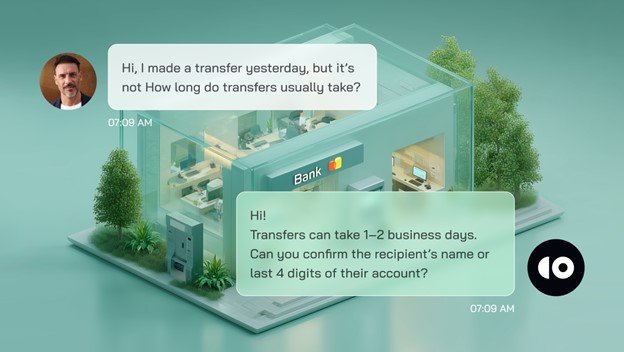
Published by Barnali Pal Sinha
Posted on March 26, 2026
8 min readLast updated: March 26, 2026
Add as preferred source on GoogleWell, there is no doubt that London, UK, serves as a financial services hub, defined by trust, accuracy, and responsiveness. Yet in today’s digital economy, financial institutions face an unprecedented operational challenge. Customer expectations have shifted dramatically as online banking, fintech ...
Well, there is no doubt that London, UK, serves as a financial services hub, defined by trust, accuracy, and responsiveness. Yet in today’s digital economy, financial institutions face an unprecedented operational challenge. Customer expectations have shifted dramatically as online banking, fintech platforms, and digital payment services scale globally. Clients expect instant answers, seamless support across multiple channels, and accurate information regardless of time zone or language.
At the same time, financial institutions must maintain strict compliance standards, protect sensitive customer data, and manage rising operational costs. Traditional customer support models built around ticket queues and call centers are increasingly difficult to scale efficiently.
According to research from Deloitte and McKinsey & Company, AI-driven automation is expected to handle a growing share of customer service interactions in financial institutions over the next decade.
A number of technology providers are developing AI-driven customer support platforms for fintech operations, including companies such as CoSupport AI.
The modern fintech ecosystem operates at an enormous scale. Digital banks, payment processors, investment platforms, and financial applications serve millions of users who expect immediate access to services and assistance.
Support teams must respond to a wide range of inquiries, including, for example:
Many of these requests require timely and accurate responses. A delayed answer regarding a transaction or account lock can quickly erode customer trust. Yet hiring large support teams is not always sustainable for growing fintech companies.
Research from industry analysts indicates that financial institutions are experiencing rising demand for support as digital services expand. As mobile banking adoption grows and financial platforms operate across multiple markets, support teams must serve a broader and more diverse customer base than ever before.
Automation has therefore become a strategic priority for many organizations seeking to maintain service quality while controlling costs.
Over the past decade, many financial institutions experimented with rule-based chatbots to automate customer interactions. While these early tools could answer basic FAQ-style questions, they often struggled with the complexity of real financial conversations.
Customers rarely communicate in perfectly structured language. They may describe a payment issue indirectly, express frustration when transactions fail, or ask multi-part questions that require contextual understanding.
Traditional bots built on rigid scripts frequently break when faced with these situations. As a result, many organizations abandoned early chatbot initiatives after discovering that scripted automation could not handle real-world support conditions.
The next wave of automation is different. AI agents powered by modern language models can analyze context, interpret intent, and retrieve information from approved knowledge sources. Rather than relying on hard-coded scripts, these systems can respond dynamically to customer questions while maintaining accuracy and compliance. This evolution is particularly relevant for fintech, where accuracy and regulatory accountability are essential.
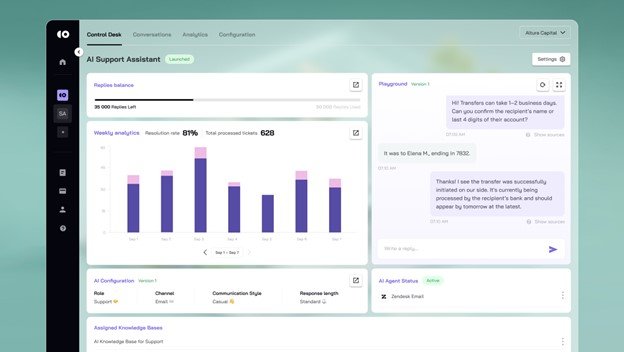
Modern AI support systems are designed to operate within structured business environments rather than functioning as standalone chatbots. These platforms integrate with helpdesk systems, knowledge bases, and internal documentation to ensure that responses reflect official policies and procedures.
CoSupport AI applies this model by grounding its responses in verified company data, including resolved support tickets, internal documentation, compliance policies, and help center content. This approach allows automation to function within clearly defined knowledge boundaries.
In practice, this means the AI does not generate speculative answers. Instead, it retrieves relevant information from approved sources and uses it to construct accurate responses for customers.
For financial institutions operating under strict regulatory frameworks, this data grounding is essential. It ensures that automated responses remain aligned with company policies and compliance standards.
Despite rapid advances in artificial intelligence, financial institutions cannot fully automate every support interaction. Certain issues require human judgment, particularly those involving disputes, regulatory concerns, or sensitive financial decisions.
Modern AI support platforms, therefore, focus on a hybrid model in which automation handles routine inquiries while human agents handle complex cases.
Typical automated tasks in fintech customer support include:
When an issue exceeds predefined confidence thresholds, the system escalates the conversation to a human support agent while preserving the full context of the interaction. This approach allows financial institutions to automate repetitive requests while maintaining human control where it matters most.
Customer support interactions contain valuable operational data that is often overlooked. Every conversation can reveal patterns about customer behavior, product usability, and service friction.
For fintech companies, these insights are particularly valuable. Support interactions frequently surface issues related to onboarding processes, payment failures, user interface confusion, or regulatory misunderstandings.
AI-powered analytics systems can analyze large volumes of conversations and transform them into structured insights. Support leaders can identify recurring issues, measure the effectiveness of resolutions, and detect emerging problems before they escalate.
These insights often benefit multiple departments. Product teams gain visibility into feature friction points. Operations teams identify process bottlenecks. Compliance teams detect patterns related to regulatory inquiries.
By turning customer conversations into actionable intelligence, AI support platforms enable organizations to improve both service quality and operational efficiency.
Financial services are increasingly global. Many fintech companies operate across dozens of markets, serving customers who speak different languages and interact through multiple communication channels.
Providing consistent support across languages is a significant operational challenge. Hiring large multilingual teams can be expensive and difficult to scale quickly.
AI-powered translation systems now allow companies to support customers in many languages without dramatically expanding staffing requirements. These systems translate incoming messages, generate responses, and ensure that the tone and meaning remain consistent with company communication standards.
For global fintech platforms, multilingual support is more than a convenience. It is often essential for maintaining customer trust and accessibility across international markets.
One of the most common obstacles organizations face when adopting AI technology is the complexity of integration. Financial institutions typically operate within established technology stacks that include helpdesk systems, customer relationship management platforms, and communication tools.
Replacing these systems entirely is rarely practical. Instead, AI solutions must integrate directly with existing workflows.
Modern support automation platforms address this challenge by connecting to widely used systems such as Zendesk, Freshdesk, Zoho Desk, and other enterprise support environments. This allows support teams to deploy AI capabilities without rebuilding their operational infrastructure.
For organizations exploring AI support automation, learning more about platforms such as CoSupport AI can provide insight into how these technologies integrate into real support environments and scale alongside existing helpdesk systems.
Security remains a central concern for financial institutions adopting AI technologies. Customer service interactions often involve sensitive personal and financial information, which must be handled in accordance with strict regulatory requirements.
AI support platforms designed for financial environments must, therefore, include robust security frameworks. These typically involve encrypted data handling, strict access controls, and detailed audit logs that track how information is accessed and processed.
Compliance with regulations such as GDPR and other data protection standards is also essential. Enterprises often require dedicated hosting environments and clearly defined policies on data usage and retention.
By addressing these concerns, AI support platforms can enable automation without compromising regulatory obligations or customer trust.
The impact of AI-powered customer support is most evident in real operational scenarios. Digital banks often receive high volumes of questions related to account setup, verification procedures, and transaction status. Automated systems can respond to many of these inquiries instantly while directing complex cases to human agents.
Payment platforms frequently handle questions about transaction delays, refunds, and charge disputes. Automation can provide immediate updates based on internal transaction data, reducing response time and improving transparency.
Investment platforms receive inquiries about account access, portfolio features, and regulatory documentation. AI systems can guide customers through these topics while ensuring that information remains consistent with official policies.
Across these scenarios, the goal is not to replace human agents but to enable them to focus on complex financial interactions that require expertise and judgment.
The financial services industry is undergoing rapid digital transformation. As new fintech platforms emerge and existing institutions expand their online services, customer support operations must evolve accordingly.
AI-powered automation is becoming an essential component of this transformation. By handling routine inquiries, supporting human agents, and extracting insights from customer conversations, modern AI systems enable organizations to scale their support operations more effectively.
Companies that adopt these technologies early often gain a competitive advantage. Faster response times, consistent communication, and improved operational visibility all contribute to stronger customer relationships. In an industry where trust and reliability are paramount, these improvements can significantly influence customer loyalty and long-term growth.
Customer support has traditionally been viewed as a cost center within financial institutions. However, advances in artificial intelligence are beginning to redefine its role.
When automation, analytics, and human expertise are combined effectively, support operations can become a strategic asset that improves customer experience while providing valuable business insight.
As fintech continues to expand globally, organizations will increasingly rely on AI-powered systems to manage support demand, maintain compliance, and deliver consistent service across markets.
Platforms designed specifically for these operational realities are helping financial institutions move from reactive support models toward scalable, intelligent customer service infrastructures.
Explore more articles in the Technology category