
Technology
Half of Enterprise Windows Endpoints Have Not yet Migrated to Windows 11, According to ControlUp Study
Published by Wanda Rich
Posted on June 26, 2025
3 min readLast updated: January 21, 2026
Add as preferred source on Google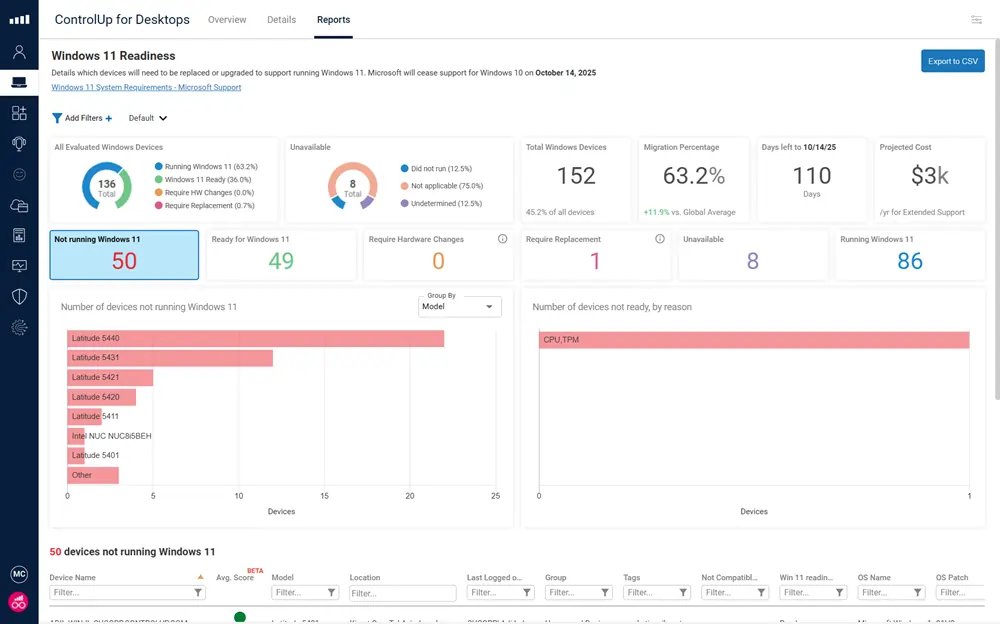
Published by Wanda Rich
Posted on June 26, 2025
3 min readLast updated: January 21, 2026
Add as preferred source on GoogleEducation and technology sectors lead the way, while healthcare and financial services lag behind
Education and technology sectors lead the way, while healthcare and financial services lag behind
London, UK. June 26, 2025 — ControlUp, a global leader in Digital Employee Experience (DEX) management tools, today announced new findings from its Windows 11 Readiness report, revealing that 50% of enterprise Windows endpoints have yet to complete their migration to Windows 11. This marks a significant improvement from last year’s data, when over 82% of enterprise devices were not running Windows 11. With just under four months remaining until Microsoft officially ends support for Windows 10 on October 14, 2025, the data highlights both encouraging progress and critical gaps in enterprise readiness across industries, geographies, and organization sizes.
“While the 50% completion mark is a major milestone, it's not time to relax,” said Marcel Calef, Americas Field CTO, ControlUp. “With Windows 10 end of support just months away, organizations need to act now to avoid being caught off guard. Our data shows that the rate of migration is uneven and many enterprises still face significant hardware and planning challenges.”
Industry Disparities Highlight Readiness Gaps
ControlUp’s analysis of over one million enterprise endpoints shows that Education and Technology sectors are leading the migration, with 77% and 73% of their devices already running Windows 11, respectively. In contrast, Healthcare (41%) and Finance (45%) are falling behind. A deeper look reveals that 19% of Healthcare endpoints need to be replaced entirely before they can support Windows 11, compared to just 3% in Finance.
Americas Trail Behind Europe and Other Regions
By region, the Americas are furthest behind, with only 43% of enterprise endpoints upgraded to Windows 11, even though 87% of those devices are Windows 11 ready. Europe leads all regions at 70% completion, followed by other global regions at 66%. These regional differences could impact multinational organizations’ ability to maintain consistency and security across their environments.
Larger Enterprises Facing the Greatest Hurdles
ControlUp’s data also reveals that very large organizations (with over 10K Windows devices) are the least prepared for the end of Windows 10 support, with just 42% of migrations completed. These organizations often have complex IT environments and a higher volume of legacy hardware, making early assessments and planning essential.
“ControlUp’s Windows 11 readiness assessment tool helps IT teams instantly evaluate endpoint compatibility, identify upgrade opportunities and flag devices needing replacement, all from a single dashboard,” Calef added.
The Windows 11 Readiness report, available through ControlUp’s Windows 11 Readiness Assessment tool, is built into the ControlUp for Desktops solution—designed to improve the digital employee experience across physical and cloud-based endpoint devices.
ControlUp’s findings are based on a sample set of more than one million enterprise Windows endpoint devices under management as of June 2025. Additional insights can be found here.
Windows 11 is the latest operating system from Microsoft, designed to enhance user experience with a new interface and improved performance features.
Enterprise readiness refers to the preparedness of an organization to adopt new technologies or systems, ensuring compatibility and functionality across its operations.
Digital Employee Experience (DEX) encompasses the tools, technologies, and environments that impact how employees interact with their workplace digitally.
Endpoint compatibility refers to the ability of devices within an organization to effectively run specific software or operating systems without issues.
Migration in IT involves transitioning from one system or platform to another, crucial for maintaining security, performance, and access to updated features.
Explore more articles in the Technology category









