Search
00
GBAF Logo
trophy
Top StoriesInterviewsBusinessFinanceBankingTechnologyInvestingTradingVideosAwardsMagazinesHeadlinesTrends

Subscribe to our newsletter

Get the latest news and updates from our team.

Global Banking & Finance Review®

Global Banking & Finance Review® - Subscribe to our newsletter

Company

    GBAF Logo
    • About Us
    • Profile
    • Privacy & Cookie Policy
    • Terms of Use
    • Contact Us
    • Advertising
    • Submit Post
    • Latest News
    • Research Reports
    • Press Release
    • Awards▾
      • About the Awards
      • Awards TimeTable
      • Submit Nominations
      • Testimonials
      • Media Room
      • Award Winners
      • FAQ
    • Magazines▾
      • Global Banking & Finance Review Magazine Issue 79
      • Global Banking & Finance Review Magazine Issue 78
      • Global Banking & Finance Review Magazine Issue 77
      • Global Banking & Finance Review Magazine Issue 76
      • Global Banking & Finance Review Magazine Issue 75
      • Global Banking & Finance Review Magazine Issue 73
      • Global Banking & Finance Review Magazine Issue 71
      • Global Banking & Finance Review Magazine Issue 70
      • Global Banking & Finance Review Magazine Issue 69
      • Global Banking & Finance Review Magazine Issue 66
    Top StoriesInterviewsBusinessFinanceBankingTechnologyInvestingTradingVideosAwardsMagazinesHeadlinesTrends

    Global Banking & Finance Review® is a leading financial portal and online magazine offering News, Analysis, Opinion, Reviews, Interviews & Videos from the world of Banking, Finance, Business, Trading, Technology, Investing, Brokerage, Foreign Exchange, Tax & Legal, Islamic Finance, Asset & Wealth Management.
    Copyright © 2010-2026 GBAF Publications Ltd - All Rights Reserved. | Sitemap | Tags | Developed By eCorpIT

    Editorial & Advertiser disclosure

    Global Banking & Finance Review® is an online platform offering news, analysis, and opinion on the latest trends, developments, and innovations in the banking and finance industry worldwide. The platform covers a diverse range of topics, including banking, insurance, investment, wealth management, fintech, and regulatory issues. The website publishes news, press releases, opinion and advertorials on various financial organizations, products and services which are commissioned from various Companies, Organizations, PR agencies, Bloggers etc. These commissioned articles are commercial in nature. This is not to be considered as financial advice and should be considered only for information purposes. It does not reflect the views or opinion of our website and is not to be considered an endorsement or a recommendation. We cannot guarantee the accuracy or applicability of any information provided with respect to your individual or personal circumstances. Please seek Professional advice from a qualified professional before making any financial decisions. We link to various third-party websites, affiliate sales networks, and to our advertising partners websites. When you view or click on certain links available on our articles, our partners may compensate us for displaying the content to you or make a purchase or fill a form. This will not incur any additional charges to you. To make things simpler for you to identity or distinguish advertised or sponsored articles or links, you may consider all articles or links hosted on our site as a commercial article placement. We will not be responsible for any loss you may suffer as a result of any omission or inaccuracy on the website.

    Home > Finance > Globalization vs protectionism
    Finance

    Globalization vs protectionism

    Published by Jessica Weisman-Pitts

    Posted on November 21, 2023

    4 min read

    Last updated: January 31, 2026

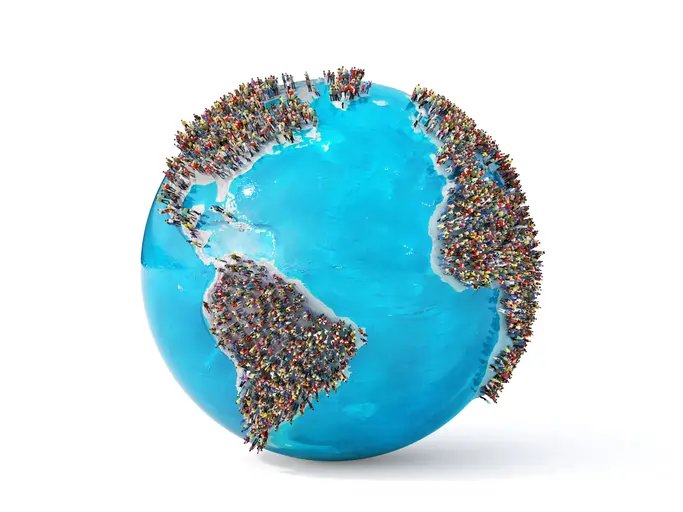
    This image visually represents the contrast between globalization and protectionism in the finance sector, highlighting their economic impacts and significance in today's global landscape.
    Conceptual illustration of globalization vs protectionism in finance - Global Banking & Finance Review
    Why waste money on news and opinion when you can access them for free?

    Take advantage of our newsletter subscription and stay informed on the go!

    Subscribe

    Tags:Globalizationemployment opportunities

    Quick Summary

    In today’s interconnected global landscape, the dynamics of globalization and protectionism have become central to economic, political, and social discussions. The clash between these two ideologies has shaped the course of nations and influenced international relations. This article delves into the...

    Globalization vs protectionism

    In today’s interconnected global landscape, the dynamics of globalization and protectionism have become central to economic, political, and social discussions. The clash between these two ideologies has shaped the course of nations and influenced international relations. This article delves into the key aspects of globalization and protectionism, exploring their impacts on economies, cultures, and societies.

    Defining globalization and protectionism

    At its core, globalization is the process of increased interconnectedness and interdependence among countries, fostering the exchange of goods, services, information, and ideas on a global scale. This phenomenon has been facilitated by advances in technology, communication, and Transportation. On the other hand, protectionism refers to the policies and practices that nations adopt to shield their domestic industries from foreign competition. This often involves the imposition of trade barriers such as tariffs and quotas.

    Economic implications

    Globalization:

    Advocates of globalization argue that it promotes economic growth by expanding markets and fostering competition. The free flow of goods and services across borders allows for specialization, leading to increased efficiency and productivity. Moreover, multinational corporations can tap into diverse markets, creating opportunities for job creation and innovation.

    Protectionism:

    Conversely, proponents of protectionism assert that it safeguards domestic industries and preserves jobs by limiting foreign competition. Tariffs and trade restrictions are seen as protective measures that prevent the erosion of local industries, particularly in sectors where a nation seeks to maintain self-sufficiency.

    Impact on employment and labor markets

    Globalization:

    One of the significant criticisms of globalization is its potential to lead to job displacement in certain industries. As companies seek cost-effective solutions, they may outsource production to countries with lower labor costs, leaving workers in higher-cost regions unemployed.

    Protectionism:

    Protectionist measures are often framed as a means to protect domestic jobs. By imposing trade barriers, governments aim to shield their industries from foreign competition, thus preserving employment opportunities for their citizens.

    Cultural exchange and identity

    Globalization:

    Beyond the economic sphere, globalization fosters cultural exchange. Increased connectivity allows for the sharing of traditions, ideas, and values. This cultural interchange contributes to a more diverse and interconnected global society.

    Protectionism:

    Critics argue that protectionism can lead to cultural isolation by limiting exposure to external influences. The focus on safeguarding domestic industries may inadvertently restrict the flow of diverse cultural products, hindering the enrichment of local societies.

    National security concerns

    Globalization:

    Proponents of globalization contend that interconnected economies create interdependencies that discourage conflict. Nations with strong economic ties have a vested interest in maintaining stability, reducing the likelihood of military conflicts.

    Protectionism:

    On the other hand, protectionists emphasize the need to protect national industries for the sake of security. Dependence on foreign goods, especially in critical sectors, may be perceived as a vulnerability, necessitating measures to ensure self-sufficiency.

    Environmental considerations

    Globalization:

    Critics argue that globalization can contribute to environmental degradation through increased transportation and resource exploitation. The pursuit of profit in a globalized economy may lead to unsustainable practices that harm the planet.

    Protectionism:

    Conversely, protectionism can be seen as a tool for environmental conservation. Localized production may reduce the carbon footprint associated with long-distance transportation of goods, aligning with sustainability goals.

    Global health and crisis response

    Globalization:

    The covid-19 pandemic highlighted both the strengths and weaknesses of globalization. While the rapid spread of the virus showcased the interconnectedness of the world, it also demonstrated the collaborative efforts made possible through global networks for vaccine development and distribution.

    Protectionism:

    In response to the pandemic, some nations embraced protectionist measures to secure essential goods and medical supplies. This raised questions about the effectiveness of global cooperation in times of crisis and the importance of self-sufficiency.

    Striking a balance for a sustainable future

    As the world navigates the complexities of globalization and protectionism, finding a balance that maximizes the benefits of global connectivity while addressing local concerns is crucial. Policies must be crafted with a nuanced understanding of the multifaceted impacts on economies, cultures, and societies. Striking this delicate equilibrium will be essential for fostering a sustainable and inclusive global future.

    Frequently Asked Questions about Globalization vs protectionism

    1What is globalization?

    Globalization is the process of increased interconnectedness and interdependence among countries, facilitating the exchange of goods, services, information, and ideas on a global scale.

    2What is protectionism?

    Protectionism refers to the policies and practices that nations adopt to shield their domestic industries from foreign competition, often involving trade barriers like tariffs and quotas.

    3What are economic implications?

    Economic implications refer to the effects that policies, events, or changes have on the economy, including growth, employment, and market dynamics.

    4What is cultural exchange?

    Cultural exchange is the process through which different cultures share traditions, ideas, and values, contributing to a more diverse and interconnected global society.

    5What are national security concerns?

    National security concerns involve the protection of a nation's interests from external threats, which can include economic vulnerabilities related to dependence on foreign goods.

    More from Finance

    Explore more articles in the Finance category

    Image for French miner Eramet's finance chief steps aside temporarily, days after CEO ouster
    French miner Eramet's finance chief steps aside temporarily, days after CEO ouster
    Image for Ukraine's Zelenskiy calls for faster action on air defence, repairs to grid
    Ukraine's Zelenskiy calls for faster action on air defence, repairs to grid
    Image for Goldman Sachs teams up with Anthropic to automate banking tasks with AI agents, CNBC reports
    Goldman Sachs teams up with Anthropic to automate banking tasks with AI agents, CNBC reports
    Image for Analysis-Hims' $49 weight-loss pill rattles investor case for cash-pay obesity market
    Analysis-Hims' $49 weight-loss pill rattles investor case for cash-pay obesity market
    Image for Analysis-Glencore to focus on short-term disposals as Rio deal remains elusive
    Analysis-Glencore to focus on short-term disposals as Rio deal remains elusive
    Image for Belgium's Agomab Therapeutics valued at $716 million as shares fall in Nasdaq debut
    Belgium's Agomab Therapeutics valued at $716 million as shares fall in Nasdaq debut
    Image for Big Tech's quarter in four charts: AI splurge and cloud growth
    Big Tech's quarter in four charts: AI splurge and cloud growth
    Image for EU hikes tariffs on Chinese ceramics to 79% to counter dumping 
    EU hikes tariffs on Chinese ceramics to 79% to counter dumping 
    Image for AI trade splinters as investors get more selective
    AI trade splinters as investors get more selective
    Image for EU extends tariff suspension on $109.8 billion of US imports for six months
    EU extends tariff suspension on $109.8 billion of US imports for six months
    Image for Dog food maker Ollie acquired by Spain’s Agrolimen
    Dog food maker Ollie acquired by Spain’s Agrolimen
    Image for Salzgitter to take over HKM steel joint venture, end clash with Thyssenkrupp
    Salzgitter to take over HKM steel joint venture, end clash with Thyssenkrupp
    View All Finance Posts
    Previous Finance PostFrom Startups to Scaling: Andrew Imbesi’s Path to Business Funding
    Next Finance PostMaximize Your Minutes, Optimize Your Life: KM Capital Management’s Joey Feste Shares 3 Game-Changing Strategies for a More Effective Workday