
Search
00
GBAF Logo
trophy
Top StoriesInterviewsBusinessFinanceBankingTechnologyInvestingTradingVideosAwardsMagazinesHeadlinesTrends

Subscribe to our newsletter

Get the latest news and updates from our team.

Global Banking & Finance Review®

Global Banking & Finance Review® - Subscribe to our newsletter

Company

    GBAF Logo
    • About Us
    • Advertising and Sponsorship
    • Profile & Readership
    • Contact Us
    • Latest News
    • Privacy & Cookies Policies
    • Terms of Use
    • Advertising Terms
    • Issue 81
    • Issue 80
    • Issue 79
    • Issue 78
    • Issue 77
    • Issue 76
    • Issue 75
    • Issue 74
    • Issue 73
    • Issue 72
    • Issue 71
    • Issue 70
    • View All
    • About the Awards
    • Awards Timetable
    • Awards Winners
    • Submit Nominations
    • Testimonials
    • Media Room
    • FAQ
    • Asset Management Awards
    • Brand of the Year Awards
    • Business Awards
    • Cash Management Banking Awards
    • Banking Technology Awards
    • CEO Awards
    • Customer Service Awards
    • CSR Awards
    • Deal of the Year Awards
    • Corporate Governance Awards
    • Corporate Banking Awards
    • Digital Transformation Awards
    • Fintech Awards
    • Education & Training Awards
    • ESG & Sustainability Awards
    • ESG Awards
    • Forex Banking Awards
    • Innovation Awards
    • Insurance & Takaful Awards
    • Investment Banking Awards
    • Investor Relations Awards
    • Leadership Awards
    • Islamic Banking Awards
    • Real Estate Awards
    • Project Finance Awards
    • Process & Product Awards
    • Telecommunication Awards
    • HR & Recruitment Awards
    • Trade Finance Awards
    • The Next 100 Global Awards
    • Wealth Management Awards
    • Travel Awards
    • Years of Excellence Awards
    • Publishing Principles
    • Ownership & Funding
    • Corrections Policy
    • Editorial Code of Ethics
    • Diversity & Inclusion Policy
    • Fact Checking Policy
    Original content: Global Banking and Finance Review - https://www.globalbankingandfinance.com

    A global financial intelligence and recognition platform delivering authoritative insights, data-driven analysis, and institutional benchmarking across Banking, Capital Markets, Investment, Technology, and Financial Infrastructure.

    Copyright © 2010-2026 - All Rights Reserved. | Sitemap | Tags

    Editorial & Advertiser disclosure

    Global Banking & Finance Review® is an online platform offering news, analysis, and opinion on the latest trends, developments, and innovations in the banking and finance industry worldwide. The platform covers a diverse range of topics, including banking, insurance, investment, wealth management, fintech, and regulatory issues. The website publishes news, press releases, opinion and advertorials on various financial organizations, products and services which are commissioned from various Companies, Organizations, PR agencies, Bloggers etc. These commissioned articles are commercial in nature. This is not to be considered as financial advice and should be considered only for information purposes. It does not reflect the views or opinion of our website and is not to be considered an endorsement or a recommendation. We cannot guarantee the accuracy or applicability of any information provided with respect to your individual or personal circumstances. Please seek Professional advice from a qualified professional before making any financial decisions. We link to various third-party websites, affiliate sales networks, and to our advertising partners websites. When you view or click on certain links available on our articles, our partners may compensate us for displaying the content to you or make a purchase or fill a form. This will not incur any additional charges to you. To make things simpler for you to identity or distinguish advertised or sponsored articles or links, you may consider all articles or links hosted on our site as a commercial article placement. We will not be responsible for any loss you may suffer as a result of any omission or inaccuracy on the website.

    1. Home
    2. >Finance
    3. >Explainer-Credit Suisse: How did it get to crisis point?
    Finance

    Explainer-Credit Suisse: How Did It Get to Crisis Point?

    Published by Jessica Weisman-Pitts

    Posted on March 16, 2023

    3 min read

    Last updated: February 2, 2026

    Add as preferred source on Google
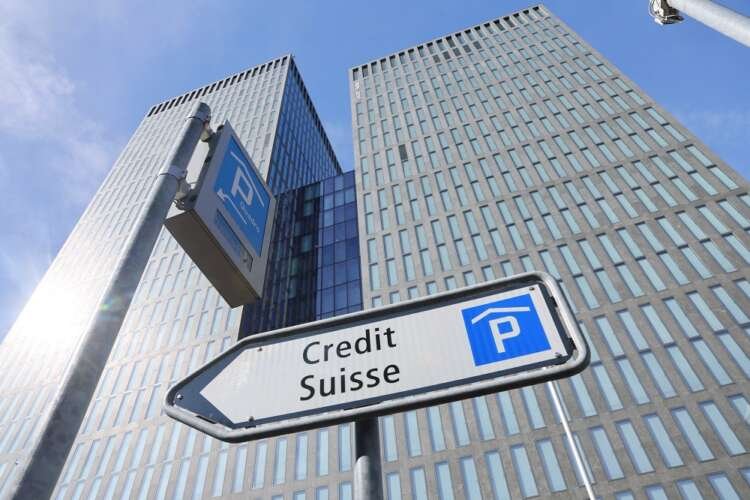
    The image showcases the Credit Suisse office building in Zurich, symbolizing the bank's ongoing financial turmoil and liquidity issues as discussed in the article.
    Exterior view of Credit Suisse office building in Zurich, reflecting its financial crisis - Global Banking & Finance Review
    Why waste money on news and opinion when you can access them for free?

    Take advantage of our newsletter subscription and stay informed on the go!

    Subscribe

    Tags:financial crisisInvestment BankingLiquidityWealth Management

    By Anshuman Daga

    (Reuters) – Credit Suisse said on Thursday it would borrow up to $54 billion from the Swiss central bank to shore up liquidity after a slump in its shares and bonds intensified fears about a global banking crisis. Analysts said they think that might not be enough.

    WHAT EVENTS LED TO THE RECENT SHARE SLUMP?

    A string of scandals over many years, top management changes, multi-billion dollar losses and an uninspiring strategy can be blamed for the mess that the 167-year-old Swiss lender now finds itself in.

    The sell-off in Credit Suisse’s shares began in 2021, triggered by losses associated with the collapse of investment fund Archegos and Greensill Capital.

    In January 2022, Antonio Horta-Osorio resigned as chairman for breaching COVID-19 rules, just eight months after he was hired to fix the ailing bank.

    In July, new CEO and restructuring expert Ulrich Koerner unveiled a strategic review – but failed to win over investors.

    An unsubstantiated rumour on an impending failure of the bank in the autumn sent customers fleeing.

    Credit Suisse confirmed last month that clients had pulled 110 billion Swiss francs of funds in the fourth quarter while the bank suffered its biggest annual loss of 7.29 billion Swiss francs since the financial crisis. In December, Credit Suisse had tapped investors for 4 billion Swiss francs.

    On Wednesday, Saudi National Bank, the bank’s top backer, told reporters it could not give more money to the bank as it was constrained by regulatory hurdles, while saying it was happy with the bank’s turnaround plan.

    The shares have lost 75% over the past one year.

    (Graphic: Credit Suisse and its problems – https://www.reuters.com/graphics/CREDITSUISSEGP-STOCKS/akveqegdgvr/chart.png)

    WHAT STEPS CAN CREDIT SUISSE TAKE TO CALM INVESTORS?

    Credit Suisse has said it would borrow up to $54 billion to shore up liquidity and investor confidence but some analysts believe that is unlikely to be enough to soothe investors.

    Winning the backing of strategic investors could be one option to shore up market confidence. It counts Qatar Investment Authority and Saudi conglomerate Oyalan Group among its investors.

    In the early days of the global financial crisis in 2008, UBS took on Singapore sovereign wealth fund GIC as an investor but the stake sell-down ultimately resulted in a loss for GIC.

    Divesting stakes in various assets is an option as Credit Suisse owns an asset management business and a stake in SIX Group, which runs the Zurich stock exchange.

    Credit Suisse has pivoted to a strategy to cater to rich clients while cutting back on its volatile investment banking business and has already announced plans to spin it off.

    HOW IMPORTANT IS CREDIT SUISSE?

    The bank ranks among the world’s largest wealth managers and crucially it is one of 30 global systemically important banks, whose failure would cause ripples through the entire financial system.

    Credit Suisse has a local Swiss bank, wealth management, investment banking and asset management operations. It has just over 50,000 employees and 1.6 trillion Swiss francs in assets under management at the end of 2021.

    With more than 150 offices in around 50 countries, Credit Suisse is the private bank for a large number of entrepreneurs, rich and ultra rich individuals and companies.

    (Reporting by Anshuman Daga and Swiss bureau; Editing by Sumeet Chatterjee, Elisa Martinuzzi and Elaine Hardcastle)

    Frequently Asked Questions about Explainer-Credit Suisse: How did it get to crisis point?

    1What is liquidity?

    Liquidity refers to how easily assets can be converted into cash without affecting their market price. It is crucial for businesses and banks to meet short-term obligations.

    2What is a financial crisis?

    A financial crisis is a situation in which the value of financial institutions or assets drops significantly, leading to widespread economic instability.

    3
    What is credit risk?

    Credit risk is the possibility of a loss resulting from a borrower's failure to repay a loan or meet contractual obligations.

    4What is wealth management?

    Wealth management is a comprehensive service that combines financial planning, investment management, and other financial services to manage an individual's or family's wealth.

    More from Finance

    Explore more articles in the Finance category

    Image for Denmark's prime minister hands in government resignation after election defeat
    Denmark's Prime Minister Hands in Government Resignation After Election Defeat
    Image for ECB's Lane flags selling prices and wages as key indicators
    ECB's Lane Flags Selling Prices and Wages as Key Indicators
    Image for UK house prices rise by least since September 2024 in January
    UK House Prices Rise by Least Since September 2024 in January
    Image for Commerzbank supervisory board committee met 11 times to discuss UniCredit in 2025
    Commerzbank Supervisory Board Committee Met 11 Times to Discuss UniCredit in 2025
    Image for Swiss air transport caterer Gategroup considers listing
    Swiss Air Transport Caterer Gategroup Considers Listing
    Image for German business sentiment fell less than expected in March, Ifo finds
    German Business Sentiment Fell Less Than Expected in March, Ifo Finds
    Image for On Holding names co-founders as CEOs
    On Holding Names Co-Founders as CEOs
    Image for ECB may need to act on even 'not-too-persistent' inflation surge, Lagarde says
    ECB May Need to Act on Even 'not-Too-Persistent' Inflation Surge, Lagarde Says
    Image for Europe's STOXX 600 gains 1% on prospect of Middle East ceasefire
    Europe's Stoxx 600 Gains 1% on Prospect of Middle East Ceasefire
    Image for Estonia says drone enters from Russia, hits power station, ERR reports
    Estonia Says Drone Enters From Russia, Hits Power Station, Err Reports
    Image for Germany's Aurelius interested in buying Carrefour's Belgian unit, L'Echo reports
    Germany's Aurelius Interested in Buying Carrefour's Belgian Unit, L'Echo Reports
    Image for Germany's EnBW expects profits to be stable at best in 2026
    Germany's EnBW Expects Profits to Be Stable at Best in 2026
    View All Finance Posts
    Previous Finance PostTypes of Car Insurance
    Next Finance PostHow Treasury Teams Can Approach Payments Modernization Right Now
