Search
00
GBAF Logo
trophy
Top StoriesInterviewsBusinessFinanceBankingTechnologyInvestingTradingVideosAwardsMagazinesHeadlinesTrends

Subscribe to our newsletter

Get the latest news and updates from our team.

Global Banking and Finance Review

Global Banking & Finance Review

Company

    GBAF Logo
    • About Us
    • Profile
    • Privacy & Cookie Policy
    • Terms of Use
    • Contact Us
    • Advertising
    • Submit Post
    • Latest News
    • Research Reports
    • Press Release
    • Awards▾
      • About the Awards
      • Awards TimeTable
      • Submit Nominations
      • Testimonials
      • Media Room
      • Award Winners
      • FAQ
    • Magazines▾
      • Global Banking & Finance Review Magazine Issue 79
      • Global Banking & Finance Review Magazine Issue 78
      • Global Banking & Finance Review Magazine Issue 77
      • Global Banking & Finance Review Magazine Issue 76
      • Global Banking & Finance Review Magazine Issue 75
      • Global Banking & Finance Review Magazine Issue 73
      • Global Banking & Finance Review Magazine Issue 71
      • Global Banking & Finance Review Magazine Issue 70
      • Global Banking & Finance Review Magazine Issue 69
      • Global Banking & Finance Review Magazine Issue 66
    Top StoriesInterviewsBusinessFinanceBankingTechnologyInvestingTradingVideosAwardsMagazinesHeadlinesTrends

    Global Banking & Finance Review® is a leading financial portal and online magazine offering News, Analysis, Opinion, Reviews, Interviews & Videos from the world of Banking, Finance, Business, Trading, Technology, Investing, Brokerage, Foreign Exchange, Tax & Legal, Islamic Finance, Asset & Wealth Management.
    Copyright © 2010-2025 GBAF Publications Ltd - All Rights Reserved.

    Editorial & Advertiser disclosure

    Global Banking and Finance Review is an online platform offering news, analysis, and opinion on the latest trends, developments, and innovations in the banking and finance industry worldwide. The platform covers a diverse range of topics, including banking, insurance, investment, wealth management, fintech, and regulatory issues. The website publishes news, press releases, opinion and advertorials on various financial organizations, products and services which are commissioned from various Companies, Organizations, PR agencies, Bloggers etc. These commissioned articles are commercial in nature. This is not to be considered as financial advice and should be considered only for information purposes. It does not reflect the views or opinion of our website and is not to be considered an endorsement or a recommendation. We cannot guarantee the accuracy or applicability of any information provided with respect to your individual or personal circumstances. Please seek Professional advice from a qualified professional before making any financial decisions. We link to various third-party websites, affiliate sales networks, and to our advertising partners websites. When you view or click on certain links available on our articles, our partners may compensate us for displaying the content to you or make a purchase or fill a form. This will not incur any additional charges to you. To make things simpler for you to identity or distinguish advertised or sponsored articles or links, you may consider all articles or links hosted on our site as a commercial article placement. We will not be responsible for any loss you may suffer as a result of any omission or inaccuracy on the website.

    Home > Banking > Exit game: Central banks’ shift from crisis policies gathers momentum
    Banking

    Exit game: Central banks’ shift from crisis policies gathers momentum

    Exit game: Central banks’ shift from crisis policies gathers momentum

    Published by maria gbaf

    Posted on August 30, 2021

    Featured image for article about Banking

    (Makes clear in paragraph 11 the Hungarian central bank has raised rates three times this summer, not twice)

    By Dan Burns

    (Reuters) -While the financial world waits for the Federal Reserve to start reversing its ultra-loose policy stance, recent moves by a clutch of other central banks signal the days of pandemic-era accommodation are already numbered even as COVID-19 continues to impede smooth economic recoveries around the world.

    South Korea’s central bank on Thursday raised its benchmark interest rate by a quarter of a percentage point to blunt rising financial stability risks posed by a surge in household debt, becoming the first major monetary authority in Asia to do so since the coronavirus broadsided the global economy 18 months ago.

    Even before the rate hike in South Korea, though, central banks in Latin America and eastern and central Europe had begun lifting interest rates this year to beat back inflation that is building on the back of currency fluctuations, global supply chain bottlenecks and regional labor shortages.

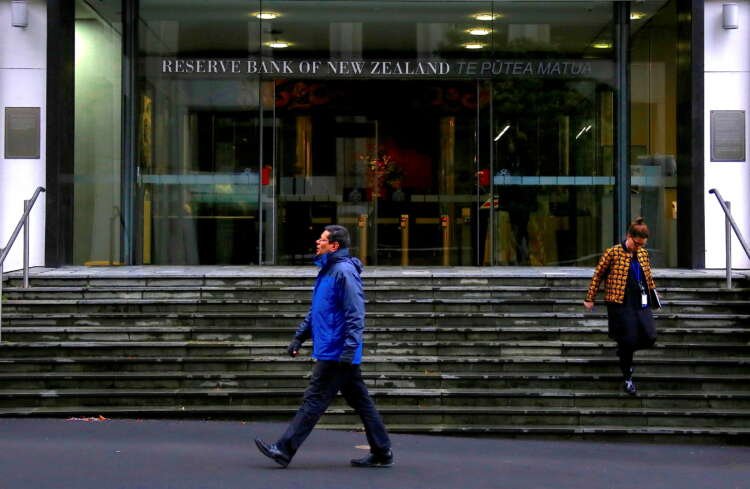
    And larger-economy central banks also are getting into the swing. The Bank of Canada has already cut back on its bond purchases and could proceed to raise borrowing costs in 2022, and the Reserve Bank of New Zealand (RBNZ) is expected to lift rates by the end of this year despite balking at an expected hike last week in the face of a snap COVID-19 lockdown.

    For its part, the Fed is lumbering toward tapering its $120 billion in monthly asset purchases, with an announcement expected before the end of 2021, possibly as early as next month. An actual U.S. interest rate increase is likely a year or more away, however.

    Fed Chair Jerome Powell is set to speak later on Friday on the economic outlook at the U.S. central bank‘s annual Jackson Hole summer research conference, which is being held virtually for the second year in a row. His remarks may color expectations at the margin for when the Fed makes its move but are not likely to offer any concrete signal.

    THE DIFFERENCE A YEAR MAKES

    When Powell spoke at last year’s conference – unveiling a new policy framework that is just starting to be tested – fewer than half of the 22 million U.S. jobs lost to coronavirus shutdowns in the spring of 2020 had been recovered and inflation was running at half the Fed’s 2% target rate. The outlook outside the United States was no less bleak, with lockdowns still widespread.

    The situation in the United States and other economies could hardly be more different a year later.

    The U.S. economy has more than fully recouped all of its lost output, roughly 9 million more jobs have been regained and inflation is well above target. Elsewhere, most of the world’s economies are back squarely in growth mode, albeit unevenly so in many cases as COVID-19 outbreaks fueled by the highly contagious Delta variant trigger localized lockdowns.

    In South Korea, the economy grew 5.9% on a year-over-year basis in the second quarter, the fastest pace in a decade, and young people are bingeing on debt and kindling financial stability concerns at the Bank of Korea. The export-reliant Asian nation’s key factory sector expanded in July for a 10th straight month, even as the Delta variant crimped manufacturing output for rivals like China, Vietnam and Malaysia.

    Central Europe’s recovery also accelerated in the second quarter as lockdowns in the region eased. The improvement – along with an upswing in inflation – has already spurred the Czech central bank to raise interest rates twice this summer and the Hungarian central bank to deliver its third hike on Aug. 24, the first increases across the European Union. Both are expected to deliver more tightening, and Czech officials are debating if they need to deliver more than the standard quarter-percentage point increase.

    While the earliest movers have been emerging market countries where inflation is often aggravated by movements in choppy currency markets, the gears of tightening are also starting to move in top-tier economies.

    The RBNZ opted not to raise rates last week because of the messaging complications that would have arisen from such a move alongside a hastily-called lockdown after the island nation reported its first local COVID-19 infection in six months. Central bank officials, however, appear determined to get a rate hike in before the year runs out.

    Meanwhile, Norway’s central bank is signaling it will not veer from its plan for its first rate hike next month despite a recent rise in infections, putting it on course to be the first of the Group of 10 (G10) developed economies to raise borrowing costs.

    “In the committee’s current assessment of the outlook and balance of risks, the policy rate will most likely be raised in September,” Norges Bank Governor Oeystein Olsen said in a statement last week.

    While the Fed and several other G10 banks now appear on course to start reducing their pandemic accommodation measures this year, tightening moves by the Fed’s two largest peers – the European Central Bank and Bank of Japan – look much further off.

    Still, that doesn’t mean they don’t see some improvement in conditions even as the Delta variant spreads.

    Japan was among the Asian economies to experience factory sector growth last month even as COVID-19 cases hit a record high. And a key ECB-POLICY-SOURCES-e4bab80d-7aeb-4e49-a29a-ce14e1595c6d>ECB policymaker sees only a limited headwind to the euro zone’s recovery due to the variant.

    “I would say we’re broadly not too far away from what we expected in June for the full year,” Philip Lane, the ECB-POLICY-SOURCES-e4bab80d-7aeb-4e49-a29a-ce14e1595c6d>ECB’s chief economist, told Reuters on Wednesday. “It’s a reasonably well-balanced picture.”

    (Reporting by Balazs Korayi and Frank Siebelt in Frankfurt, Jason Hovet in Prague, Krisztina Than in Budapest, Leika Kihara in Tokyo, Praveen Menon in Wellington, and Cynthia Kim and Joori Roh in SeoulWriting by Dan BurnsEditing by Paul Simao)

    (Makes clear in paragraph 11 the Hungarian central bank has raised rates three times this summer, not twice)

    By Dan Burns

    (Reuters) -While the financial world waits for the Federal Reserve to start reversing its ultra-loose policy stance, recent moves by a clutch of other central banks signal the days of pandemic-era accommodation are already numbered even as COVID-19 continues to impede smooth economic recoveries around the world.

    South Korea’s central bank on Thursday raised its benchmark interest rate by a quarter of a percentage point to blunt rising financial stability risks posed by a surge in household debt, becoming the first major monetary authority in Asia to do so since the coronavirus broadsided the global economy 18 months ago.

    Even before the rate hike in South Korea, though, central banks in Latin America and eastern and central Europe had begun lifting interest rates this year to beat back inflation that is building on the back of currency fluctuations, global supply chain bottlenecks and regional labor shortages.

    And larger-economy central banks also are getting into the swing. The Bank of Canada has already cut back on its bond purchases and could proceed to raise borrowing costs in 2022, and the Reserve Bank of New Zealand (RBNZ) is expected to lift rates by the end of this year despite balking at an expected hike last week in the face of a snap COVID-19 lockdown.

    For its part, the Fed is lumbering toward tapering its $120 billion in monthly asset purchases, with an announcement expected before the end of 2021, possibly as early as next month. An actual U.S. interest rate increase is likely a year or more away, however.

    Fed Chair Jerome Powell is set to speak later on Friday on the economic outlook at the U.S. central bank‘s annual Jackson Hole summer research conference, which is being held virtually for the second year in a row. His remarks may color expectations at the margin for when the Fed makes its move but are not likely to offer any concrete signal.

    THE DIFFERENCE A YEAR MAKES

    When Powell spoke at last year’s conference – unveiling a new policy framework that is just starting to be tested – fewer than half of the 22 million U.S. jobs lost to coronavirus shutdowns in the spring of 2020 had been recovered and inflation was running at half the Fed’s 2% target rate. The outlook outside the United States was no less bleak, with lockdowns still widespread.

    The situation in the United States and other economies could hardly be more different a year later.

    The U.S. economy has more than fully recouped all of its lost output, roughly 9 million more jobs have been regained and inflation is well above target. Elsewhere, most of the world’s economies are back squarely in growth mode, albeit unevenly so in many cases as COVID-19 outbreaks fueled by the highly contagious Delta variant trigger localized lockdowns.

    In South Korea, the economy grew 5.9% on a year-over-year basis in the second quarter, the fastest pace in a decade, and young people are bingeing on debt and kindling financial stability concerns at the Bank of Korea. The export-reliant Asian nation’s key factory sector expanded in July for a 10th straight month, even as the Delta variant crimped manufacturing output for rivals like China, Vietnam and Malaysia.

    Central Europe’s recovery also accelerated in the second quarter as lockdowns in the region eased. The improvement – along with an upswing in inflation – has already spurred the Czech central bank to raise interest rates twice this summer and the Hungarian central bank to deliver its third hike on Aug. 24, the first increases across the European Union. Both are expected to deliver more tightening, and Czech officials are debating if they need to deliver more than the standard quarter-percentage point increase.

    While the earliest movers have been emerging market countries where inflation is often aggravated by movements in choppy currency markets, the gears of tightening are also starting to move in top-tier economies.

    The RBNZ opted not to raise rates last week because of the messaging complications that would have arisen from such a move alongside a hastily-called lockdown after the island nation reported its first local COVID-19 infection in six months. Central bank officials, however, appear determined to get a rate hike in before the year runs out.

    Meanwhile, Norway’s central bank is signaling it will not veer from its plan for its first rate hike next month despite a recent rise in infections, putting it on course to be the first of the Group of 10 (G10) developed economies to raise borrowing costs.

    “In the committee’s current assessment of the outlook and balance of risks, the policy rate will most likely be raised in September,” Norges Bank Governor Oeystein Olsen said in a statement last week.

    While the Fed and several other G10 banks now appear on course to start reducing their pandemic accommodation measures this year, tightening moves by the Fed’s two largest peers – the European Central Bank and Bank of Japan – look much further off.

    Still, that doesn’t mean they don’t see some improvement in conditions even as the Delta variant spreads.

    Japan was among the Asian economies to experience factory sector growth last month even as COVID-19 cases hit a record high. And a key ECB-POLICY-SOURCES-e4bab80d-7aeb-4e49-a29a-ce14e1595c6d>ECB policymaker sees only a limited headwind to the euro zone’s recovery due to the variant.

    “I would say we’re broadly not too far away from what we expected in June for the full year,” Philip Lane, the ECB-POLICY-SOURCES-e4bab80d-7aeb-4e49-a29a-ce14e1595c6d>ECB’s chief economist, told Reuters on Wednesday. “It’s a reasonably well-balanced picture.”

    (Reporting by Balazs Korayi and Frank Siebelt in Frankfurt, Jason Hovet in Prague, Krisztina Than in Budapest, Leika Kihara in Tokyo, Praveen Menon in Wellington, and Cynthia Kim and Joori Roh in SeoulWriting by Dan BurnsEditing by Paul Simao)

    Related Posts
    CIBC wins two Global Banking and Finance Awards for student banking
    CIBC wins two Global Banking and Finance Awards for student banking
    DeFi and banking are converging. Here’s what banks can do.
    DeFi and banking are converging. Here’s what banks can do.
    Are Neo Banks Offering Better Metal Debit Cards Than Traditional Banks?
    Are Neo Banks Offering Better Metal Debit Cards Than Traditional Banks?
    Banking at the Intersection: From Nashville to Cannes, A Strategic Call to Action
    Banking at the Intersection: From Nashville to Cannes, A Strategic Call to Action
    Driving Efficiency and Profit Through Customer-Centric Banking
    Driving Efficiency and Profit Through Customer-Centric Banking
    How Ecosystem Partnerships Are Redefining Deposit Products
    How Ecosystem Partnerships Are Redefining Deposit Products
    CIBC Private Banking wins four 2025 Global Banking & Finance Awards
    CIBC Private Banking wins four 2025 Global Banking & Finance Awards
    How Banks Can Put AI to Work Now and Prove ROI in 90 Days
    How Banks Can Put AI to Work Now and Prove ROI in 90 Days
    Top 5 AI quality assurance framework providers for Banks and Financial Services firms.
    Top 5 AI quality assurance framework providers for Banks and Financial Services firms.
    The Unbanked Paradox: How Banking Access Creates Economic Resilience
    The Unbanked Paradox: How Banking Access Creates Economic Resilience
    Hyper-Personalised Banking - Shaping the Future of Finance
    Hyper-Personalised Banking - Shaping the Future of Finance
    The End of Voice Trust: How AI Deepfakes Are Forcing Banks to Rethink Authentication
    The End of Voice Trust: How AI Deepfakes Are Forcing Banks to Rethink Authentication

    Why waste money on news and opinions when you can access them for free?

    Take advantage of our newsletter subscription and stay informed on the go!

    Subscribe

    Previous Banking PostU.S. climate envoy Kerry visits Japan, China for talks on emissions
    Next Banking PostEurope’s banks lagging on sustainability – BlackRock study

    More from Banking

    Explore more articles in the Banking category

    Predicting and Preventing Customer Churn in Retail Banking

    Predicting and Preventing Customer Churn in Retail Banking

    Growth and Impact: Banreservas Leads Dominican Republic Economic Expansion

    Growth and Impact: Banreservas Leads Dominican Republic Economic Expansion

    Turning Insight into Impact: Making AI and Analytics Work in Retail Banking

    Turning Insight into Impact: Making AI and Analytics Work in Retail Banking

    KeyBank Embraces Next-Generation AI Platform to Transform Fraud and Financial Crime Prevention

    KeyBank Embraces Next-Generation AI Platform to Transform Fraud and Financial Crime Prevention

    Understanding Association Banking: Financial Solutions for Community Success

    Understanding Association Banking: Financial Solutions for Community Success

    Applying Symbiosis for advantage in APAC banking

    Applying Symbiosis for advantage in APAC banking

    AmBank Islamic Berhad Earns Triple Recognition for Excellence in Islamic Banking

    AmBank Islamic Berhad Earns Triple Recognition for Excellence in Islamic Banking

    FinTok Strategy: How Banks Are Reaching Gen Z Through Social Media

    FinTok Strategy: How Banks Are Reaching Gen Z Through Social Media

    Rethinking Retail Banking Sustainability: Why the ATM is an Asset in the Sustainable Transition

    Rethinking Retail Banking Sustainability: Why the ATM is an Asset in the Sustainable Transition

    How private banks can survive the neo-broker revolution

    How private banks can survive the neo-broker revolution

    Next-Gen Bank Branches: The Evolution from Transaction Hubs to Experience Centers

    Next-Gen Bank Branches: The Evolution from Transaction Hubs to Experience Centers

    The Banking Talent Crunch: How Financial Institutions Are Competing for Digital-Native Skills

    The Banking Talent Crunch: How Financial Institutions Are Competing for Digital-Native Skills

    View All Banking Posts