Search
00
GBAF Logo
trophy
Top StoriesInterviewsBusinessFinanceBankingTechnologyInvestingTradingVideosAwardsMagazinesHeadlinesTrends

Subscribe to our newsletter

Get the latest news and updates from our team.

Global Banking and Finance Review

Global Banking & Finance Review

Company

    GBAF Logo
    • About Us
    • Profile
    • Privacy & Cookie Policy
    • Terms of Use
    • Contact Us
    • Advertising
    • Submit Post
    • Latest News
    • Research Reports
    • Press Release
    • Awards▾
      • About the Awards
      • Awards TimeTable
      • Submit Nominations
      • Testimonials
      • Media Room
      • Award Winners
      • FAQ
    • Magazines▾
      • Global Banking & Finance Review Magazine Issue 79
      • Global Banking & Finance Review Magazine Issue 78
      • Global Banking & Finance Review Magazine Issue 77
      • Global Banking & Finance Review Magazine Issue 76
      • Global Banking & Finance Review Magazine Issue 75
      • Global Banking & Finance Review Magazine Issue 73
      • Global Banking & Finance Review Magazine Issue 71
      • Global Banking & Finance Review Magazine Issue 70
      • Global Banking & Finance Review Magazine Issue 69
      • Global Banking & Finance Review Magazine Issue 66
    Top StoriesInterviewsBusinessFinanceBankingTechnologyInvestingTradingVideosAwardsMagazinesHeadlinesTrends

    Global Banking & Finance Review® is a leading financial portal and online magazine offering News, Analysis, Opinion, Reviews, Interviews & Videos from the world of Banking, Finance, Business, Trading, Technology, Investing, Brokerage, Foreign Exchange, Tax & Legal, Islamic Finance, Asset & Wealth Management.
    Copyright © 2010-2025 GBAF Publications Ltd - All Rights Reserved.

    Editorial & Advertiser disclosure

    Global Banking and Finance Review is an online platform offering news, analysis, and opinion on the latest trends, developments, and innovations in the banking and finance industry worldwide. The platform covers a diverse range of topics, including banking, insurance, investment, wealth management, fintech, and regulatory issues. The website publishes news, press releases, opinion and advertorials on various financial organizations, products and services which are commissioned from various Companies, Organizations, PR agencies, Bloggers etc. These commissioned articles are commercial in nature. This is not to be considered as financial advice and should be considered only for information purposes. It does not reflect the views or opinion of our website and is not to be considered an endorsement or a recommendation. We cannot guarantee the accuracy or applicability of any information provided with respect to your individual or personal circumstances. Please seek Professional advice from a qualified professional before making any financial decisions. We link to various third-party websites, affiliate sales networks, and to our advertising partners websites. When you view or click on certain links available on our articles, our partners may compensate us for displaying the content to you or make a purchase or fill a form. This will not incur any additional charges to you. To make things simpler for you to identity or distinguish advertised or sponsored articles or links, you may consider all articles or links hosted on our site as a commercial article placement. We will not be responsible for any loss you may suffer as a result of any omission or inaccuracy on the website.

    Home > Trading > Exclusive-Exxon, Chevron look to make renewable fuels without costly refinery upgrades – sources
    Trading

    Exclusive-Exxon, Chevron look to make renewable fuels without costly refinery upgrades – sources

    Exclusive-Exxon, Chevron look to make renewable fuels without costly refinery upgrades – sources

    Published by maria gbaf

    Posted on August 23, 2021

    Featured image for article about Trading

    By Laura Sanicola

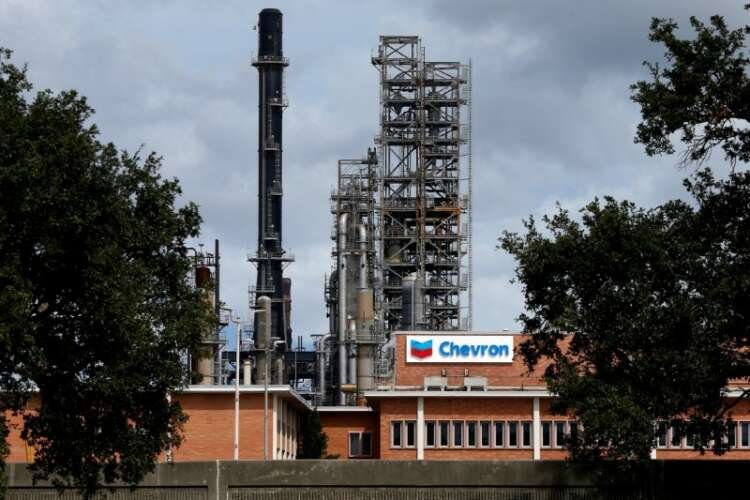
    (Reuters) – U.S. oil major Exxon Mobil Corp, along with Chevron Corp, is seeking to bulk up in the burgeoning renewable fuels space by finding ways to make such products at existing facilities, sources familiar with the efforts said.

    The two largest U.S. oil companies want to produce sustainable fuels without ponying up billions of dollars that some refineries are spending to reconfigure operations to make such products. Renewable fuels account for 5% of U.S. fuel consumption, but are poised to grow as various sectors adapt to cut overall carbon emissions to combat global climate change.

    Both Chevron and Exxon have massive refining divisions that contribute heavily to their overall carbon emissions. The companies have been criticized for a less urgent approach to renewable investments than European rivals Royal Dutch Shell Plc and TotalEnergies, and have generally spent a lower percentage of their capital than those companies on “green” technologies.

    The companies are looking into how to process bio-based feedstocks like vegetable oils and partially-processed biofuels with petroleum distillates to make renewable diesel, sustainable aviation fuel (SAF) and renewable gasoline, without meaningfully increasing capital spending.

    Commercial production of renewable fuels is costlier than making conventional motor gasoline unless coupled with tax credits.

    A task force was created at Exxon’s request within international standards and testing organization ASTM International to determine the capability of refiners to co-process up to 50% of certain types of bio-feedstocks to produce SAF, according to the sources.

    Exxon did not respond to a request for comment.

    Chevron is looking into how to run those feedstocks through their fluid catalytic crackers (FCC), gasoline-producing units that are generally the largest component of refining facilities.

    “Our goal is to co-process biofeedstocks in the FCC by the end of 2021,” a Chevron spokesperson told Reuters, to supply renewable products to consumers in Southern California.

    The company is partnering with the U.S. Environmental Protection Agency (EPA) and California Air Resources Board (CARB) to develop a path to produce fuel that would qualify for emissions credits.

    A source familiar with the matter said if approved by the EPA and CARB, Chevron would be able to produce and generate credits for renewable gasoline. That product is not yet commercially available, but can reduce carbon dioxide emissions by 61% to 83%, depending which feedstock is used, according to the California Energy Commission.

    Chevron said on its earnings call earlier this month that in the second phase of its process, it would be the first U.S. refiner to use the cat cracker to produce renewable fuels.

    “We did it this way, in part, because it’s very capital-efficient … It’s literally just a tank and some pipes,” Chevron Chief Finance Officer Pierre Breber said on the call.

    Congress is considering legislation for tax credits that would further spur refiners to process sustainable aviation fuel commercially.

    Some refiners, like San Antonio-based Valero Energy Corp and Finland-based Neste, have ramped up production of renewable fuels from waste oils and vegetable oils to cash in on lucrative federal and state financial incentives. Several U.S. refiners are in the midst of partially or totally converting plants to produce certain renewable fuels, particularly diesel.

    If approved, new methods of producing renewable fuels at refineries could allow refiners to avoid lengthy environmental permitting processes. Many of these processes are still undergoing further testing to see which can make renewable fuels commercially, but without damaging refining units.

    (Reporting by Laura Sanicola; Editing by Marguerita Choy)

    By Laura Sanicola

    (Reuters) – U.S. oil major Exxon Mobil Corp, along with Chevron Corp, is seeking to bulk up in the burgeoning renewable fuels space by finding ways to make such products at existing facilities, sources familiar with the efforts said.

    The two largest U.S. oil companies want to produce sustainable fuels without ponying up billions of dollars that some refineries are spending to reconfigure operations to make such products. Renewable fuels account for 5% of U.S. fuel consumption, but are poised to grow as various sectors adapt to cut overall carbon emissions to combat global climate change.

    Both Chevron and Exxon have massive refining divisions that contribute heavily to their overall carbon emissions. The companies have been criticized for a less urgent approach to renewable investments than European rivals Royal Dutch Shell Plc and TotalEnergies, and have generally spent a lower percentage of their capital than those companies on “green” technologies.

    The companies are looking into how to process bio-based feedstocks like vegetable oils and partially-processed biofuels with petroleum distillates to make renewable diesel, sustainable aviation fuel (SAF) and renewable gasoline, without meaningfully increasing capital spending.

    Commercial production of renewable fuels is costlier than making conventional motor gasoline unless coupled with tax credits.

    A task force was created at Exxon’s request within international standards and testing organization ASTM International to determine the capability of refiners to co-process up to 50% of certain types of bio-feedstocks to produce SAF, according to the sources.

    Exxon did not respond to a request for comment.

    Chevron is looking into how to run those feedstocks through their fluid catalytic crackers (FCC), gasoline-producing units that are generally the largest component of refining facilities.

    “Our goal is to co-process biofeedstocks in the FCC by the end of 2021,” a Chevron spokesperson told Reuters, to supply renewable products to consumers in Southern California.

    The company is partnering with the U.S. Environmental Protection Agency (EPA) and California Air Resources Board (CARB) to develop a path to produce fuel that would qualify for emissions credits.

    A source familiar with the matter said if approved by the EPA and CARB, Chevron would be able to produce and generate credits for renewable gasoline. That product is not yet commercially available, but can reduce carbon dioxide emissions by 61% to 83%, depending which feedstock is used, according to the California Energy Commission.

    Chevron said on its earnings call earlier this month that in the second phase of its process, it would be the first U.S. refiner to use the cat cracker to produce renewable fuels.

    “We did it this way, in part, because it’s very capital-efficient … It’s literally just a tank and some pipes,” Chevron Chief Finance Officer Pierre Breber said on the call.

    Congress is considering legislation for tax credits that would further spur refiners to process sustainable aviation fuel commercially.

    Some refiners, like San Antonio-based Valero Energy Corp and Finland-based Neste, have ramped up production of renewable fuels from waste oils and vegetable oils to cash in on lucrative federal and state financial incentives. Several U.S. refiners are in the midst of partially or totally converting plants to produce certain renewable fuels, particularly diesel.

    If approved, new methods of producing renewable fuels at refineries could allow refiners to avoid lengthy environmental permitting processes. Many of these processes are still undergoing further testing to see which can make renewable fuels commercially, but without damaging refining units.

    (Reporting by Laura Sanicola; Editing by Marguerita Choy)

    Related Posts
    What Is a Liquidity Provider – And Why Modern Brokers Can’t Function Without One
    What Is a Liquidity Provider – And Why Modern Brokers Can’t Function Without One
    OneFunded: Prop Firm Overview and Program Structure
    OneFunded: Prop Firm Overview and Program Structure
    What if You Can Actually Chat with Your Crypto Wallet?
    What if You Can Actually Chat with Your Crypto Wallet?
    The Growing Importance of Choosing the Right Crypto Broker in 2025
    The Growing Importance of Choosing the Right Crypto Broker in 2025
    The Rise of Algorithmic Trading Among Retail Investors in the UK
    The Rise of Algorithmic Trading Among Retail Investors in the UK
    Forex Trading for the 9-to-5er: A Realistic Path to a Second Income
    Forex Trading for the 9-to-5er: A Realistic Path to a Second Income
    Quality Matters: ZiNRai’s Focus on Empowering Traders with Precision and Purpose
    Quality Matters: ZiNRai’s Focus on Empowering Traders with Precision and Purpose
    MiCA Regulations and the Legal Requirements for Crypto Presales and Token Offerings in the European Union
    MiCA Regulations and the Legal Requirements for Crypto Presales and Token Offerings in the European Union
    Top Ways Forex Traders Benefit From Peer-to-Peer Learning
    Top Ways Forex Traders Benefit From Peer-to-Peer Learning
    Why High Leverage Remains Attractive to Forex Traders Worldwide
    Why High Leverage Remains Attractive to Forex Traders Worldwide
    XDC Network’s ETP Listing Signals the Maturing Convergence of Blockchain and Trade Finance
    XDC Network’s ETP Listing Signals the Maturing Convergence of Blockchain and Trade Finance
    Inside the Perp DEX Landscape: How Platforms Like Grvt and Hyperliquid Are Shaping Their Long-Term Vision
    Inside the Perp DEX Landscape: How Platforms Like Grvt and Hyperliquid Are Shaping Their Long-Term Vision

    Why waste money on news and opinions when you can access them for free?

    Take advantage of our newsletter subscription and stay informed on the go!

    Subscribe

    Previous Trading PostSpread of COVID-19 Delta variant knocks oil demand outlook – IEA
    Next Trading PostOPEC+ supply boost unlikely despite call from U.S. for more oil, says Goldman

    More from Trading

    Explore more articles in the Trading category

    Blending Theory and Practice: Building Stronger Forex Strategies

    Blending Theory and Practice: Building Stronger Forex Strategies

    Strategies for Professional CFD Traders: Tools and Company Support

    Strategies for Professional CFD Traders: Tools and Company Support

    Trust as the Cornerstone of Capital Markets

    Trust as the Cornerstone of Capital Markets

    UK Investors Reassess Trading Venues as Liquidity Shifts

    UK Investors Reassess Trading Venues as Liquidity Shifts

    Bitcoin Price Live: What Factors Influence Its Value?

    Bitcoin Price Live: What Factors Influence Its Value?

    Offshore Forex Brokers vs. U.S.-Regulated Brokers: A Risk Assessment

    Offshore Forex Brokers vs. U.S.-Regulated Brokers: A Risk Assessment

    The Broker Expo, Its Role in the Small Business World, and Everest Business Funding’s Role as Sponsor

    The Broker Expo, Its Role in the Small Business World, and Everest Business Funding’s Role as Sponsor

    Finding Your Edge with a Crypto-First Prop Firm

    Finding Your Edge with a Crypto-First Prop Firm

    Evaluating the Most Reliable Tools for Tracking Real-Time Cryptocurrency Prices

    Evaluating the Most Reliable Tools for Tracking Real-Time Cryptocurrency Prices

    MT5 vs MT4: Why More Brokers Are Moving to MetaTrader 5

    MT5 vs MT4: Why More Brokers Are Moving to MetaTrader 5

    From Central Banks to Retail Traders: Who Drives the Forex Market?

    From Central Banks to Retail Traders: Who Drives the Forex Market?

    Building a Winning Forex Portfolio: Tools and Resources You Can’t Ignore

    Building a Winning Forex Portfolio: Tools and Resources You Can’t Ignore

    View All Trading Posts