Search
00
GBAF Logo
trophy
Top StoriesInterviewsBusinessFinanceBankingTechnologyInvestingTradingVideosAwardsMagazinesHeadlinesTrends

Subscribe to our newsletter

Get the latest news and updates from our team.

Global Banking and Finance Review

Global Banking & Finance Review

Company

    GBAF Logo
    • About Us
    • Profile
    • Privacy & Cookie Policy
    • Terms of Use
    • Contact Us
    • Advertising
    • Submit Post
    • Latest News
    • Research Reports
    • Press Release
    • Awards▾
      • About the Awards
      • Awards TimeTable
      • Submit Nominations
      • Testimonials
      • Media Room
      • Award Winners
      • FAQ
    • Magazines▾
      • Global Banking & Finance Review Magazine Issue 79
      • Global Banking & Finance Review Magazine Issue 78
      • Global Banking & Finance Review Magazine Issue 77
      • Global Banking & Finance Review Magazine Issue 76
      • Global Banking & Finance Review Magazine Issue 75
      • Global Banking & Finance Review Magazine Issue 73
      • Global Banking & Finance Review Magazine Issue 71
      • Global Banking & Finance Review Magazine Issue 70
      • Global Banking & Finance Review Magazine Issue 69
      • Global Banking & Finance Review Magazine Issue 66
    Top StoriesInterviewsBusinessFinanceBankingTechnologyInvestingTradingVideosAwardsMagazinesHeadlinesTrends

    Global Banking & Finance Review® is a leading financial portal and online magazine offering News, Analysis, Opinion, Reviews, Interviews & Videos from the world of Banking, Finance, Business, Trading, Technology, Investing, Brokerage, Foreign Exchange, Tax & Legal, Islamic Finance, Asset & Wealth Management.
    Copyright © 2010-2025 GBAF Publications Ltd - All Rights Reserved.

    ;
    Editorial & Advertiser disclosure

    Global Banking and Finance Review is an online platform offering news, analysis, and opinion on the latest trends, developments, and innovations in the banking and finance industry worldwide. The platform covers a diverse range of topics, including banking, insurance, investment, wealth management, fintech, and regulatory issues. The website publishes news, press releases, opinion and advertorials on various financial organizations, products and services which are commissioned from various Companies, Organizations, PR agencies, Bloggers etc. These commissioned articles are commercial in nature. This is not to be considered as financial advice and should be considered only for information purposes. It does not reflect the views or opinion of our website and is not to be considered an endorsement or a recommendation. We cannot guarantee the accuracy or applicability of any information provided with respect to your individual or personal circumstances. Please seek Professional advice from a qualified professional before making any financial decisions. We link to various third-party websites, affiliate sales networks, and to our advertising partners websites. When you view or click on certain links available on our articles, our partners may compensate us for displaying the content to you or make a purchase or fill a form. This will not incur any additional charges to you. To make things simpler for you to identity or distinguish advertised or sponsored articles or links, you may consider all articles or links hosted on our site as a commercial article placement. We will not be responsible for any loss you may suffer as a result of any omission or inaccuracy on the website.

    Home > Technology > Communication is key as Strong Customer Authentication rules come into force
    Technology

    Communication is key as Strong Customer Authentication rules come into force

    Communication is key as Strong Customer Authentication rules come into force

    Published by Jessica Weisman-Pitts

    Posted on April 13, 2022

    Featured image for article about Technology

    By Andrew Stevens, Principal – Banking and Financial Services at Quadient

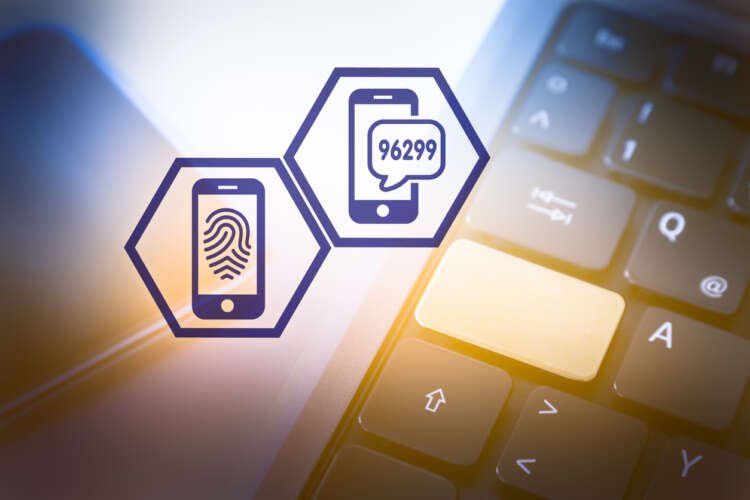
    It has taken a number of years, but many aspects of the Strong Customer Authentication (SCA) regulation have finally become mandatory across banking and retail in the UK. The new rules are designed to keep customers safe when shopping online and ensure their money is better protected. The changes meana that whenever customers buy something online, they will be asked to verify their identity through two-factor authentication – for example, through their banking app or a one-time passcode via text or phone call.

    A journey that began before the pandemic has now reached its destination, as we pass the final deadline for retailers. Beyond March 2022, all non-compliant transactions will be declined. Many of us have become used to verifying our identity when purchasing something online, for example through a banking app, or a one-time passcode via text or phone call. However, it’s important to remember there are also many less digitally-savvy consumers that may be unaware of the additional layer of authentication now required of them when transacting online. If they were not aware of SCA rules and suddenly start having transactions declined, these people are likely to become frustrated, pointing the finger of blame at their bank or card issuer.

    Friction brings frustration

    SCA will be required for every online purchase, and will help protect consumers from the growing threat of online fraud. But in many cases, the regulations simply haven’t been effectively communicated to customers. The average person doesn’t keep up with banking regulations, so when a bank-branded screen pops up to interrupt their purchase, they may be quick to accuse their bank of adding unnecessary steps to the customer experience. Although the SCA rules affect banks and retailers equally, seemingly constant requests for consumers to verify payments with their card issuer can lead to damaged customer perceptions and even negative social media posts.

    Consumers are likely to wonder why the process used to run smoothly, but they are now being asked to jump through hoops just to make a transaction. If consumers don’t know the exact background and reasons for the change, their ignorance could easily lead to ruined reputations for banks. People need to be aware of the SCA regulations, why they’re being implemented, and know how to avoid any authentication issues. I If they get a new phone or change their mobile number people may have to spend hours getting multiple accounts up and running again, meaning the potential for frustration is massive.

    Education is key

    Explaining to consumers that SCA is now a legal requirement and that it is intended to protect consumers from fraud can go a long way to dispelling frustration. This should be communicated over different platforms depending on customer preferences. For instance, while interacting with customers about SCA via email or SMS will work for some, others may still prefer a written letter.

    Banks can also take this one step further and inform consumers how to ensure their authentication experience is smooth. For instance, if a device is required to authenticate, what happens if customers change their phone number or buy a new mobile? Are there other authentication options available? In this area, it’s clear that neobanks have an easier job on their hands. Their customer bases are already used to biometrics and a completely digital banking experience; with Monzo, for example, customers can’t sign-up for an account without recording a video selfie. By contrast, traditional banks face a more diverse range of customers, all with varying levels of digital comfort.

    Two-factor authentication simply isn’t going to be intuitive for each individual customer, and some will need more support and guidance as they go through each step of the process. Just like offering different communication methods, traditional banks should also consider having a variety of ways that users can authenticate their transactions. For example, for older or less digitally-savvy customers, banks could offer a phone call service that shares a code to type in online. Having different authentication channels also helps in the event another method is unavailable or inaccessible – such as if a customer changed their mobile device or phone number without updating the bank.

    Better communication builds customer confidence

    While customers may become frustrated if not properly informed about SCA, they are likely to understand the benefits of the regulations once communicated to them. With fraud on the rise, people are highly unlikely to object to more secure online transactions that keep them and their money safe. However, if they don’t understand the intentions of SCA, customers are likely to lay the blame at their bank’s feet if transactions are declined and consumers are left without the convenience of being able to shop or bank online. It is therefore critical that banks explain these regulations clearly, through the right channel and give different authentication options to customers. This will not only strengthen confidence in their ability to keep consumers safe online, but also show their willingness to make the authentication process as easy as possible.

    Related Posts
    LakeFusion Secures Seed Funding to Advance AI-Native Master Data Management
    LakeFusion Secures Seed Funding to Advance AI-Native Master Data Management
    Clarity, Context, Confidence: Explainable AI and the New Era of Investor Trust
    Clarity, Context, Confidence: Explainable AI and the New Era of Investor Trust
    Data Intelligence Transforms the Future of Credit Risk Strategy
    Data Intelligence Transforms the Future of Credit Risk Strategy
    Architect of Integration Ushers in a New Era for AI in Regulated Industries
    Architect of Integration Ushers in a New Era for AI in Regulated Industries
    How One Technologist is Building Self-Healing AI Systems that Could Transform Financial Regulation
    How One Technologist is Building Self-Healing AI Systems that Could Transform Financial Regulation
    SBS is Doubling Down on SaaS to Power the Next Wave of Bank Modernization
    SBS is Doubling Down on SaaS to Power the Next Wave of Bank Modernization
    Trust Embedding: Integrating Governance into Next-Generation Data Platforms
    Trust Embedding: Integrating Governance into Next-Generation Data Platforms
    The Guardian of Connectivity: How Rohith Kumar Punithavel Is Redefining Trust in Private Networks
    The Guardian of Connectivity: How Rohith Kumar Punithavel Is Redefining Trust in Private Networks
    BNY Partners With HID and SwiftConnect to Provide Mobile Access to its Offices Around the Globe With Employee Badge in Apple Wallet
    BNY Partners With HID and SwiftConnect to Provide Mobile Access to its Offices Around the Globe With Employee Badge in Apple Wallet
    How Integral’s CTO Chidambaram Bhat is helping to solve  transfer pricing problems through cutting edge AI.
    How Integral’s CTO Chidambaram Bhat is helping to solve transfer pricing problems through cutting edge AI.
    Why Physical Infrastructure Still Matters in a Digital Economy
    Why Physical Infrastructure Still Matters in a Digital Economy
    Why Compliance Has Become an Engineering Problem
    Why Compliance Has Become an Engineering Problem

    Why waste money on news and opinions when you can access them for free?

    Take advantage of our newsletter subscription and stay informed on the go!

    Subscribe

    More from Technology

    Explore more articles in the Technology category

    Can AI-Powered Security Prevent $4.2 Billion in Banking Fraud?

    Can AI-Powered Security Prevent $4.2 Billion in Banking Fraud?

    Reimagining Human-Technology Interaction: Sagar Kesarpu’s Mission to Humanize Automation

    Reimagining Human-Technology Interaction: Sagar Kesarpu’s Mission to Humanize Automation

    LeapXpert: How financial institutions can turn shadow messaging from a risk into an opportunity

    LeapXpert: How financial institutions can turn shadow messaging from a risk into an opportunity

    Intelligence in Motion: Building Predictive Systems for Global Operations

    Intelligence in Motion: Building Predictive Systems for Global Operations

    Predictive Analytics and Strategic Operations: Strengthening Supply Chain Resilience

    Predictive Analytics and Strategic Operations: Strengthening Supply Chain Resilience

    How Nclude.ai   turned broken portals into completed applications

    How Nclude.ai turned broken portals into completed applications

    The Silent Shift: Rethinking Services for a Digital World?

    The Silent Shift: Rethinking Services for a Digital World?

    Culture as Capital: How Woxa Corporation Is Redefining Fintech Sustainability

    Culture as Capital: How Woxa Corporation Is Redefining Fintech Sustainability

    Securing the Future: We're Fixing Cyber Resilience by Finally Making Compliance Cool

    Securing the Future: We're Fixing Cyber Resilience by Finally Making Compliance Cool

    Supply chain security risks now innumerable and unmanageable for majority of cybersecurity leaders, IO research reveals

    Supply chain security risks now innumerable and unmanageable for majority of cybersecurity leaders, IO research reveals

    Why AI's Promise of Efficiency May Break Tomorrow's Workforce

    Why AI's Promise of Efficiency May Break Tomorrow's Workforce

    Revolutionizing AppSec: The AI Security Crew Paradigm Shift

    Revolutionizing AppSec: The AI Security Crew Paradigm Shift

    View All Technology Posts
    Previous Technology PostThe 7 transformational technology trends to revolutionize the financial sector in the post-pandemic era
    Next Technology PostUnderstanding and Managing Identity Risk