Search
00
GBAF Logo
trophy
Top StoriesInterviewsBusinessFinanceBankingTechnologyInvestingTradingVideosAwardsMagazinesHeadlinesTrends

Subscribe to our newsletter

Get the latest news and updates from our team.

Global Banking and Finance Review

Global Banking & Finance Review

Company

    GBAF Logo
    • About Us
    • Profile
    • Privacy & Cookie Policy
    • Terms of Use
    • Contact Us
    • Advertising
    • Submit Post
    • Latest News
    • Research Reports
    • Press Release
    • Awards▾
      • About the Awards
      • Awards TimeTable
      • Submit Nominations
      • Testimonials
      • Media Room
      • Award Winners
      • FAQ
    • Magazines▾
      • Global Banking & Finance Review Magazine Issue 79
      • Global Banking & Finance Review Magazine Issue 78
      • Global Banking & Finance Review Magazine Issue 77
      • Global Banking & Finance Review Magazine Issue 76
      • Global Banking & Finance Review Magazine Issue 75
      • Global Banking & Finance Review Magazine Issue 73
      • Global Banking & Finance Review Magazine Issue 71
      • Global Banking & Finance Review Magazine Issue 70
      • Global Banking & Finance Review Magazine Issue 69
      • Global Banking & Finance Review Magazine Issue 66
    Top StoriesInterviewsBusinessFinanceBankingTechnologyInvestingTradingVideosAwardsMagazinesHeadlinesTrends

    Global Banking & Finance Review® is a leading financial portal and online magazine offering News, Analysis, Opinion, Reviews, Interviews & Videos from the world of Banking, Finance, Business, Trading, Technology, Investing, Brokerage, Foreign Exchange, Tax & Legal, Islamic Finance, Asset & Wealth Management.
    Copyright © 2010-2025 GBAF Publications Ltd - All Rights Reserved.

    ;
    Editorial & Advertiser disclosure

    Global Banking and Finance Review is an online platform offering news, analysis, and opinion on the latest trends, developments, and innovations in the banking and finance industry worldwide. The platform covers a diverse range of topics, including banking, insurance, investment, wealth management, fintech, and regulatory issues. The website publishes news, press releases, opinion and advertorials on various financial organizations, products and services which are commissioned from various Companies, Organizations, PR agencies, Bloggers etc. These commissioned articles are commercial in nature. This is not to be considered as financial advice and should be considered only for information purposes. It does not reflect the views or opinion of our website and is not to be considered an endorsement or a recommendation. We cannot guarantee the accuracy or applicability of any information provided with respect to your individual or personal circumstances. Please seek Professional advice from a qualified professional before making any financial decisions. We link to various third-party websites, affiliate sales networks, and to our advertising partners websites. When you view or click on certain links available on our articles, our partners may compensate us for displaying the content to you or make a purchase or fill a form. This will not incur any additional charges to you. To make things simpler for you to identity or distinguish advertised or sponsored articles or links, you may consider all articles or links hosted on our site as a commercial article placement. We will not be responsible for any loss you may suffer as a result of any omission or inaccuracy on the website.

    Home > Technology > COLOCATION DOESN’T HAVE TO BE AN EITHER OR WHERE CLOUD IS CONCERNED
    Technology

    COLOCATION DOESN’T HAVE TO BE AN EITHER OR WHERE CLOUD IS CONCERNED

    COLOCATION DOESN’T HAVE TO BE AN EITHER OR WHERE CLOUD IS CONCERNED

    Published by Gbaf News

    Posted on February 25, 2015

    Featured image for article about Technology

    By Lilac Schoenbeck, Vice President of Product Marketing and Product Management at iland

    Having recently read a lot of articles debating the pros and cons of colocation versus cloud, it made me think about how fast this industry moves. Today, IT is critical to all business segments and right now most IT departments are feeling the pressure to build a more agile, modern, cost-effective cloud environment. In particular, one that has the ability to adapt to business change quickly. Most organisations are investigating a move to the cloud to reap all those promised benefits of scalability, agility, the ability to spin up your infrastructure in days rather than months and all at an affordable price.

    This makes me wonder whether any business can keep up with the velocity of technology change. In fact, I recall that it wasn’t that long ago when we were promoting virtualisation, coaxing organisations out of the need for physical systems and into a shared, more cost effective model. Barely a decade has passed and now we’re asking IT to stop thinking about a virtualised system and to start thinking about delivering it all in the cloud. To put that into perspective, in enterprise IT terms that equates to maybe two hardware refresh cycles.

    There are a number of reasons why this pace of change is hard and it’s not just about the hardware, software or infrastructure. It’s also not about whether the company should go with public, private or hybrid cloud. Nor is it about the resource and cultural issues, training, procurement processes, regulatory issues or security concerns. I’m talking about the fact that not all systems have been virtualised. Not every application in an enterprise estate has made the shift to 2005, let alone 2015.

    While this might sound ridiculous, it’s not that long ago, 15 years in fact, when most of us were up at midnight wondering if COBOL code would take down our world. You’ve only got to look at the many high-profile banking incidents over the past 12 months or so to know that the vast majority of that COBOL code is still in situ, working perfectly (or perhaps not so perfectly for some) in many of the data centres around the world of our large financial institutions, healthcare organisations and governments. So, it’s not all that inconceivable to think many databases haven’t made the leap to becoming virtual machines.

    So where does this leave the company seeking to move to the cloud? For many, multi-tiered applications with physical dependencies or specific networking requirements, platforms and applications are all hindering that move.

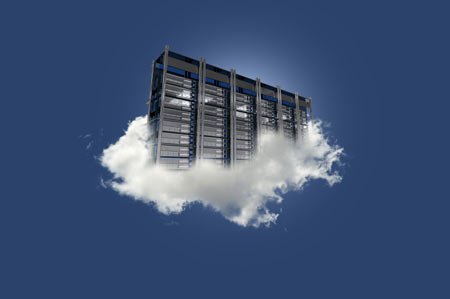
    While we all jokingly call cloud “the next generation of hosting”, most cloud providers have forgotten how to do one of the most critical tasks in hosting: colocation. Colocation is the practice of housing your servers and devices in a professional data centre in order to access economies of scale, advanced infrastructure, greater bandwidth, lower latency, specialist services and systems, constant security and a whole host of other additional advantages. I can see dozens of reasons why companies should seek colocation options from their enterprise cloud providers – and many reasons why cloud providers like us should happily offer them.

    There are a number of reasons cloud companies should offer colocation at every one of their global locations. For one, it’s important so they can support customers with physical system needs, with dependencies on specific network configurations, and with non-standard operating systems. It shouldn’t be an either/or decision. You don’t have to be one hundred percent virtual and one hundred percent standard to benefit from cloud. Finally, colocation supports disaster recovery offerings, which let’s face it, aren’t much good if some critical part of a client’s infrastructure cannot be replicated.

    The takeaway is that you cloud providers shouldn’t force you to drag your infrastructure through the decades to reach the cloud with all your applications. iland, for example, can support a bespoke environment, and can offer colocation in the cloud and work with you to deliver the optimum infrastructure to suit your business requirements. You don’t have to completely do away with your entire IT infrastructure to make the leap to an all-in cloud environment. Enterprises don’t have to choose colocation or cloud. For iland it is about making sure that colocation and cloud services coexist so IT can evolve.

    Related Posts
    LakeFusion Secures Seed Funding to Advance AI-Native Master Data Management
    LakeFusion Secures Seed Funding to Advance AI-Native Master Data Management
    Clarity, Context, Confidence: Explainable AI and the New Era of Investor Trust
    Clarity, Context, Confidence: Explainable AI and the New Era of Investor Trust
    Data Intelligence Transforms the Future of Credit Risk Strategy
    Data Intelligence Transforms the Future of Credit Risk Strategy
    Architect of Integration Ushers in a New Era for AI in Regulated Industries
    Architect of Integration Ushers in a New Era for AI in Regulated Industries
    How One Technologist is Building Self-Healing AI Systems that Could Transform Financial Regulation
    How One Technologist is Building Self-Healing AI Systems that Could Transform Financial Regulation
    SBS is Doubling Down on SaaS to Power the Next Wave of Bank Modernization
    SBS is Doubling Down on SaaS to Power the Next Wave of Bank Modernization
    Trust Embedding: Integrating Governance into Next-Generation Data Platforms
    Trust Embedding: Integrating Governance into Next-Generation Data Platforms
    The Guardian of Connectivity: How Rohith Kumar Punithavel Is Redefining Trust in Private Networks
    The Guardian of Connectivity: How Rohith Kumar Punithavel Is Redefining Trust in Private Networks
    BNY Partners With HID and SwiftConnect to Provide Mobile Access to its Offices Around the Globe With Employee Badge in Apple Wallet
    BNY Partners With HID and SwiftConnect to Provide Mobile Access to its Offices Around the Globe With Employee Badge in Apple Wallet
    How Integral’s CTO Chidambaram Bhat is helping to solve  transfer pricing problems through cutting edge AI.
    How Integral’s CTO Chidambaram Bhat is helping to solve transfer pricing problems through cutting edge AI.
    Why Physical Infrastructure Still Matters in a Digital Economy
    Why Physical Infrastructure Still Matters in a Digital Economy
    Why Compliance Has Become an Engineering Problem
    Why Compliance Has Become an Engineering Problem

    Why waste money on news and opinions when you can access them for free?

    Take advantage of our newsletter subscription and stay informed on the go!

    Subscribe

    More from Technology

    Explore more articles in the Technology category

    Can AI-Powered Security Prevent $4.2 Billion in Banking Fraud?

    Can AI-Powered Security Prevent $4.2 Billion in Banking Fraud?

    Reimagining Human-Technology Interaction: Sagar Kesarpu’s Mission to Humanize Automation

    Reimagining Human-Technology Interaction: Sagar Kesarpu’s Mission to Humanize Automation

    LeapXpert: How financial institutions can turn shadow messaging from a risk into an opportunity

    LeapXpert: How financial institutions can turn shadow messaging from a risk into an opportunity

    Intelligence in Motion: Building Predictive Systems for Global Operations

    Intelligence in Motion: Building Predictive Systems for Global Operations

    Predictive Analytics and Strategic Operations: Strengthening Supply Chain Resilience

    Predictive Analytics and Strategic Operations: Strengthening Supply Chain Resilience

    How Nclude.ai   turned broken portals into completed applications

    How Nclude.ai turned broken portals into completed applications

    The Silent Shift: Rethinking Services for a Digital World?

    The Silent Shift: Rethinking Services for a Digital World?

    Culture as Capital: How Woxa Corporation Is Redefining Fintech Sustainability

    Culture as Capital: How Woxa Corporation Is Redefining Fintech Sustainability

    Securing the Future: We're Fixing Cyber Resilience by Finally Making Compliance Cool

    Securing the Future: We're Fixing Cyber Resilience by Finally Making Compliance Cool

    Supply chain security risks now innumerable and unmanageable for majority of cybersecurity leaders, IO research reveals

    Supply chain security risks now innumerable and unmanageable for majority of cybersecurity leaders, IO research reveals

    Why AI's Promise of Efficiency May Break Tomorrow's Workforce

    Why AI's Promise of Efficiency May Break Tomorrow's Workforce

    Revolutionizing AppSec: The AI Security Crew Paradigm Shift

    Revolutionizing AppSec: The AI Security Crew Paradigm Shift

    View All Technology Posts
    Previous Technology PostARE YOUR MOBILE BANKING OR PAYMENT APPS AND PERSONAL DATA TRULY PROTECTED?
    Next Technology PostWHY HYBRID CLOUD IS THE PERFECT SOLUTION