Search
00
GBAF Logo
trophy
Top StoriesInterviewsBusinessFinanceBankingTechnologyInvestingTradingVideosAwardsMagazinesHeadlinesTrends

Subscribe to our newsletter

Get the latest news and updates from our team.

Global Banking and Finance Review

Global Banking & Finance Review

Company

    GBAF Logo
    • About Us
    • Profile
    • Privacy & Cookie Policy
    • Terms of Use
    • Contact Us
    • Advertising
    • Submit Post
    • Latest News
    • Research Reports
    • Press Release
    • Awards▾
      • About the Awards
      • Awards TimeTable
      • Submit Nominations
      • Testimonials
      • Media Room
      • Award Winners
      • FAQ
    • Magazines▾
      • Global Banking & Finance Review Magazine Issue 79
      • Global Banking & Finance Review Magazine Issue 78
      • Global Banking & Finance Review Magazine Issue 77
      • Global Banking & Finance Review Magazine Issue 76
      • Global Banking & Finance Review Magazine Issue 75
      • Global Banking & Finance Review Magazine Issue 73
      • Global Banking & Finance Review Magazine Issue 71
      • Global Banking & Finance Review Magazine Issue 70
      • Global Banking & Finance Review Magazine Issue 69
      • Global Banking & Finance Review Magazine Issue 66
    Top StoriesInterviewsBusinessFinanceBankingTechnologyInvestingTradingVideosAwardsMagazinesHeadlinesTrends

    Global Banking & Finance Review® is a leading financial portal and online magazine offering News, Analysis, Opinion, Reviews, Interviews & Videos from the world of Banking, Finance, Business, Trading, Technology, Investing, Brokerage, Foreign Exchange, Tax & Legal, Islamic Finance, Asset & Wealth Management.
    Copyright © 2010-2025 GBAF Publications Ltd - All Rights Reserved.

    Editorial & Advertiser disclosure

    Global Banking and Finance Review is an online platform offering news, analysis, and opinion on the latest trends, developments, and innovations in the banking and finance industry worldwide. The platform covers a diverse range of topics, including banking, insurance, investment, wealth management, fintech, and regulatory issues. The website publishes news, press releases, opinion and advertorials on various financial organizations, products and services which are commissioned from various Companies, Organizations, PR agencies, Bloggers etc. These commissioned articles are commercial in nature. This is not to be considered as financial advice and should be considered only for information purposes. It does not reflect the views or opinion of our website and is not to be considered an endorsement or a recommendation. We cannot guarantee the accuracy or applicability of any information provided with respect to your individual or personal circumstances. Please seek Professional advice from a qualified professional before making any financial decisions. We link to various third-party websites, affiliate sales networks, and to our advertising partners websites. When you view or click on certain links available on our articles, our partners may compensate us for displaying the content to you or make a purchase or fill a form. This will not incur any additional charges to you. To make things simpler for you to identity or distinguish advertised or sponsored articles or links, you may consider all articles or links hosted on our site as a commercial article placement. We will not be responsible for any loss you may suffer as a result of any omission or inaccuracy on the website.

    Home > Finance > Caught in the crossfire: how the Russia-Ukraine crisis is exposing firms to cyber-risk, and what they can do about it
    Finance

    Caught in the crossfire: how the Russia-Ukraine crisis is exposing firms to cyber-risk, and what they can do about it

    Caught in the crossfire: how the Russia-Ukraine crisis is exposing firms to cyber-risk, and what they can do about it

    Published by Jessica Weisman-Pitts

    Posted on April 20, 2022

    Featured image for article about Finance

    By Guy Warren, CEO, ITRS Group

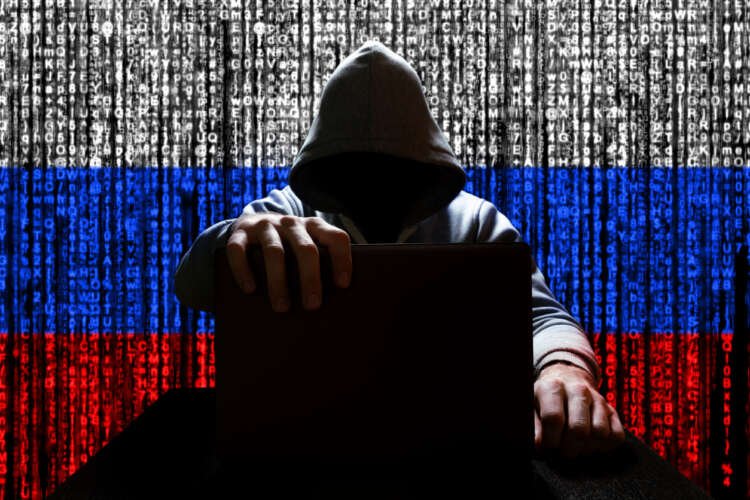
    As the war in Ukraine draws towards its 50-day milestone, banks and financial institutions across the world are increasingly aware of how a long conflict will impact the operations of the global financial system. The cyber threats that have come to characterise modern warfare pose a significant risk to institutions which are critical to their country’s infrastructure.

    As such, it is crucial that banks and other financial institutions assess their vulnerability to such attacks – and do so urgently.

    A global crisis

    Whilst some in the west might feel that the Russia-Ukraine crisis is a faraway problem that can’t impact them, recent history indicates otherwise. NotPetya – a Russian-organised cyberattack targeting Ukrainian power, transportation, and financial systems – was less than five years ago. And while its intention was to destabilise Ukraine, NotPetya spread rapidly.

    The consequences of the attack included massive operational disruption to countries across the globe – including the US, UK, France, Germany and India, with the ripple effects felt in even the furthest corner of the global economy. The consequences were disastrous – with the White House estimating the total worldwide cost of the attack exceeding $10 billion.

    Now, both the threat and the stakes of a cyberattack are even higher.

    The US Cybersecurity and Infrastructure Security Agency (CISA) recently issued a warning of the risk of Russian cyberattacks spilling over onto US networks, which follows previous CISA warnings on the risks posed by Russian cyberattacks for US critical infrastructure. And the European Central Bank (ECB) has warned European financial institutions of the risk of retaliatory Russian cyber-attacks in the event of sanctions and related market disruptions.

    Clearly, countries across the globe are anticipating the possibility of their critical financial infrastructures getting caught in the cyber-crossfire of the conflict.

    But what can they do to protect themselves?

    Understanding the risk

    Firms have no hope of protecting themselves against cyberattacks unless they have a comprehensive understanding of the range of attacks they are open to.

    And there are many forms of cyberattacks that banks are vulnerable to. There are attempts to crash a website (DDOS); hacking to penetrate the network; Trojan horse with software running inside the firewalls reaching out to the criminals; spam and attempts to fool someone to let them in; virus payloads which can encrypt the computers; and these are just a few.

    When it comes to the impact, this can vary – from bringing down a critical service, to stealing data, to ransom to de-encrypt, etc. However, because of the intertwined nature of the financial services industry, if one part is hacked, it can have ripple effects on other parts. For example, if payment processers were victims of a cyberattack, stock exchange transactions would be impacted.

    Damage limitation and control

    While these techniques are known and understood, it is significantly harder to ensure that all means of access are not vulnerable – particularly as banks’ infrastructures are more complex than ever, and, for many traditional players, suffer from significant siloes.

    Fortunately, there are techniques to prevent each form of cyberattack, but getting the right preparation in place is key. Firms must consider not only their ability, but the ability of their third-party providers, to withstand cyberattacks.

    Another effective tactic is raising staff awareness – including re-running staff ethical phishing campaigns and holding drills to ensure your firm is prepared. For example, in November 2021, the Securities Industry and Financial Markets Association, a trade association, led a global ransomware drill to practice fighting against such attacks, which over 240 public and private sector institutions, including financial firms and central banks.

    However, in a large, complex IT estate with many staff, as is the case for many banks, it is very difficult to prevent all techniques all the time. Teams looking at cybersecurity, geopolitical risk, and physical security should be working closely together, not in silos – and it’s far better to build communication and cooperation before disaster strikes, rather than in the face of a crisis.

    Regulators around the world have recently increased focus on this, introducing new Operational Resilience regulations and recommendations (DORA in the EU for example). And the FCA recommends that firms report material operational incidents to them in a timely way in order to ensure that they can provide specialist expertise and work to minimise harm to consumers, markets and the wider UK financial sector.

    Of course, there can be no guarantee of entirely escaping the consequences of the conflict and cyber threats remain a significant risk. However, there are several processes banks and financial institutions can put in place to safeguard themselves against the worst-case scenarios – and in doing so, strengthen the stability of their entire country.

    Related Posts
    Eni and BlackRock's GIP take joint control of carbon capture unit
    Eni and BlackRock's GIP take joint control of carbon capture unit
    Bank of England's Bailey sees inflation near 2% target by May
    Bank of England's Bailey sees inflation near 2% target by May
    Italian judge drops Genoa dam case against Webuild CEO
    Italian judge drops Genoa dam case against Webuild CEO
    ECB's Lagarde 'fully confident' EU will agree reparation loan plan for Ukraine
    ECB's Lagarde 'fully confident' EU will agree reparation loan plan for Ukraine
    ECB keeps rates unchanged, turns more positive on economy
    ECB keeps rates unchanged, turns more positive on economy
    Austria's top court rules Meta's ad model illegal, orders overhaul of user data practices in EU
    Austria's top court rules Meta's ad model illegal, orders overhaul of user data practices in EU
    Salzgitter takes legal action against Thyssenkrupp over HKM joint venture
    Salzgitter takes legal action against Thyssenkrupp over HKM joint venture
    Lovable valued at $6.6 billion in latest funding round as AI coding demand surges
    Lovable valued at $6.6 billion in latest funding round as AI coding demand surges
    Israel, Germany sign $3.1 billion contract expansion for Arrow air defence system
    Israel, Germany sign $3.1 billion contract expansion for Arrow air defence system
    Britain imposes more sanctions on Russia's energy sector
    Britain imposes more sanctions on Russia's energy sector
    Asked about NATO, Zelenskiy says Ukraine should not change its constitution
    Asked about NATO, Zelenskiy says Ukraine should not change its constitution
    Equals Money | Railsr partners with Okta to secure AI-driven payments
    Equals Money | Railsr partners with Okta to secure AI-driven payments

    Why waste money on news and opinions when you can access them for free?

    Take advantage of our newsletter subscription and stay informed on the go!

    Subscribe

    More from Finance

    Explore more articles in the Finance category

    France drafts in army for cattle vaccination to defuse farmer protests

    France drafts in army for cattle vaccination to defuse farmer protests

    Belgian farmers in anti-trade protest clash with police

    Belgian farmers in anti-trade protest clash with police

    UK actors vote to reject digital scans in AI rights push, echoing Hollywood battles

    UK actors vote to reject digital scans in AI rights push, echoing Hollywood battles

    UK pauses trials of Ajax in new setback for army fighting vehicle

    UK pauses trials of Ajax in new setback for army fighting vehicle

    Germany signs $2.35 billion armoured vehicle deal with Finland's Patria

    Germany signs $2.35 billion armoured vehicle deal with Finland's Patria

    ECB keeps rates steady, nudges up growth forecast

    ECB keeps rates steady, nudges up growth forecast

    Lufthansa looks to US flyers opting for premium to boost sales

    Lufthansa looks to US flyers opting for premium to boost sales

    Bank of England policymakers' views on December rate cut

    Bank of England policymakers' views on December rate cut

    EU leaders agree to work on using Russian assets for loan for Ukraine -Polish PM

    EU leaders agree to work on using Russian assets for loan for Ukraine -Polish PM

    ECB holds rates steady and turns more positive on the economy

    ECB holds rates steady and turns more positive on the economy

    Orlen to buy butadiene plant builder from Synthos for $193 million

    Orlen to buy butadiene plant builder from Synthos for $193 million

    British regulator cracks down on home, travel insurers

    British regulator cracks down on home, travel insurers

    View All Finance Posts
    Previous Finance PostThe ROI of Chat Commerce for Small Credit Unions
    Next Finance PostWill banks embrace decentralised finance?