Search
00
GBAF Logo
trophy
Top StoriesInterviewsBusinessFinanceBankingTechnologyInvestingTradingVideosAwardsMagazinesHeadlinesTrends

Subscribe to our newsletter

Get the latest news and updates from our team.

Global Banking & Finance Review®

Global Banking & Finance Review® - Subscribe to our newsletter

Company

    GBAF Logo
    • About Us
    • Advertising and Sponsorship
    • Profile & Readership
    • Contact Us
    • Latest News
    • Privacy & Cookies Policies
    • Terms of Use
    • Advertising Terms
    • Issue 81
    • Issue 80
    • Issue 79
    • Issue 78
    • Issue 77
    • Issue 76
    • Issue 75
    • Issue 74
    • Issue 73
    • Issue 72
    • Issue 71
    • Issue 70
    • View All
    • About the Awards
    • Awards Timetable
    • Awards Winners
    • Submit Nominations
    • Testimonials
    • Media Room
    • FAQ
    • Asset Management Awards
    • Brand of the Year Awards
    • Business Awards
    • Cash Management Banking Awards
    • Banking Technology Awards
    • CEO Awards
    • Customer Service Awards
    • CSR Awards
    • Deal of the Year Awards
    • Corporate Governance Awards
    • Corporate Banking Awards
    • Digital Transformation Awards
    • Fintech Awards
    • Education & Training Awards
    • ESG & Sustainability Awards
    • ESG Awards
    • Forex Banking Awards
    • Innovation Awards
    • Insurance & Takaful Awards
    • Investment Banking Awards
    • Investor Relations Awards
    • Leadership Awards
    • Islamic Banking Awards
    • Real Estate Awards
    • Project Finance Awards
    • Process & Product Awards
    • Telecommunication Awards
    • HR & Recruitment Awards
    • Trade Finance Awards
    • The Next 100 Global Awards
    • Wealth Management Awards
    • Travel Awards
    • Years of Excellence Awards
    • Publishing Principles
    • Ownership & Funding
    • Corrections Policy
    • Editorial Code of Ethics
    • Diversity & Inclusion Policy
    • Fact Checking Policy
    Original content: Global Banking and Finance Review - https://www.globalbankingandfinance.com

    A global financial intelligence and recognition platform delivering authoritative insights, data-driven analysis, and institutional benchmarking across Banking, Capital Markets, Investment, Technology, and Financial Infrastructure.

    Copyright © 2010-2026 - All Rights Reserved. | Sitemap | Tags

    Editorial & Advertiser disclosure

    Global Banking & Finance Review® is an online platform offering news, analysis, and opinion on the latest trends, developments, and innovations in the banking and finance industry worldwide. The platform covers a diverse range of topics, including banking, insurance, investment, wealth management, fintech, and regulatory issues. The website publishes news, press releases, opinion and advertorials on various financial organizations, products and services which are commissioned from various Companies, Organizations, PR agencies, Bloggers etc. These commissioned articles are commercial in nature. This is not to be considered as financial advice and should be considered only for information purposes. It does not reflect the views or opinion of our website and is not to be considered an endorsement or a recommendation. We cannot guarantee the accuracy or applicability of any information provided with respect to your individual or personal circumstances. Please seek Professional advice from a qualified professional before making any financial decisions. We link to various third-party websites, affiliate sales networks, and to our advertising partners websites. When you view or click on certain links available on our articles, our partners may compensate us for displaying the content to you or make a purchase or fill a form. This will not incur any additional charges to you. To make things simpler for you to identity or distinguish advertised or sponsored articles or links, you may consider all articles or links hosted on our site as a commercial article placement. We will not be responsible for any loss you may suffer as a result of any omission or inaccuracy on the website.

    1. Home
    2. >Technology
    3. >Cashless after COVID-19: why touch-free transactions could see us finally say goodbye to cash
    Technology

    Cashless After COVID-19: Why Touch-Free Transactions Could See Us Finally Say Goodbye to Cash

    Published by Gbaf News

    Posted on June 2, 2020

    5 min read

    Last updated: January 21, 2026

    Add as preferred source on Google
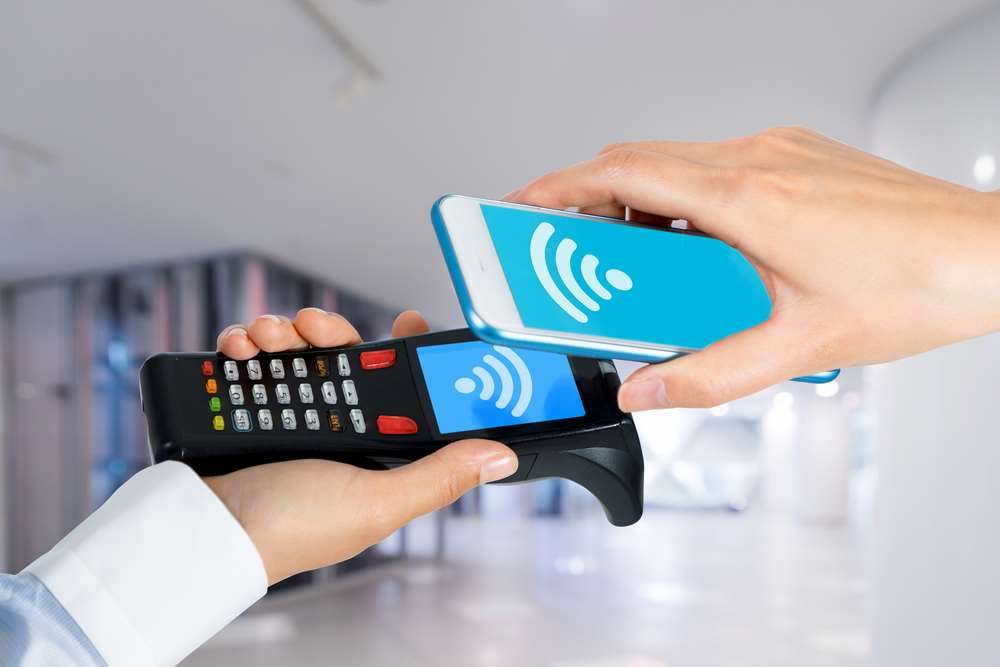
    An individual making a touch-free transaction using contactless payment technology in a retail environment. This image illustrates the shift towards cashless transactions accelerated by COVID-19.
    Person using contactless payment technology in a store - Global Banking & Finance Review
    Why waste money on news and opinion when you can access them for free?

    Take advantage of our newsletter subscription and stay informed on the go!

    Subscribe

    By Vince Graziani, CEO of IDEX Biometrics ASA 

    The impact of COVID-19 on the global payments industry is likely to be profound. McKinsey predicts that activity in the sector could drop by as much as 8-10% of total revenues due to the pandemic, a reduction of between $165 billion- $210 billion. That’s compared to the 10-11% revenue reduction seen following the 2008 global financial crash. The devasting outcomes of the pandemic have not only created consequences for our immediate lives and the economy but are already causing shifts in consumer behaviour relating to payment that will resonate for years to come.

    In the payment industry, the pandemic is accelerating a shift towards a cashless economy. Back in February, before the pandemic was declared, UK Finance predicted that the UK will become virtually cashless within the next decade – which is only likely to accelerate in the current climate. Meanwhile, in the midst of the pandemic China has launched a sovereign digital currency, the eRMB, anticipating cash will diminish even further. In March, the World Health Organization advised the public to use contactless technology where possible, to prevent the spread of the disease. Since then, retailers have begun refusing cash payments and a concern around sharing potentially ‘contaminated’ cash has grown.

    A reason to give up cash

    It seems that while a cashless world has been on the horizon for a number of years, the coronavirus pandemic has finally given the public a firm reason to give up cash. We are currently seeing a widespread change in consumer behaviour propelling the desire for a cashless society forward – including for those who were previously sceptical of going cashless.

    For many consumers, using contactless payments can provide much needed reassurance while shopping in stores during the pandemic. While these new purchase options may seem unusual for some, COVID-19 has caused retailers and consumers to seek touch-free payment alternatives. It has quickly become second nature for consumers to tap their card to pay for goods and services instead of using cash or punching in a PIN.

    So, now there is significant demand for a cashless society, how do we actually get there? And how do we make sure it is secure and accessible to all? 

    Making payments touch-free and secure

     The answer is to make all payments touch-free. We already have contactless payments, of course. The limit for PIN-free payments has even risen around the world in response to the COVID-19 outbreak, reaching £45 in the UK, €50 in all EU countries and even up to $250 in Canada– allowing consumers to make more payments without having to touch a PIN pad. But in a post-pandemic world, all payments, regardless of value, need to be touch-free to protect consumers.

    And while contactless methods are the most commonly available touch-free payment option, they lack added security and authentication. As Strong Customer Authentication (SCA) grows in importance, payment methods must have two-factor authentication, as well as convenience and hygiene. But with PINs increasingly recognised as insecure and PIN pads deemed ‘unclean’, consumers are now worrying about their health as well as contactless banking fraud while making a payment.

    Consumers, particularly those cautious about potential fraud from transactions without a PIN, may need a greater layer of security to overcome trust issues around contactless payments. While a signature can be forged, a PIN cracked or an online account hacked, a fingerprint is virtually impossible to replicate. Therefore, to resolve fraud uncertainty, the payments industry must adopt fingerprint biometric authorisation to provide greater security and protect consumers.

    Finding the balance

    Biometric payment cards provide the ideal balance of security, convenience and hygiene for transactions, without having to touch anything beyond your personal payment card. When paying for goods with a fingerprint biometric payment card, the consumer only needs to touch the sensor on their own bank card while holding it above the terminal for a contactless payment – just like they do today. This two factor authentication links the person to the payment card in a sanitary way, eliminating the incentive for theft or mis-use of payment cards.

    We know that consumers want a transaction process that is fast and free from hold ups. In the age of COVID-19, increased touch-free authentication with your fingerprint will secure the payment card, removing the need for PINs and reducing the need for the payment limit, all while making the transaction process more hygienic.

    Preparing for a cashless world

    As the pandemic continues, and consumer’s payment behaviour continues to change, it seems likely that the UK will ultimately become a mostly cashless society sooner than we thought. But the transition must be well supported to provide all consumers with a secure and easy way to manage contactless payments.

    Biometric smart payment cards are vital to help consumers overcome trust issues around digital payments. The payment industry must now adapt and adopt biometric technology to ensure that payments are stable, secure and sanitary as we finally embrace a cashless world.

    More from Technology

    Explore more articles in the Technology category

    Image for Showcasing Digital Leadership – Best Bank for Social Media 2026
    Showcasing Digital Leadership – Best Bank for Social Media 2026
    Image for Innovation Through Partnership: The Role of External Tech Teams
    Innovation Through Partnership: The Role of External Tech Teams
    Image for Nominations Open for Technology Awards 2026
    Nominations Open for Technology Awards 2026
    Image for Nominations Open for Innovation Awards 2026
    Nominations Open for Innovation Awards 2026
    Image for Archie earns industry recognition across G2, Capterra, and SoftwareReviews
    Archie Earns Industry Recognition Across G2, Capterra, and SoftwareReviews
    Image for The Bankaool Transformation: How a Regional Mexican Bank Became a Fintech Disruptor
    The Bankaool Transformation: How a Regional Mexican Bank Became a FinTech Disruptor
    Image for Submit Your Entry Today for Digital Banking Awards 2026
    Submit Your Entry Today for Digital Banking Awards 2026
    Image for Behavioral AI in Financial Services: Moving Beyond Automation Toward Human Understanding
    Behavioral AI in Financial Services: Moving Beyond Automation Toward Human Understanding
    Image for Submit Your Entry for Brand of the Year Awards Technology Bahrain 2026
    Submit Your Entry for Brand of the Year Awards Technology Bahrain 2026
    Image for Entries Now Open for Best Islamic Open Banking Burkina Faso APIs 2026
    Entries Now Open for Best Islamic Open Banking Burkina Faso APIs 2026
    Image for Entrepreneurial Discipline in the AI Economy: Insights from Dmytro Lavryniuk
    Entrepreneurial Discipline in the AI Economy: Insights From Dmytro Lavryniuk
    Image for Entries Now Open for Best New Digital Wallet Innovation Award 2026
    Entries Now Open for Best New Digital Wallet Innovation Award 2026
    View All Technology Posts
    Previous Technology PostCan Knowledge Graphs Help Untangle the RegTech Data Management Puzzle
    Next Technology PostBritons Embrace Biometrics but Over Half Will Abandon Applications if Not Fully Digital