Research Reports
Bunker Fuel Market to Hit Us$ 177.8 Bn by 2027
Published by TMR Research Insights
Posted on August 19, 2021
21 min readLast updated: February 16, 2026
Add as preferred source on Google
Published by TMR Research Insights
Posted on August 19, 2021
21 min readLast updated: February 16, 2026
Add as preferred source on GoogleFor several decades, the shipping industry was under significant pressure to curb harmful emissions and use marine or bunker fuels with low sulfur content. Recent developments in the bunker fuel market suggest that achieving greener marine ecosystem will be a reality soon. The pressure on the marine industry is largely driven by the growing need to curb air pollution and significant rise in the number of childhood asthma cases worldwide. Cargo, container, and tanker fleet play a major role in adding to the air pollution across the world. These major sources of air pollution, which run on bunker fuels laden with sulfur have also caused significant damage to communities that live close to shipping channels.
Despite efforts being made to use low-sulfur fuels, emissions from cargo ships continue to pose a major threat to the environment. In the wake of these growing concerns, stringent air quality regulations have been formulated, which are likely to set the pace for the growth of the bunker fuel market during the forecast period (2019-2027). While high sulfur fuel oils (HSFO) enter the last leg of their journey, demand for low sulfur fuel oils is set to witness a steady growth in the coming years.
Strong expertise with attention to detail makes our market research reports stand apart. Download PDF Brochure –
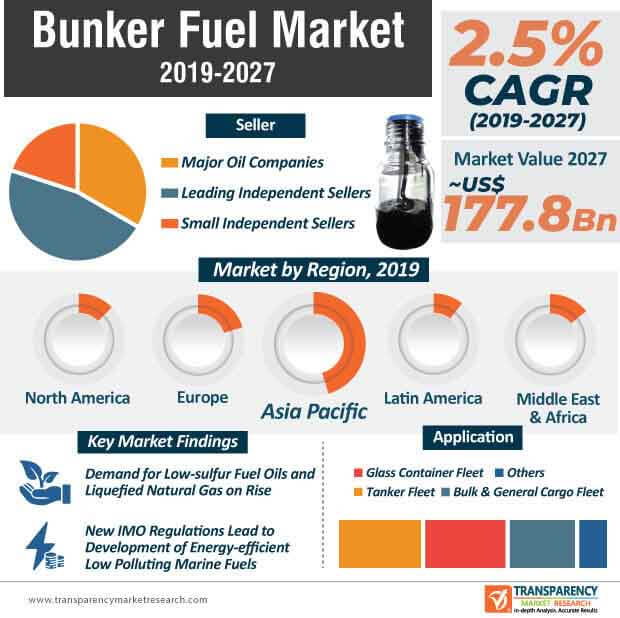
International Marine Organization Regulations to Impact Growth of Bunker Fuel Market
With mounting pressure to clean their act, the marine industry is set to witness a major overhaul in the forthcoming years. Efforts to curb sulfur-emission have gained significant traction in the bunker fuel market in the past three to four years. Drastic changes in sulfur-emission policies are expected to influence the growth of the market for bunker fuels in the coming decade.
Request for Covid-19 Impact Analysis on Bunker Fuel Market:
In 2016, when the International Marine Organization agreed to restrict the sulfur content in bunker fuels to around 0.5% by 2020, the stage was set for a paradigm shift in the bunker fuel market toward the use of low-sulfur bunker fuels. While the demand for high sulfur fuel oils will witness a gradual decline, it will provide a boost to the demand for low-sulfur fuel oils and liquefied natural gas (LNG). The fluctuating prices of liquefied natural gas or alternative bunker fuels could pose a major hurdle for stakeholders involved in the bunker fuel market value chain. Several shippers are exploring the potential of alternative for high sulfur fuel oils by installing exhaust scrubbers or tilting toward liquefied natural gas.
Buy our Premium Research Report on Bunker Fuel Market@
Although installing scrubbers could potentially result in high capital expenses, it will enable shipping companies to use high sulfur fuel oil. In addition, stakeholders in the bunker fuel market are also expected to negotiate their way through steep up-front costs and large-scale availability of liquefied natural– two factors that could deter the demand for liquefied natural gas during the coming period.
Demand for Marine Diesel Oil Likely to Rise
Barriers put forward by liquefied natural gas and environmental concerns over the deployment of high sulfur fuel oils have opened up the floodgates for marine diesel oil to penetrate the bunker fuel market. The new regulations laid down by the International Marine Organization offers significant promise for stakeholders eyeing investment opportunities and potential applications of marine diesel oils.
The shift in the tide toward marine diesel oil is likely to result in higher crude runs. Furthermore, the blazing demand for marine diesel oils is expected to topple the prices of high sulfur fuel oils, which, in turn, will widen the spread between marine diesel oil and high sulfur resid bunker.
At present, as marine diesel fuel are set to replace high sulfur fuel oils, producers of high sulfur fuel oils are expected to find other end uses, including power generation. The demand for low-sulfur fuel oils during the forecast period will hinge on a range of factors, of which the segregation of low-sulfur resid materials will play an important role. New commercial agreements and in logistics and tankage will shape the future for low-sulfur oils.
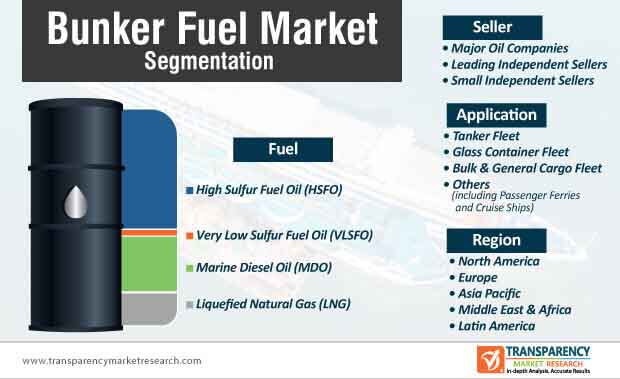
Analysts’ Viewpoint
The bunker fuel market is expected to grow at a sluggish CAGR of ~2.5% during the forecast period. Some of the factors that are expected to fuel market growth include a significant rise in demand for marine diesel oil and steady adoption of low-sulfur fuel oils. Stakeholders in the current bunker fuel market should invest their resources in improving the availability of marine diesel bunker fuels and liquefied natural gas. The regulations laid down by the International Marine Organization will continue to fuel the growth of the bunker fuel market during the forecast period, as a shift from high sulfur fuel oils toward LNG and marine diesel oils can be observed.
Increase in Offshore Exploration & Production Activities to Drive Bunker Fuel Market
LNG/LPG as Alternative Fuel Likely to Hamper Bunker Fuel Market
Rise in Demand for Alternate or Low Sulfur Fuel
Recent Developments, Expansions, Acquisitions, and New Contracts in Bunker Fuel Market
Asia Pacific to be Highly Lucrative Market for Bunker Fuel
Bunker Fuel Market is Highly Competitive
Energy & Natural Resources-Industry battles Tangible Impact of Economic and Cultural changes, Stay Updated on the Latest Trends in Energy & Natural Resources -market@
https://www.transparencymarketresearch.com/energy-market-reports-3.html
About Us
Transparency Market Research is a global market intelligence company, providing global business information reports and services. Our exclusive blend of quantitative forecasting and trends analysis provides forward-looking insight for thousands of decision makers. Our experienced team of Analysts, Researchers, and Consultants, use proprietary data sources and various tools and techniques to gather, and analyze information.
Our data repository is continuously updated and revised by a team of research experts, so that it always reflects the latest trends and information. With a broad research and analysis capability, Transparency Market Research employs rigorous primary and secondary research techniques in developing distinctive data sets and research material for business reports.
Contact
Transparency Market Research
State Tower,
90 State Street,
Suite 700,
Albany NY – 12207
United States
USA – Canada Toll Free: 866-552-3453
Email: sales@transparencymarketresearch.com
Follow Us: Twitter | LinkedIn
Blog: https://tmrblog.com
For several decades, the shipping industry was under significant pressure to curb harmful emissions and use marine or bunker fuels with low sulfur content. Recent developments in the bunker fuel market suggest that achieving greener marine ecosystem will be a reality soon. The pressure on the marine industry is largely driven by the growing need to curb air pollution and significant rise in the number of childhood asthma cases worldwide. Cargo, container, and tanker fleet play a major role in adding to the air pollution across the world. These major sources of air pollution, which run on bunker fuels laden with sulfur have also caused significant damage to communities that live close to shipping channels.
Despite efforts being made to use low-sulfur fuels, emissions from cargo ships continue to pose a major threat to the environment. In the wake of these growing concerns, stringent air quality regulations have been formulated, which are likely to set the pace for the growth of the bunker fuel market during the forecast period (2019-2027). While high sulfur fuel oils (HSFO) enter the last leg of their journey, demand for low sulfur fuel oils is set to witness a steady growth in the coming years.
Strong expertise with attention to detail makes our market research reports stand apart. Download PDF Brochure –
International Marine Organization Regulations to Impact Growth of Bunker Fuel Market
With mounting pressure to clean their act, the marine industry is set to witness a major overhaul in the forthcoming years. Efforts to curb sulfur-emission have gained significant traction in the bunker fuel market in the past three to four years. Drastic changes in sulfur-emission policies are expected to influence the growth of the market for bunker fuels in the coming decade.
Request for Covid-19 Impact Analysis on Bunker Fuel Market:
In 2016, when the International Marine Organization agreed to restrict the sulfur content in bunker fuels to around 0.5% by 2020, the stage was set for a paradigm shift in the bunker fuel market toward the use of low-sulfur bunker fuels. While the demand for high sulfur fuel oils will witness a gradual decline, it will provide a boost to the demand for low-sulfur fuel oils and liquefied natural gas (LNG). The fluctuating prices of liquefied natural gas or alternative bunker fuels could pose a major hurdle for stakeholders involved in the bunker fuel market value chain. Several shippers are exploring the potential of alternative for high sulfur fuel oils by installing exhaust scrubbers or tilting toward liquefied natural gas.
Buy our Premium Research Report on Bunker Fuel Market@
Although installing scrubbers could potentially result in high capital expenses, it will enable shipping companies to use high sulfur fuel oil. In addition, stakeholders in the bunker fuel market are also expected to negotiate their way through steep up-front costs and large-scale availability of liquefied natural– two factors that could deter the demand for liquefied natural gas during the coming period.
Demand for Marine Diesel Oil Likely to Rise
Barriers put forward by liquefied natural gas and environmental concerns over the deployment of high sulfur fuel oils have opened up the floodgates for marine diesel oil to penetrate the bunker fuel market. The new regulations laid down by the International Marine Organization offers significant promise for stakeholders eyeing investment opportunities and potential applications of marine diesel oils.
The shift in the tide toward marine diesel oil is likely to result in higher crude runs. Furthermore, the blazing demand for marine diesel oils is expected to topple the prices of high sulfur fuel oils, which, in turn, will widen the spread between marine diesel oil and high sulfur resid bunker.
At present, as marine diesel fuel are set to replace high sulfur fuel oils, producers of high sulfur fuel oils are expected to find other end uses, including power generation. The demand for low-sulfur fuel oils during the forecast period will hinge on a range of factors, of which the segregation of low-sulfur resid materials will play an important role. New commercial agreements and in logistics and tankage will shape the future for low-sulfur oils.
Analysts’ Viewpoint
The bunker fuel market is expected to grow at a sluggish CAGR of ~2.5% during the forecast period. Some of the factors that are expected to fuel market growth include a significant rise in demand for marine diesel oil and steady adoption of low-sulfur fuel oils. Stakeholders in the current bunker fuel market should invest their resources in improving the availability of marine diesel bunker fuels and liquefied natural gas. The regulations laid down by the International Marine Organization will continue to fuel the growth of the bunker fuel market during the forecast period, as a shift from high sulfur fuel oils toward LNG and marine diesel oils can be observed.
Increase in Offshore Exploration & Production Activities to Drive Bunker Fuel Market
LNG/LPG as Alternative Fuel Likely to Hamper Bunker Fuel Market
Rise in Demand for Alternate or Low Sulfur Fuel
Recent Developments, Expansions, Acquisitions, and New Contracts in Bunker Fuel Market
Asia Pacific to be Highly Lucrative Market for Bunker Fuel
Bunker Fuel Market is Highly Competitive
Energy & Natural Resources-Industry battles Tangible Impact of Economic and Cultural changes, Stay Updated on the Latest Trends in Energy & Natural Resources -market@
https://www.transparencymarketresearch.com/energy-market-reports-3.html
About Us
Transparency Market Research is a global market intelligence company, providing global business information reports and services. Our exclusive blend of quantitative forecasting and trends analysis provides forward-looking insight for thousands of decision makers. Our experienced team of Analysts, Researchers, and Consultants, use proprietary data sources and various tools and techniques to gather, and analyze information.
Our data repository is continuously updated and revised by a team of research experts, so that it always reflects the latest trends and information. With a broad research and analysis capability, Transparency Market Research employs rigorous primary and secondary research techniques in developing distinctive data sets and research material for business reports.
Contact
Transparency Market Research
State Tower,
90 State Street,
Suite 700,
Albany NY – 12207
United States
USA – Canada Toll Free: 866-552-3453
Email: sales@transparencymarketresearch.com
Follow Us: Twitter | LinkedIn
Blog: https://tmrblog.com
Bunker fuel is a type of fuel oil used in ships and vessels for propulsion and power generation. It is categorized based on sulfur content and includes high sulfur fuel oil (HSFO) and low sulfur fuel oil (LSFO).
Low-sulfur fuels are marine fuels that contain reduced levels of sulfur, helping to minimize harmful emissions from ships. They comply with international regulations aimed at improving air quality.
The International Marine Organization (IMO) is a specialized agency of the United Nations responsible for regulating shipping. It sets global standards for the safety, security, and environmental performance of international shipping.
Marine diesel oils (MDO) are a type of fuel used in marine engines. They are typically cleaner than traditional bunker fuels and are gaining popularity due to stricter environmental regulations.
Explore more articles in the Research Reports category