Automotive Coolant Market Analysis and Forecast to 2030
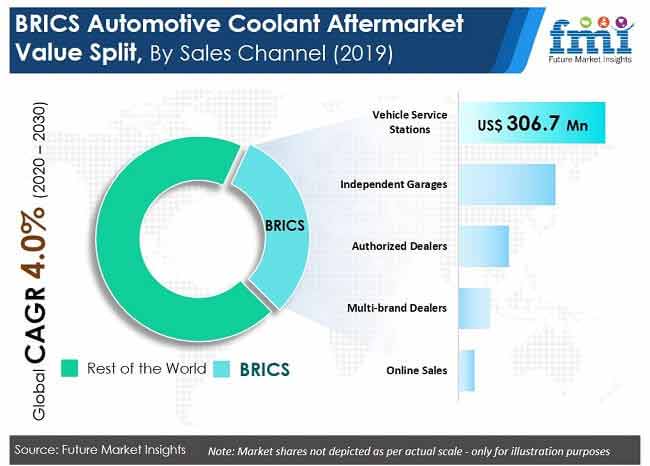
Future Market Insights, an ESOMAR-certified market research firm, in its incisive market study on the global automotive coolant aftermarket opines a 4% CAGR through 2030.
The development of advanced coolant solutions, with non-polluting properties and extended service life are helping in reduction of maintenance costs. This will remain a key imperative, boosting market prospects over the forecast period.
With fewer people resorting to shared mobility services in the prevailing pandemic, high reliance on personal vehicles will spur demand for automotive coolants.
“With car parc being the primal performance driver of the coolant aftermarket, a drop in new car sales will impact its inflow thus affecting the overall demand for coolants” says FMI analyst.
Key Takeaways for Automotive Coolant Aftermarket Study
- Ethylene Glycol-based organic coolants will remain the preferred choice among end-users on back of their cost-effectiveness and high suitability in varying climatic conditions
- The high demand for goods carriers from small and medium-sized enterprises in APAC will accelerate demand for automotive aftermarket coolant within this region
- Stringent emission norms and miniaturization of engine components will fuel demand for coolants with improved thermal load resistance
- East Asia will continue to lead the automotive coolant aftermarket in 2020 capturing 32% of market share
- A significant section of consumers are switching to purchase of coolants from online sources to obviate the effects of closed service stations and dealerships
Despite Near Term Uncertainties, Market Slated for Quick Recovery
The current pandemic will offset sales of automotive coolants temporarily. The market is witnessing demand destruction with supply chain disruptions and halted production in the overall automotive sector. Trade restrictions and closed borders have impacted supply and distribution of coolants.
A rapidly evolving consumer dynamic is emerging that is showing markedly different mobility preferences. Shared mobility will decrease and personal vehicle usage will rise.
Automotive Coolant Aftermarket: Competition Landscape
The Automotive Coolant Aftermarket is a fragmented market with the presence of a large number of global and regional players. Affordability, high-corrosion resistance and longevity will be key factors on which manufacturers will differentiate their product offerings.
- Prestone’s AF2100 Extended Life 50/50 antifreeze coolant is one of the top selling coolants in the market. It’s high applicability in automotive rests on its superlative performance. The coolant comes pre-diluted with 50% de-mineralized water and 50% antifreeze thus offering heat protection in temperatures as low as -34 degrees
- Motorcraft’s Gold antifreeze coolant continues to be the coolant of choice for Ford owners. The coolant gives protection against heat, cold and corrosion with a longer life and is ideal for gasoline and diesel engines
- The G13 coolant by Audi is specially designed for Audi cars and Volkswagen and can be used in the 50:50 ratio which users need to attain using distilled and demineralized water. While more costly, it provides trouble-free service for 4-5 years.
- WT SUPRA coolant by Total released this year offers patented carboxylate technology which reduces environmental impact with its non-polluting properties. It also offers extended service life.
For Information On The Research Approach Used In The Report, Ask Analyst @ https://www.futuremarketinsights.com/ask-question/rep-gb-11693
Find More Valuable Insights on Automotive Coolant Aftermarket:
FMI in its new market research study, offers an unbiased analysis of the Automotive Coolant Aftermarket which comprises global industry analysis for 2015–2019 and opportunity assessment for the 2020–2030. The report offers complete analysis on global Automotive Coolant Aftermarket through four different categories – By Type, By Vehicle Type, By Sales Channel and region. The global Automotive Coolant Aftermarket study provides information of pricing by different life cycle analysis, product life cycle, key market trends and technologies which are being implemented in the production of the Automotive Coolant Aftermarket and product adoption in varied end use industries.
About the Automotive Division of FMI
The automotive division of FMI offers a novel approach and innovative perspective in the analysis of the industrial automation market. Comprehensive coverage of capital, portable, process, construction, industrial, and special purpose machinery across the manufacturing sector and distinctive analysis about the installed base, consumables, replacement, USP-feature-application matrix make us a pioneering voice in the industry. We are preferred associates with established as well as budding industry stakeholders, and channel partners when it comes to sustaining, growing, and identifying new revenue prospects.
The post Automotive Coolant Aftermarket Overview, Cost Structure Analysis, Growth Opportunities And Forecast To 2030 appeared first on Market Research Blog.