Search
00
GBAF Logo
trophy
Top StoriesInterviewsBusinessFinanceBankingTechnologyInvestingTradingVideosAwardsMagazinesHeadlinesTrends

Subscribe to our newsletter

Get the latest news and updates from our team.

Global Banking and Finance Review

Global Banking & Finance Review

Company

    GBAF Logo
    • About Us
    • Profile
    • Privacy & Cookie Policy
    • Terms of Use
    • Contact Us
    • Advertising
    • Submit Post
    • Latest News
    • Research Reports
    • Press Release
    • Awards▾
      • About the Awards
      • Awards TimeTable
      • Submit Nominations
      • Testimonials
      • Media Room
      • Award Winners
      • FAQ
    • Magazines▾
      • Global Banking & Finance Review Magazine Issue 79
      • Global Banking & Finance Review Magazine Issue 78
      • Global Banking & Finance Review Magazine Issue 77
      • Global Banking & Finance Review Magazine Issue 76
      • Global Banking & Finance Review Magazine Issue 75
      • Global Banking & Finance Review Magazine Issue 73
      • Global Banking & Finance Review Magazine Issue 71
      • Global Banking & Finance Review Magazine Issue 70
      • Global Banking & Finance Review Magazine Issue 69
      • Global Banking & Finance Review Magazine Issue 66
    Top StoriesInterviewsBusinessFinanceBankingTechnologyInvestingTradingVideosAwardsMagazinesHeadlinesTrends

    Global Banking & Finance Review® is a leading financial portal and online magazine offering News, Analysis, Opinion, Reviews, Interviews & Videos from the world of Banking, Finance, Business, Trading, Technology, Investing, Brokerage, Foreign Exchange, Tax & Legal, Islamic Finance, Asset & Wealth Management.
    Copyright © 2010-2025 GBAF Publications Ltd - All Rights Reserved.

    ;
    Editorial & Advertiser disclosure

    Global Banking and Finance Review is an online platform offering news, analysis, and opinion on the latest trends, developments, and innovations in the banking and finance industry worldwide. The platform covers a diverse range of topics, including banking, insurance, investment, wealth management, fintech, and regulatory issues. The website publishes news, press releases, opinion and advertorials on various financial organizations, products and services which are commissioned from various Companies, Organizations, PR agencies, Bloggers etc. These commissioned articles are commercial in nature. This is not to be considered as financial advice and should be considered only for information purposes. It does not reflect the views or opinion of our website and is not to be considered an endorsement or a recommendation. We cannot guarantee the accuracy or applicability of any information provided with respect to your individual or personal circumstances. Please seek Professional advice from a qualified professional before making any financial decisions. We link to various third-party websites, affiliate sales networks, and to our advertising partners websites. When you view or click on certain links available on our articles, our partners may compensate us for displaying the content to you or make a purchase or fill a form. This will not incur any additional charges to you. To make things simpler for you to identity or distinguish advertised or sponsored articles or links, you may consider all articles or links hosted on our site as a commercial article placement. We will not be responsible for any loss you may suffer as a result of any omission or inaccuracy on the website.

    Home > Banking > As Lebanon’s banks struggle to raise capital, a deadline looms
    Banking

    As Lebanon’s banks struggle to raise capital, a deadline looms

    As Lebanon’s banks struggle to raise capital, a deadline looms

    Published by linker 5

    Posted on February 15, 2021

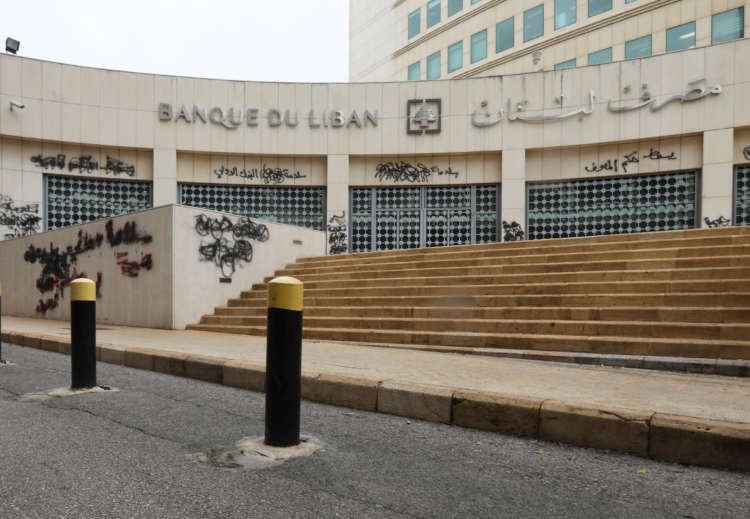
    Featured image for article about Banking

    By Tom Arnold and Ellen Francis

    BEIRUT (Reuters) – Paralysed by financial crisis and riven with political risk, a number of Lebanon’s banks are struggling to meet a central bank target to raise their capital defences by 20% by the end of this month.

    Less than half of the country’s dozen or so large banks are expected to meet the requirement, which the central bank set in August to reinforce the sector, according to four banking sources with direct knowledge of the situation. Those that are on track to meet central bank targets have largely tapped existing shareholders or depositors, converting local dollar deposits into equity instruments or sold overseas businesses.

    The situation underscores the scale of the problem facing Lebanon’s banks, heavily exposed to one of the world’s most indebted states and starved of funding. Their customers have largely been frozen out of their dollar deposits and blocked from transferring cash abroad since late 2019.

    Given the wall of losses facing the sector, some investors and economists say it’s too little too late anyway.

    The 20% target laid down by Riad Salameh, Lebanon’s veteran central bank governor, is equivalent to around $4 billion, he confirmed to Reuters. That is far short of the $83 billion hole in banks’ balance sheets estimated by the outgoing government last year as part of a financial rescue plan it had drawn up.

    “They are all insolvent,” said Mike Azar, a debt finance advisor and a former lecturer in international economics at John Hopkins School of Advanced International Studies.

    “There’s no prospect for recovery as things stand, until there is a sector-wide bank resolution and restructuring and finally a fresh capital raise.”

    A central bank order for banks to request their largest depositors to repatriate up to 30% of their deposits also appears to have yielded little, the four banking sources say.

    Salim Sfeir, the head of Lebanon’s association of banks and the chief executive of Bank of Beirut, said most banks would “abide by the central bank guidelines”.

    “If we believe that there is no prospect for recovery we would be out of business by now. The challenges are difficult but we have a history of resilience and creativity and we will adapt to the new situation,” Sfeir said in an statement to Reuters.

    The central bank said it was premature to assess banks’ response to the capital hike target and to a separate request from it that they boost their liquidity by 3% with their corresponding banks.

    “Nevertheless, almost all banks have applied for the increase in capital and serious work has been done for the increase in liquidity,” Salameh said in an emailed response to questions.

    He acknowledged the banks could require more capital. “The Central Bank will work with the banks to tackle this issue individually,” Salameh said in emailed comments.

    With the end of February deadline approaching, speculation has bubbled on social media over which banks might be liquidated. The central bank issued a statement last week saying such discussions were “devoid of any truth”.

    The governor has warned that those who cannot meet the target would have to exit the market but some bankers told Reuters they expect it will be extended because there is so little hope of attracting fresh investment.

    FRESH SCRUTINY

    The financial rescue plan devised by the outgoing government envisaged wiping out bank shareholders but opposition from bankers and politicians torpedoed it, contributing to the collapse of financing talks with the International Monetary Fund.

    “A 20% increase in their capital is useful but insufficient,” said Khaled Abdel Majeed, MENA fund manager at London-based SAM Capital Partners, an investment advisory firm.

    “I would not touch Lebanese bank stocks at any price. Things will get much worse in Lebanon, before they get better.”

    Salameh, whose use of what he has described as “financial engineering” to keep Lebanon’s public finances afloat has attracted criticism, is also facing fresh scrutiny, raising questions about his future, bankers say.

    Switzerland’s attorney general said last month it was probing possible embezzlement tied to the Lebanese central bank. Salameh has denied any wrongdoing and did not respond to a request for comment about how the inquiry might impact his position and the wider banking sector.

    Bank Audi and Blom Bank, the country’s largest banks by assets, have sold foreign businesses to help bolster their finances.

    “The proceeds from the sale of the foreign operations would allow us to meet said regulatory requirements while positioning Bank Audi amongst viable Lebanese banks with adequate capital and liquidity levels,” Bank Audi management said in a statement to Reuters.

    Blom Bank did not immediately respond to a Reuters request for comment on its progress in raising its capital buffers and liquidity levels. It said last month the sale of its Egypt unit would allow it to comply with the central bank target.

    NO CONSENSUS

    For years, Lebanon’s banks were among the world’s more profitable lenders, funnelling funds from a scattered diaspora to the government’s coffers in return for high interest rates.

    But exposure to the state has ultimately been the banks’ undoing since dollar remittances dried up and anticorruption protests erupted, starving the financial system of funding.

    Commercial banks have lost roughly 49 trillion Lebanese pounds in deposits in the past two years, equivalent to around 22% of current total assets and large depositors are likely to be in the firing line in any resolution of the banking crisis.

    The government’s default on a $1.2 billion eurobond in March left banks, with government paper accounting for most of their assets, as the biggest casualty.

    Much of the remainder of banks’ assets are in real estate, where valuations have slumped amid the economic downturn.

    If those assets were to be marked to market, then combined with write-offs linked to government exposure, losses would overwhelm the sector’s capital base, said economist Nafez Zouk.

    (GRAPHIC: Banks’ high exposure to the central bank and government – https://graphics.reuters.com/LEBANON-BANKS/jbyvrdjqeve/chart.png)

    The central bank told banks in August to provision for a 1.89% loss on their hard currency deposits with the central bank and a 45% loss on government Eurobond holdings, levels some economists have said underestimate the scale of the problem.

    The Lebanese pound has fallen 80% since late 2019 and Moody’s rating agency has estimated that Eurobond losses are greater than 65%.

    Privately, many bankers in Lebanon agree that the current banking sector, with at least 40 lenders and assets that swelled to as much as 167% of the country’s economic output at their recent peak of 2015, needs to drastically shrink. Some acknowledge that will require shareholders, bondholders and customers to swallow losses.

    But there is no consensus on how many banks will need to be wound down and how big the losses should be. Without a new government — the current cabinet serves in a caretaker role since resigning in August amid public fury over a devastating port blast in Beirut — the bankers acknowledge a resolution appears unlikely anytime soon.

    (GRAPHIC: Lebanon’s disappearing deposits – https://graphics.reuters.com/LEBANON-CRISIS/gjnvwzewlpw/chart.png)

    (Editing by Carmel Crimmins)

    Related Posts
    DeFi and banking are converging. Here’s what banks can do.
    DeFi and banking are converging. Here’s what banks can do.
    Are Neo Banks Offering Better Metal Debit Cards Than Traditional Banks?
    Are Neo Banks Offering Better Metal Debit Cards Than Traditional Banks?
    Banking at the Intersection: From Nashville to Cannes, A Strategic Call to Action
    Banking at the Intersection: From Nashville to Cannes, A Strategic Call to Action
    Driving Efficiency and Profit Through Customer-Centric Banking
    Driving Efficiency and Profit Through Customer-Centric Banking
    How Ecosystem Partnerships Are Redefining Deposit Products
    How Ecosystem Partnerships Are Redefining Deposit Products
    CIBC Private Banking wins four 2025 Global Banking & Finance Awards
    CIBC Private Banking wins four 2025 Global Banking & Finance Awards
    How Banks Can Put AI to Work Now and Prove ROI in 90 Days
    How Banks Can Put AI to Work Now and Prove ROI in 90 Days
    Top 5 AI quality assurance framework providers for Banks and Financial Services firms.
    Top 5 AI quality assurance framework providers for Banks and Financial Services firms.
    The Unbanked Paradox: How Banking Access Creates Economic Resilience
    The Unbanked Paradox: How Banking Access Creates Economic Resilience
    Hyper-Personalised Banking - Shaping the Future of Finance
    Hyper-Personalised Banking - Shaping the Future of Finance
    The End of Voice Trust: How AI Deepfakes Are Forcing Banks to Rethink Authentication
    The End of Voice Trust: How AI Deepfakes Are Forcing Banks to Rethink Authentication
    Predicting and Preventing Customer Churn in Retail Banking
    Predicting and Preventing Customer Churn in Retail Banking

    Why waste money on news and opinions when you can access them for free?

    Take advantage of our newsletter subscription and stay informed on the go!

    Subscribe

    Previous Banking PostUBS investment bank co-chief Novelli to join Euronext as chairman
    Next Banking PostKarofsky to run UBS investment bank as Novelli joins Euronext

    More from Banking

    Explore more articles in the Banking category

    Growth and Impact: Banreservas Leads Dominican Republic Economic Expansion

    Growth and Impact: Banreservas Leads Dominican Republic Economic Expansion

    Turning Insight into Impact: Making AI and Analytics Work in Retail Banking

    Turning Insight into Impact: Making AI and Analytics Work in Retail Banking

    KeyBank Embraces Next-Generation AI Platform to Transform Fraud and Financial Crime Prevention

    KeyBank Embraces Next-Generation AI Platform to Transform Fraud and Financial Crime Prevention

    Understanding Association Banking: Financial Solutions for Community Success

    Understanding Association Banking: Financial Solutions for Community Success

    Applying Symbiosis for advantage in APAC banking

    Applying Symbiosis for advantage in APAC banking

    AmBank Islamic Berhad Earns Triple Recognition for Excellence in Islamic Banking

    AmBank Islamic Berhad Earns Triple Recognition for Excellence in Islamic Banking

    FinTok Strategy: How Banks Are Reaching Gen Z Through Social Media

    FinTok Strategy: How Banks Are Reaching Gen Z Through Social Media

    Rethinking Retail Banking Sustainability: Why the ATM is an Asset in the Sustainable Transition

    Rethinking Retail Banking Sustainability: Why the ATM is an Asset in the Sustainable Transition

    How private banks can survive the neo-broker revolution

    How private banks can survive the neo-broker revolution

    Next-Gen Bank Branches: The Evolution from Transaction Hubs to Experience Centers

    Next-Gen Bank Branches: The Evolution from Transaction Hubs to Experience Centers

    The Banking Talent Crunch: How Financial Institutions Are Competing for Digital-Native Skills

    The Banking Talent Crunch: How Financial Institutions Are Competing for Digital-Native Skills

    Beyond Interest: How Banks Are Reimagining Revenue in the Digital Age

    Beyond Interest: How Banks Are Reimagining Revenue in the Digital Age

    View All Banking Posts