Search
00
GBAF Logo
trophy
Top StoriesInterviewsBusinessFinanceBankingTechnologyInvestingTradingVideosAwardsMagazinesHeadlinesTrends

Subscribe to our newsletter

Get the latest news and updates from our team.

Global Banking & Finance Review®

Global Banking & Finance Review® - Subscribe to our newsletter

Company

    GBAF Logo
    • About Us
    • Profile
    • Privacy & Cookie Policy
    • Terms of Use
    • Contact Us
    • Advertising
    • Submit Post
    • Latest News
    • Research Reports
    • Press Release
    • Awards▾
      • About the Awards
      • Awards TimeTable
      • Submit Nominations
      • Testimonials
      • Media Room
      • Award Winners
      • FAQ
    • Magazines▾
      • Global Banking & Finance Review Magazine Issue 79
      • Global Banking & Finance Review Magazine Issue 78
      • Global Banking & Finance Review Magazine Issue 77
      • Global Banking & Finance Review Magazine Issue 76
      • Global Banking & Finance Review Magazine Issue 75
      • Global Banking & Finance Review Magazine Issue 73
      • Global Banking & Finance Review Magazine Issue 71
      • Global Banking & Finance Review Magazine Issue 70
      • Global Banking & Finance Review Magazine Issue 69
      • Global Banking & Finance Review Magazine Issue 66
    Top StoriesInterviewsBusinessFinanceBankingTechnologyInvestingTradingVideosAwardsMagazinesHeadlinesTrends

    Global Banking & Finance Review® is a leading financial portal and online magazine offering News, Analysis, Opinion, Reviews, Interviews & Videos from the world of Banking, Finance, Business, Trading, Technology, Investing, Brokerage, Foreign Exchange, Tax & Legal, Islamic Finance, Asset & Wealth Management.
    Copyright © 2010-2026 GBAF Publications Ltd - All Rights Reserved. | Sitemap | Tags | Developed By eCorpIT

    Editorial & Advertiser disclosure

    Global Banking & Finance Review® is an online platform offering news, analysis, and opinion on the latest trends, developments, and innovations in the banking and finance industry worldwide. The platform covers a diverse range of topics, including banking, insurance, investment, wealth management, fintech, and regulatory issues. The website publishes news, press releases, opinion and advertorials on various financial organizations, products and services which are commissioned from various Companies, Organizations, PR agencies, Bloggers etc. These commissioned articles are commercial in nature. This is not to be considered as financial advice and should be considered only for information purposes. It does not reflect the views or opinion of our website and is not to be considered an endorsement or a recommendation. We cannot guarantee the accuracy or applicability of any information provided with respect to your individual or personal circumstances. Please seek Professional advice from a qualified professional before making any financial decisions. We link to various third-party websites, affiliate sales networks, and to our advertising partners websites. When you view or click on certain links available on our articles, our partners may compensate us for displaying the content to you or make a purchase or fill a form. This will not incur any additional charges to you. To make things simpler for you to identity or distinguish advertised or sponsored articles or links, you may consider all articles or links hosted on our site as a commercial article placement. We will not be responsible for any loss you may suffer as a result of any omission or inaccuracy on the website.

    Home > Investing > Analysis: Swiss policy pivot signals exit for big stock and bond investor
    Investing

    Analysis: Swiss policy pivot signals exit for big stock and bond investor

    Published by Wanda Rich

    Posted on June 24, 2022

    5 min read

    Last updated: February 6, 2026

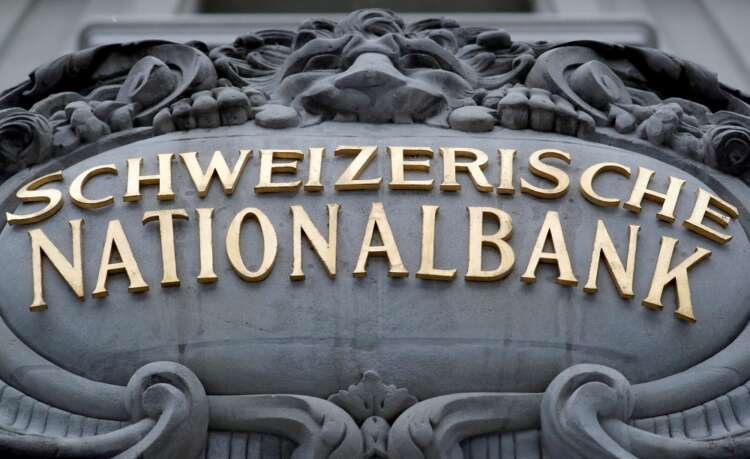
    The Swiss National Bank logo symbolizes a pivotal policy change that signals an exit for major stock and bond investors. This shift is crucial for understanding the implications on global markets, particularly for U.S. and European securities.
    Swiss National Bank logo representing policy changes affecting global markets - Global Banking & Finance Review
    Why waste money on news and opinion when you can access them for free?

    Take advantage of our newsletter subscription and stay informed on the go!

    Subscribe

    Tags:monetary policyfinancial marketsequity investmentforeign exchange

    Quick Summary

    By Yoruk Bahceli, Saikat Chatterjee and Tommy Wilkes

    By Yoruk Bahceli, Saikat Chatterjee and Tommy Wilkes

    LONDON (Reuters) – From Silicon Valley shares to U.S. and European government bonds, securities that are already under heavy pressure stand to lose a major buyer as Switzerland ends its long-standing policy of recycling euros and dollars into foreign markets.

    The Swiss National Bank recently delivered a surprise half-point interest rate hike and for the first time in years omitted references in its statement to the franc being highly valued.

    The shift is a momentous one, suggesting the SNB will no longer prioritise weakening the currency by purchasing foreign exchange – a policy that enabled it to build a reserve pile of nearly $1 trillion.

    Unlike most central banks, it recycled these proceeds of intervention into world markets rather than holding them at home, making it a huge stock and bond investor. In recent years it ranked among the top shareholders in the likes of Apple, Amazon and Microsoft.

    Any reduction in its purchases, or an eventual move towards selling – a possibility after the bank said it is also ready to check a weakening of the franc – risks heightening volatility on already shaky markets.

    “The SNB’s departure from its previous approach to keep the franc weak means they will unwind their large U.S. stock holdings, particularly in FAANGS, which should increase selling pressure on these mega-cap names,” said Kaspar Hense, senior portfolio manager at Bluebay Asset Management, referring to the tech quintet of Facebook (Meta), Apple, Amazon, Netflix and Google.

    The SNB had already cut back forex buying in recent weeks, as evidenced by a drop in “total sight deposits” at Swiss banks that are seen as a proxy for intervention. These deposits declined by 1.3 billion Swiss francs in the week ending June 17, versus a rise of 756 million francs a month earlier and an increase of nearly 6 billion francs in early April.

    The SNB said it would seek to minimise the market impact whether it were to let existing bonds expire or actively sell assets, with the focus remaining on the overall liquidity of the portfolio.

    With inflation above the SNB’s target, the franc has been allowed to rise to seven-year highs against the euro, briefly pushing beyond one franc per euro in March. It has performed less well against the dollar, which has soared on expectations of aggressive policy tightening by the U.S. Federal Reserve.

    FAANGs

    The SNB’s recent policy shift is not quite on a par with its shock decision in 2015 to ditch the franc’s euro exchange rate peg. But tighter policy and its potential step back from markets coincides with a deepening market selloff that has sent global stocks to a 21% loss this year.

    Bond yields have also surged as inflation hits multi-decade highs, prompting steep rate hikes.

    “In isolation, the impact (of potential asset sales) would have been limited but it comes in the middle of a sharp re-pricing and lower market liquidity so the effect will likely be magnified,” said ING senior rates strategist Antoine Bouvet.

    It is difficult to gauge accurately the impact of any investment pullback, as the SNB does not provide a breakdown of exactly which assets it holds in each currency.

    SNB data does show that a quarter of its FX reserves were in equities as of end-March.

    At that time, U.S. regulatory filings show the SNB’s U.S. equity portfolio was worth $177 billion, including $12.4 billion in Apple shares, $9.5 billion in Microsoft and $6.4 billion in Amazon. Other holdings included $1.5 billion in Exxon Mobil and $1.1 billion in Coca Cola.

    The SNB also holds 600 billion francs in foreign government bonds, making up 64% of FX reserves, according to Reuters calculations from SNB data.

    Assuming bonds make up the same share of holdings in each currency as they do across its entire FX portfolio, Reuters calculations show that might include some $248 billion of U.S. Treasuries and 221 billion euros of euro zone government debt – most of it likely to be in top-rated bonds like Germany’s.

    “Their activities have been quite large over the last few years, and we did see in general increased euro holdings by central banks, and the SNB is one of them,” BofA strategist Sphia Salim said. She predicted pressure on short-dated German bonds.

    Unsurprisingly, last week’s policy pivot sent euro zone and U.S. bond yields surging.

    If the SNB were to wind down bond holdings, it would first stop reinvesting the proceeds of maturing bonds, Lyn Graham-Taylor, senior rates strategist at Rabobank said. That could see the SNB drop nearly 5 billion euros of German government debt by year-end, he estimates.

    In 2023, “you’ll get those concerns around the SNB potentially selling bonds, merged with higher issuance next year and the potential for ECB QT,” BofA’s Salim said – a reference to expectations the European Central Bank may eventually start reducing its own balance sheet, a process known as Quantitative Tightening.

    (Additional reporting by John Revill in Zurich and Noel Randewich in New York; Editing by Sujata Rao and Catherine Evans)

    Frequently Asked Questions about Analysis: Swiss policy pivot signals exit for big stock and bond investor

    1What is monetary policy?

    Monetary policy refers to the actions taken by a country's central bank to control the money supply and interest rates to achieve macroeconomic goals such as controlling inflation and stabilizing currency.

    2What is inflation?

    Inflation is the rate at which the general level of prices for goods and services rises, eroding purchasing power. It is typically measured as an annual percentage.

    3What is a central bank?

    A central bank is a financial institution that manages a country's currency, money supply, and interest rates. It oversees the banking system and implements monetary policy.

    4What is equity investment?

    Equity investment involves purchasing shares of a company, giving the investor ownership rights. It can provide dividends and capital gains but also carries risks.

    More from Investing

    Explore more articles in the Investing category

    Image for Understanding the Factors Shaping Bitcoin’s Current Market Conditions
    Understanding the Factors Shaping Bitcoin’s Current Market Conditions
    Image for Understanding Investment Management Consulting Services in the U.S. Market
    Understanding Investment Management Consulting Services in the U.S. Market
    Image for The Role of DST Sponsors and Service Providers in Delaware Statutory Trusts
    The Role of DST Sponsors and Service Providers in Delaware Statutory Trusts
    Image for Understanding Self-Directed IRA Structures and Platform Models
    Understanding Self-Directed IRA Structures and Platform Models
    Image for 1031 Exchanges and Delaware Statutory Trusts: What Investors Need to Know
    1031 Exchanges and Delaware Statutory Trusts: What Investors Need to Know
    Image for Excellence in Innovation – Strategic Investment & Economic Transformation Egypt 2025
    Excellence in Innovation – Strategic Investment & Economic Transformation Egypt 2025
    Image for What Is the Average Pension Pot in the UK? (By Age)
    What Is the Average Pension Pot in the UK? (By Age)
    Image for From Money Printing to Market Surge: The Macro Forces Driving Crypto in 2026
    From Money Printing to Market Surge: The Macro Forces Driving Crypto in 2026
    Image for  Millennials Aren’t Ignoring Retirement. They’re Rebuilding It.
    Millennials Aren’t Ignoring Retirement. They’re Rebuilding It.
    Image for BridgeWise Launches FixedWise, the First AI Solution Bringing Granular Bond Intelligence to the European Market
    BridgeWise Launches FixedWise, the First AI Solution Bringing Granular Bond Intelligence to the European Market
    Image for Why Financial Advisors Are Rethinking Gold Allocations
    Why Financial Advisors Are Rethinking Gold Allocations
    Image for From Opaque to Investable: Yaniv Bertele's Blueprint for Transparent Alternatives
    From Opaque to Investable: Yaniv Bertele's Blueprint for Transparent Alternatives
    View All Investing Posts
    Previous Investing PostTaiwan pension fund awards $2.3 billion ESG mandate to HSBC, Morgan Stanley, 3 others By Selena Li
    Next Investing PostWall Street puts floor under stocks, crude steadies