
Headlines
Retired Hens Revitalise Cyprus Olive Groves
Published by Global Banking & Finance Review®
Posted on February 24, 2025
2 min readLast updated: February 27, 2026
Add as preferred source on Google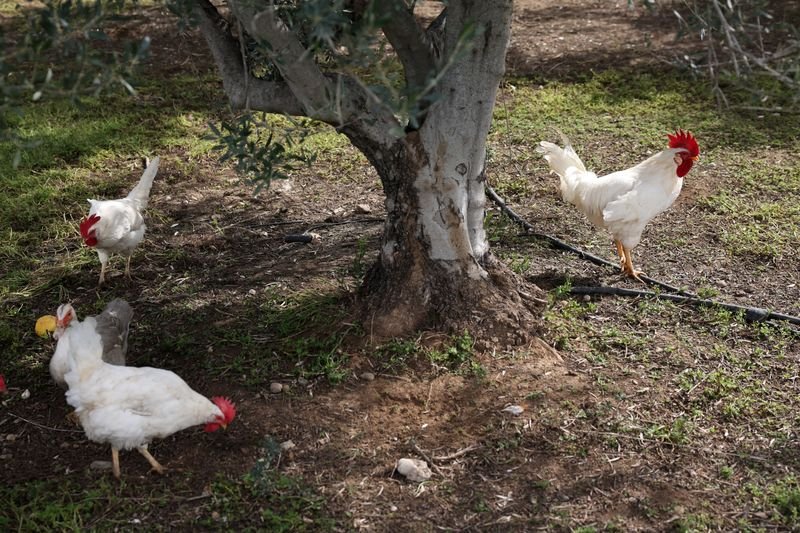
Published by Global Banking & Finance Review®
Posted on February 24, 2025
2 min readLast updated: February 27, 2026
Add as preferred source on GoogleRetired hens in Cyprus are revitalizing olive groves by boosting yields and reducing pests, creating a sustainable ecosystem.
By Michele Kambas
AKAKI, Cyprus (Reuters) - Organic farmers in Cyprus have recruited hundreds of retired hens to fertilize olive groves in a pilot project they say boosts yields, counters disease, and helps to manage food waste.
Saved from slaughter after their egg-laying years, hens peck and poop to their hearts' content among olive trees at the organically certified Akaki Grove, on the green foothills of the Troodos mountains west of Nicosia.
In a back-to-basics approach, farmer and grove owner Elena Christoforos and soil engineer Nicolas Netien have launched the Kot-Kot project. They collect food waste donations to feed hens, which in turn provide natural fertilizer for olive trees producing oil high in inflammation-busting polyphenols.
"We provide them with an old hens' home, they come here and retire," said Christoforos, surrounded by clucking chickens while emptying bins of food waste donated by schoolchildren.
Hens reduce the presence of pests such as olive fly, a scourge for olive farmers in the Mediterranean, by pecking at larvae while simultaneously clearing surface weed cover.
Their droppings enrich the soil, and feeding them with food waste reduces the amount of methane-producing organic matter going into landfill.
The hens can enjoy a long retirement among the olive trees, living for 8-10 years despite only laying eggs until the age of 2.
"The goal here is to create a biodiverse, self-sustained ecosystem that can sustain really high temperatures and long droughts. So when I bring animals into the system by eating ground cover and pooping, it speeds up the cycle," Netien said.
Netien, who holds the world record for producing olive oil with the highest polyphenol content, said olive tree growth and yields had improved markedly since the hens arrived.
(Reporting by Michele Kambas; additional reporting by Yiannis Kourtoglou; editing by Giles Elgood)
The Kot-Kot project is an initiative launched by farmer Elena Christoforos and soil engineer Nicolas Netien in Cyprus, where retired hens are used to fertilize olive groves and improve yields.
Hens reduce pests like the olive fly by pecking at larvae and their droppings enrich the soil, contributing to a healthier ecosystem for the olive trees.
The hens can live for 8-10 years, although they only lay eggs until the age of 2, allowing them to enjoy a long retirement among the olive trees.
Using retired hens helps reduce methane emissions from organic waste in landfills by feeding them food waste, while also promoting a self-sustained ecosystem.
Since the hens have been introduced to the olive groves, there has been a marked improvement in olive tree growth and yields, according to soil engineer Nicolas Netien.
Explore more articles in the Headlines category

