Headlines
Austria's Far-Right Led Coalition Talks Set to Begin, Thousands Protest
Published by Global Banking & Finance Review®
Posted on January 10, 2025
3 min readLast updated: January 27, 2026
Add as preferred source on Google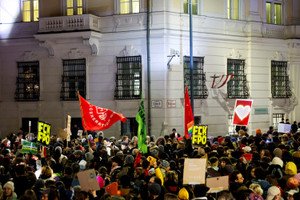
Published by Global Banking & Finance Review®
Posted on January 10, 2025
3 min readLast updated: January 27, 2026
Add as preferred source on GoogleAustria's far-right FPO starts coalition talks, sparking protests in Vienna. Herbert Kickl leads negotiations amid concerns over Russian influence.
By Francois Murphy
VIENNA (Reuters) - Talks to form a coalition government led by Austria's far-right Freedom Party (FPO) will begin on Friday, the party said on Thursday, as thousands protested in Vienna against the prospect of the country's first FPO-led government.
The eurosceptic, Russia-friendly FPO won September's parliamentary election with around 29% of the vote but was initially sidelined as centrist parties tried to form a ruling coalition without it. That effort failed at the weekend, and FPO leader Herbert Kickl was tasked with forming a government.
"First step: negotiations on the budget as of tomorrow," Kickl said in a statement on Thursday evening while protesters carrying placards reading "Nazis out" and "History is repeating itself" gathered in the square that stands between the offices of the president and the chancellor.
Chancellor Karl Nehammer of the conservative People's Party (OVP), who had led the centrist coalition talks, said on Saturday he was stepping down because they had collapsed. His successor as head of the caretaker government, Foreign Minister Alexander Schallenberg, is due to take over on Friday.
Various non-governmental organisations that deal with human rights, refugees and the environment called Thursday's protest, Thursday being the day for demonstrations when the FPO was in power as a junior coalition partner - its only experience of government - most recently with the OVP in 2019.
"Our republic is at a crossroads," the organisers said in a statement. "The threat of an extreme right-wing chancellor looms and with him an attack on democracy, human rights, judiciary, independent media and social cohesion in our country."
More than 10,000 protesters packed tightly together on the square and streets leading into it whistled, jeered and shone their phone lights towards the chancellor's office, chanting "Kickl out" in a peaceful atmosphere.
The OVP, which under Nehammer said it would not govern with Kickl, calling him a conspiracy theorist and a security threat, now says under interim leader Christian Stocker that it prefers to reach a coalition deal with Kickl to holding a snap election.
On Wednesday, however, Stocker said he demanded assurances from Kickl that he wants to keep Austria free from Russian interference - a reference to FPO positions including opposing sanctions against Moscow over Russia's invasion of Ukraine.
Support for the FPO has only increased since September, polls show, and the party now has a lead of more than 10 percentage points over the OVP.
"We are entering negoatiations with the FPO," the OVP said in a statement minutes before the FPO's, confirming that Kickl and Stocker had held initial discussions and that the first issue would be the budget.
"For us, the most important cornerstones are Austria's sovereignty against foreign influence, especially from Russia, Austria as a reliable partner in the EU and our western liberal democracy based on the rule of law," it said.
(Additional reporting by Christine Uyanik; Editing by Alexandra Hudson)
The coalition talks are being led by Austria's far-right Freedom Party (FPO).
The FPO won the election with around 29% of the vote but was initially sidelined as centrist parties attempted to form a coalition without it.
Protesters were demonstrating against the potential formation of a coalition government with the FPO, expressing concerns about the threat to democracy and human rights.
Chancellor Karl Nehammer announced that he was stepping down after the collapse of the centrist coalition talks, leading to the current negotiations with the FPO.
Support for the FPO has increased since the election, with polls indicating they now have a lead of more than 10 percentage points over the People's Party (OVP).
Explore more articles in the Headlines category